Constitutional Court: Nephews Also Eligible to Request Retrials in “Historical Injustice Cases”... Criminal Procedure Act Ruled Constitutionally Incompatible
Constitutional Complaint Filed After Retrial Request Rejected
7-to-2 Ruling of Constitutional Incompatibility
In cases involving human rights violations by state authorities, known as “historical injustice cases,” the Constitutional Court has ruled that not only spouses and direct relatives of the deceased, but also other relatives such as nephews and nieces, should be allowed to request a retrial.

On June 24, the Constitutional Court, by a 7-to-2 vote, ruled that Article 424, Clause 4 of the Criminal Procedure Act—which limits the right to request a retrial for a deceased person convicted of a crime to spouses, direct relatives, and siblings—is incompatible with the Constitution.
The justices stated, “In cases such as mass civilian massacres, state institutions were systematically involved, and even after the fact, truth-finding was suppressed, making it impossible to uncover the facts for a long time. In many instances, the victims died without ever marrying, or entire families were killed, leaving no eligible persons to request a retrial under current law.”
A ruling of “constitutional incompatibility” declares a law unconstitutional, but allows it to remain formally effective out of respect for the legislative body. As a result of this decision, lawmakers must revise the relevant provision by December 31, 2027. The law will remain in effect until then.
On the other hand, the dissenting justices explained that limiting the right to request a retrial to spouses and direct family members is justified for legal stability and efficient use of judicial resources. They argued that indiscriminately expanding eligibility could threaten the stability of finalized court decisions for an extended period.
Hot Picks Today
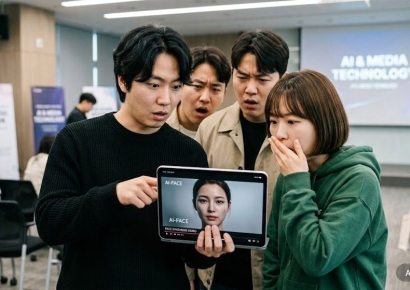 "Even My Mother Couldn't Recognize Me... Outrage Over 'AI Fake Ads' Made for Just 20,000 Won"
- "Even If SK hynix Stock Falls to Zero, I Won't Sell" "Korean Market Is Too Risky" U.S. Retail Investors Panic Amid Plunge
- "You No Longer Need to Visit the District Office... AI National Secretary Handles Everything from Certificate Issuance to Submission [Tried and Tested]"
- "Expected an Idol Look, but Why Is This 200 Million Won Robot Like This?" Flood of Complaints Leads to Discount Coupons
- Spraying Water Once Costs 2.26 Million Won... Chinese Apartment Complex Tackles Heatwave with 'Rooftop Rain'
This case was brought by the nephew and sister-in-law of individuals killed without due process after being accused of involvement in the Yeosu-Suncheon Incident, as well as the nephew of a Catholic priest who was convicted and died after being implicated in the National Democratic Youth and Student Federation case. Their applications for retrial were rejected by the courts because, under current law, nephews and similar relatives are not eligible. They subsequently filed a constitutional complaint.
© The Asia Business Daily. All rights reserved. Unauthorized AI training and use prohibited.