Board of Audit and Inspection to Strengthen Accounting Audits of Constitutional Institutions with Weak External Oversight... "Began Collecting Data from Election Committee" (Comprehensive)
Kim Ho-chul of the Board of Audit and Inspection Addresses Press: "On-site Audit of Election Committee Expected in July"
Restoring Trust in Election Management After Local Election Ballot Shortage
Audit Operations Overhauled With Focus on Enhancing Public Benefit
Protecting Proactive Administration While Intensifying Oversight of Local Corruption and Fiscal Leakage
Push for AI-Based Audit System and Development of Audit Data Hub
Kim Ho-chul, Chairman of the Board of Audit and Inspection, announced on June 24 that, in relation to the Central Election Management Committee's ballot paper shortage and other election management failures, "Following a resolution by the Audit Committee on the 23rd, we have begun collecting materials today for an accounting audit."

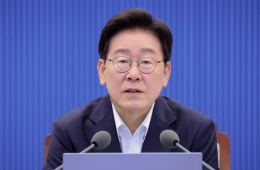
Kim Ho-cheol, Chairman of the Board Audit and Inspection, is speaking at a press conference held at the Board Audit and Inspection in Jongno-gu, Seoul on June 24, 2026. Photo by Yonhap News
View original imageAt a press conference held at the Board of Audit and Inspection building that day, Chairman Kim stated, "There is significant public concern and interest regarding the infringement of voting rights. After collecting materials, we will determine the scope and target institutions of the audit, and select the matters to be examined. We expect to commence the on-site audit around July."
He added, "While we cannot conduct work inspections of the Election Management Committee out of respect for the Constitutional Court's decision, it is our duty to conduct accounting audits of constitutional institutions. We will collect materials and, based on the facts revealed, select audit matters we can undertake." Regarding the specific audit topics, he explained, "There are various issues identified through accounting audits, such as expenditures not for election management purposes, inadequate settlement of election expenses, improper purchase or prolonged neglect of election equipment and supplies." He continued, "We will be able to examine meaningful results related to the execution of accounting and financial management, which are matters of public interest."
In his opening remarks that day, Chairman Kim also said, "As the nation’s top audit agency, we will strengthen accounting audits of constitutional institutions where external oversight is weak." This decision stems from the belief that, regardless of the guaranteed independence and neutrality of such institutions, their budget execution and administrative transparency must not be left outside the scope of oversight.
The recent ballot paper shortage incident has fueled public distrust in the administration of election management. The Board of Audit and Inspection believes that while respecting the constitutional independence of the Election Management Committee, it can examine the appropriateness of budget formulation and execution, as well as the management of related administrative systems, within the scope of its accounting audit authority.
Additionally, Chairman Kim stated that the Board's operational focus will shift toward "improving public convenience," marking a paradigm shift in its audit approach. This reflects criticism that existing audits, which have focused primarily on legal compliance, have diminished administrative improvement, highlighted only the faults and accountability of public officials, and contributed to inertia at the working level. Going forward, audits will not simply identify regulatory violations but will be designed to reduce inconvenience in citizens’ lives and resolve chronic administrative issues.
To this end, the Board of Audit and Inspection will expand public participation from the audit topic selection stage, and broadly reflect audit demands from the National Assembly and external experts. During audits, the focus will be on analyzing the causes of problems and proposing fundamental solutions, rather than merely pointing out issues. Audit outcomes will also be evaluated not only based on disciplinary measures but also on the effectiveness of institutional improvements and the enhancement of public benefit. The Board plans to finalize detailed implementation plans through a review and resolution by the Audit Committee in August, and to fully implement the new paradigm starting with next year’s audits.
Furthermore, the protection of proactive administration will be strengthened. Chairman Kim stated, "If a public official has acted outside the rules out of necessity but has achieved results that enhance public benefit, we will not hold them responsible." The intention is that audits should not be a mechanism that discourages public officials on the ground, but rather a system that supports them in acting for the public good. While this does not mean condoning actions that disregard legal requirements and procedures, responsibility will be determined by considering both administrative realities and public benefit.
To ensure the establishment of this new audit approach, the Board of Audit and Inspection is currently conducting ten pilot audits focused on improving public convenience. These include the illegal importation of narcotics, protection of financial investors, safety of multi-use sports facilities, safety of consumer chemical products, gaps in welfare for people with disabilities, safety of new technologies such as secondary batteries, and information security certification systems. Based on the results of these pilot audits, the Board will refine its audit practice guidelines and concurrently amend necessary regulations.

Kim Hochul, Chairperson of the Board of Audit and Inspection, is holding a press conference at the Board of Audit and Inspection in Jongno-gu, Seoul on June 24, 2026. Photo by Yonhap News
View original imageThe Board of Audit and Inspection will also expand audits of key national issues. Over the next four years, it plans to make response to climate and environmental crises a major audit area and develop an audit roadmap focusing on three pillars: greenhouse gas reduction, climate change adaptation, and green industry growth and R&D. The review will cover issues such as the supply of zero-emission vehicles and charging infrastructure, support for climate crisis response in the industrial sector, improvements to agricultural, livestock, and fisheries facility infrastructure, and the operation of climate response funds. As the budget for climate crisis response increases, the Board intends to assess both policy effectiveness and the appropriateness of fiscal execution.
Efforts to eliminate local corruption and block fiscal leakage were also presented as key tasks for the second half of the year. Chairman Kim said, "With the trend toward expanding central government investment in regions due to local population decline and widening regional disparities, we will actively eliminate local corruption and fiscal leakage that can undermine the effectiveness of policies and projects." The Board will focus on structural corruption involving local authorities and interests, as well as waste of budgets through subsidies and outsourced projects, centering on the newly established Anti-Corruption Investigation Bureau.
An artificial intelligence (AI)-based system will also be introduced to improve the efficiency of audit work. Within this year, the Board will establish a code of ethics outlining the principles and limits of AI use, and will form an AI Ethics Committee with the participation of expert groups. In the mid- to long-term, the Board plans to build its own AI model and audit data hub to advance data analysis, risk detection, and audit document preparation. Chairman Kim said, "By establishing an AI-based audit system, we will enhance the efficiency and capability of audit work. We will also implement a system to specifically analyze, measure, and quantify the effect of audits on improving public benefit."
Hot Picks Today
![[Test Drive] The Sealion 7 Transformed by a 2 Million Won Upgrade: "Base Model Buyers Might Feel Shortchanged"](https://cwcontent.asiae.co.kr/asiaresize/93/2026080417033869589_1785830618.jpg) [Test Drive] The Sealion 7 Transformed by a 2 Million Won Upgrade: "Base Model Buyers Might Feel Shortchanged"
[Test Drive] The Sealion 7 Transformed by a 2 Million Won Upgrade: "Base Model Buyers Might Feel Shortchanged"
- 'Single-Stock Leveraged ETF Blow' Crippled KOSDAQ in July... Hopes Rise for a Turnaround in August with 11.38% Surge [Weekend Money]
- Chinese Buyers Retreat from Seoul’s Real Estate Market? Foreign Purchases Plummet by 2,000 [Real Estate AtoZ]
- "If We Don't Get Married, Let's Live Together"... Gen Z Chooses 'Co-Buying Homes with Friends' Over Romantic Partners [Gen Z Around the World]
- Kim Seontae Appears Gaunt After Leaving 'Don Seontae'... 3,000 Thumbs Up for Chungju Mayor's "Come Back" Offer
Meanwhile, Chairman Kim also introduced the achievements in reforming the Board of Audit and Inspection since his inauguration. He explained that major policy decisions have been excluded from the scope of work inspections, and that matters subject to exceptional audits have been limited to illegal or corrupt acts. The Special Investigation Bureau, which had been at the center of political audit controversies, has been abolished, and the Anti-Corruption Investigation Bureau has been restructured to specialize in personnel inspections and anti-corruption. Internal checks have also been strengthened through enhanced prior control by the Audit Committee in the initiation and processing of audits.
© The Asia Business Daily. All rights reserved. Unauthorized AI training and use prohibited.





!["Even a 500 Million Won Jump Is Fine, Self-Residence Buyers Flock to Billion-Won Units"...High Winning Bids Continue for Mid- and Low-Priced Reconstruction Complexes [Real Estate AtoZ]](https://cwcontent.asiae.co.kr/asiaresize/307/2026042709001641074_1777248016.jpg)