"Not a Fundamental Issue"...Experts See Limited Possibility of Further Stock Market Decline
KOSPI Records Fifth Largest Drop in History
Past Crashes Recovered in Two to Three Months
Likely to Rebound as This Is a Supply-Demand Issue, Not a Fundamental One

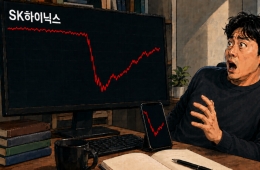
Although the Korean stock market plunged due to simultaneous heavy selling by foreign and institutional investors, analysts stated that further declines are likely to be limited and that there is a high possibility of a rebound in the next two to three months.
According to the Korea Exchange on June 24, the KOSPI closed at 8,203.84 the previous day, down 910.71 points (9.99%). In terms of the rate of decline, this is the fifth largest in history.
The largest historical drop occurred on March 4 of this year, when concerns over war between the United States and Iran led to a -12.06% decline. The second largest was during the September 11 attacks in 2001 (-12%), followed by the dot-com bubble in 2000 (-11.6%), and the 2008 global financial crisis (-10.5%).
Experts noted that, looking back at previous sharp declines, excessive plunges have always presented buying opportunities at low prices. They pointed out that after steep falls in the past, stock prices typically recovered within two to three months, and in many cases, rose even higher afterwards.
According to Kiwoom Securities, an analysis of the top 10 historical KOSPI declines showed that after a crash, the KOSPI recorded an average increase of 6.9% five trading days later, 7.8% after 20 trading days, and 24.6% after 60 trading days. Except for cases involving fundamental issues that shook the entire financial system, such as the 2008 global financial crisis, most instances saw a rebound.
Ji-Young Han, a researcher at Kiwoom Securities, explained, "It is reasonable to view this crash not as a result of earnings or other fundamental issues, but rather as a side effect of concentrated trading in semiconductors, which intensified in both the spot and derivatives markets (with a leverage spillover effect on individual stocks). Based on past experience, it is important to remember that market corrections caused by supply-demand shocks have not lasted long."
There are also arguments that it is wise to seize this sharp drop as a buying opportunity. Yong-Goo Kim, a researcher at Yuanta Securities, said, "This sharp decline should be viewed as profit-taking and a technical correction in major semiconductor stocks, not a fundamental breakdown. As semiconductors have proven their performance through exports, it is advisable to use this recent correction centered on semiconductors as a buying opportunity at low prices."
Hot Picks Today
![[Test Drive] The Sealion 7 Transformed by a 2 Million Won Upgrade: "Base Model Buyers Might Feel Shortchanged"](https://cwcontent.asiae.co.kr/asiaresize/93/2026080417033869589_1785830618.jpg) [Test Drive] The Sealion 7 Transformed by a 2 Million Won Upgrade: "Base Model Buyers Might Feel Shortchanged"
[Test Drive] The Sealion 7 Transformed by a 2 Million Won Upgrade: "Base Model Buyers Might Feel Shortchanged"
- 'Single-Stock Leveraged ETF Blow' Crippled KOSDAQ in July... Hopes Rise for a Turnaround in August with 11.38% Surge [Weekend Money]
- Chinese Buyers Retreat from Seoul’s Real Estate Market? Foreign Purchases Plummet by 2,000 [Real Estate AtoZ]
- "If We Don't Get Married, Let's Live Together"... Gen Z Chooses 'Co-Buying Homes with Friends' Over Romantic Partners [Gen Z Around the World]
- Kim Seontae Appears Gaunt After Leaving 'Don Seontae'... 3,000 Thumbs Up for Chungju Mayor's "Come Back" Offer
Join Cho, a researcher at Samsung Securities, also stated, "After a sharp short-term decline, the fastest rebound has always been led by the market's leading stocks. Given that the AI growth trend and semiconductor profit momentum remain solid, it is more effective to use this correction as a chance to increase the proportion of leading stocks in your portfolio rather than viewing it as a break in the overall trend."
© The Asia Business Daily. All rights reserved. Unauthorized AI training and use prohibited.






!["Even a 500 Million Won Jump Is Fine, Self-Residence Buyers Flock to Billion-Won Units"...High Winning Bids Continue for Mid- and Low-Priced Reconstruction Complexes [Real Estate AtoZ]](https://cwcontent.asiae.co.kr/asiaresize/307/2026042709001641074_1777248016.jpg)