Korean Stock Market Fails in 12th Attempt to Join MSCI Developed Markets Index... Will It Reach the Watchlist Next Year? (Comprehensive)
MSCI Releases Annual Market Classification... Korea Remains an Emerging Market
"Authorities' Measures Recognized... Fundamental Issues Remain Unresolved"
Expectations Rise for Meaningful Improvement in Foreign Exchange Market Access in the S
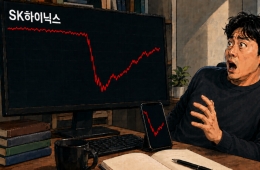
South Korea’s efforts to join the Morgan Stanley Capital International (MSCI) Developed Markets (DM) Index have once again failed. The country was not even added to the watchlist, a preliminary stage before full inclusion, marking the 12th unsuccessful attempt since it was removed from the watchlist in 2014. However, market participants note that the government’s planned institutional reforms, such as the expansion of the foreign exchange market, are proceeding as scheduled, raising the possibility that South Korea could be re-added to the watchlist next year. After nearly a 10% plunge the previous day, largely reflecting the anticipated MSCI decision and a subsequent correction, the Korean stock market is rebounding on June 24.

"Issues like restrictions on offshore won trading remain unresolved"
MSCI announced in its 2026 annual market classification results, released on the morning of June 24 (Korea Standard Time), that South Korea remains classified as an Emerging Market (EM), unchanged from before. MSCI stated, “We acknowledge the measures announced by Korean financial authorities to address long-standing concerns,” but explained that “investors responded that fundamental issues have not been fully resolved,” which is why South Korea remains an emerging market.
Specifically, MSCI cited the limited convertibility of the won in the offshore foreign exchange market. “Market participants pointed out that the restricted convertibility of the won in the offshore foreign exchange market is a key factor blocking reclassification,” MSCI said, adding, “The Korean won cannot be delivered offshore.” Despite the extension of foreign exchange trading hours, domestic liquidity is still insufficient compared to developed markets, which remains a concern. The limited practical use of omnibus accounts and the real transfer of securities is also highlighted as an area in need of improvement.
In its previously released annual market accessibility review, MSCI gave South Korea’s stock market a negative (needs improvement) rating in 5 out of 18 evaluation categories: degree of foreign exchange market liberalization, investor registration and account opening, information flow, clearing and settlement, and securities mobility. The only area upgraded from negative to positive last year was the availability of investment products.

MSCI annually classifies major stock markets around the world into Developed Markets, Emerging Markets, Frontier Markets, and Standalone Markets. South Korea has been included in the Emerging Market index since 1992. In 2008, the country was added to the watchlist, a preliminary stage before developed market inclusion, but was repeatedly denied an upgrade due to insufficient market accessibility and was eventually removed from the watchlist in 2014.
Nevertheless, despite the news of failing to be placed on the watchlist, as of 10:00 a.m. on June 24, the KOSPI was trading at 8,504.43, up 3.66% from the previous trading day. At the same time, the KOSDAQ was up 2.27% at 911.74. This is analyzed as a result of the market already having priced in the difficulties of MSCI developed market inclusion during the previous day’s sharp decline, and investors seeing the correction as a buying opportunity. The previous day’s KOSPI drop was so severe that it marked the fifth-largest decline in KOSPI history at -9.99%.

According to Kiwoom Securities, an analysis of the top 10 historical declines in the KOSPI shows that, on average, the index climbed 6.9% five trading days after a crash, 7.8% after 20 days, and 24.6% after 60 days. At present, the rebound in the KOSPI is being led by large-cap stocks. As of 10:01 a.m., Samsung Electronics was trading at 3,330,000 won, up 7.50% from the previous session, while SK hynix was trading at 2,646,000 won, up 3.56%.
"There is hope for next year," say securities industry experts
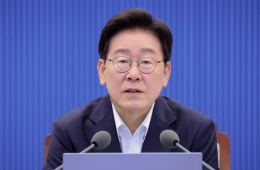
Despite this year’s setback, experts inside and outside the securities industry are optimistic that South Korea may be added to the watchlist next year. This optimism is fueled by the Lee Jaemyung administration’s roadmap, under which quantitative requirements demanded by overseas institutions—such as the abolition of mandatory foreign investor registration and the phased expansion of mandatory English disclosures—were largely completed in the first half of the year. In addition, the government is set to begin substantial implementation in the second half of measures to improve foreign exchange market accessibility, which MSCI has repeatedly cited as the greatest challenge.
To begin with, following a pilot operation, the government plans to shift the won–dollar foreign exchange market to a 24-hour trading system starting July 6. With the exception of Saturdays, Sundays, and January 1, won–dollar trading will be possible even on public holidays such as Chuseok and Christmas. This will significantly increase currency exchange convenience not only for individual investors trading abroad, but also for foreigners looking to invest in Korean stocks and bonds.
Additionally, from next year, the “offshore won settlement system” will be fully implemented, allowing foreign financial institutions to hold won accounts in Korea and manage won directly. Currently, the Korean foreign exchange market only recognizes won–dollar spot settlements conducted onshore. Offshore financial institutions can participate if approved as a Registered Foreign Institution (RFI), but must rely on domestic foreign exchange banks for related transactions. However, when the offshore settlement system is activated, 24-hour local won settlements will be possible via the Bank of Korea’s settlement network. With pilot operations scheduled to begin in September, MSCI is expected to closely monitor these developments.

Furthermore, as the government is set to unveil its “won internationalization roadmap” later this year, additional measures are anticipated, with the prospect of dramatically enhancing foreign investors’ access to the won. If issues raised by MSCI this time, such as onshore foreign exchange market liquidity, are addressed, future assessments are expected to improve even further.
Shin Joongho, head of research at LS Securities, said, “MSCI tends to make decisions after confirming policy changes. If the government follows its roadmap, there is a possibility that Korea could be placed on the watchlist in 2027.” Lee Jaewon, a researcher at Yuanta Securities, added, “We have positive expectations for the 2027 review, especially as the activation of the offshore foreign exchange market gains traction.” To be included in the developed market index, a country must first be on the watchlist for at least a year, then be formally added to the index, and finally complete the process in three stages.
On the other hand, a senior official at a securities firm, speaking on condition of anonymity, cautioned, “It may not be easy even next year. Being added to the watchlist does not guarantee inclusion in the developed market index,” emphasizing the need to further strengthen the institutional investor base and improve regulations, including taxation. Namwoo Lee, chairman of the Korea Corporate Governance Forum, also commented, “The government has done everything it can in terms of foreign exchange, but it is crucial that these measures are established in practice. Consistent capital market reform is essential.”
Hot Picks Today
![[Test Drive] The Sealion 7 Transformed by a 2 Million Won Upgrade: "Base Model Buyers Might Feel Shortchanged"](https://cwcontent.asiae.co.kr/asiaresize/93/2026080417033869589_1785830618.jpg) [Test Drive] The Sealion 7 Transformed by a 2 Million Won Upgrade: "Base Model Buyers Might Feel Shortchanged"
[Test Drive] The Sealion 7 Transformed by a 2 Million Won Upgrade: "Base Model Buyers Might Feel Shortchanged"
- 'Single-Stock Leveraged ETF Blow' Crippled KOSDAQ in July... Hopes Rise for a Turnaround in August with 11.38% Surge [Weekend Money]
- Chinese Buyers Retreat from Seoul’s Real Estate Market? Foreign Purchases Plummet by 2,000 [Real Estate AtoZ]
- "If We Don't Get Married, Let's Live Together"... Gen Z Chooses 'Co-Buying Homes with Friends' Over Romantic Partners [Gen Z Around the World]
- Kim Seontae Appears Gaunt After Leaving 'Don Seontae'... 3,000 Thumbs Up for Chungju Mayor's "Come Back" Offer
In a joint statement released on the morning of June 24, the Ministry of Economy and Finance and the Financial Services Commission said, “If we steadily pursue foreign exchange and capital market reforms according to our own needs and timeline, we will naturally be able to join the MSCI Developed Markets index. We will continue to monitor the practical implementation of improvement measures and reflect on-site feedback.”
© The Asia Business Daily. All rights reserved. Unauthorized AI training and use prohibited.


!["Even a 500 Million Won Jump Is Fine, Self-Residence Buyers Flock to Billion-Won Units"...High Winning Bids Continue for Mid- and Low-Priced Reconstruction Complexes [Real Estate AtoZ]](https://cwcontent.asiae.co.kr/asiaresize/307/2026042709001641074_1777248016.jpg)