Second-Year Cabinet Reshuffle Near for Lee Administration... Pace Expected to Pick Up After Han Seong-sook's Confirmation
Focus on an Executive and Performance-Oriented Cabinet:
Enhancing Policy Effectiveness and Restoring Public Trust
Possible Reshuffles in SMEs, Land, and Welfare Ministries;
Education and Culture Also Under Consideration
Welfare Candidates Include Park Joomin, Kim Yoon, Kim Yeonmyung;
Land Candidates Include Maeng Sungkyu, Yoon Hoeduck, Son Myungsoo, Han Junho
The confirmation hearing for Prime Minister nominee Han Seong-sook is expected to mark the starting point for the second-year cabinet reshuffle of the Lee Jaemyung administration. As President Lee has indicated that it would be difficult for him to receive ministerial nominations from the outgoing prime minister, the prevailing view is that a follow-up reshuffle will begin in earnest only after Han's confirmation process is complete and the new prime minister submits recommendations for ministers.

According to ruling party sources on June 24, there is speculation that the upcoming reshuffle may start with the appointment of a new Minister for SMEs and Startups, and could expand to include at least four ministries: the Ministry of Land, Infrastructure and Transport, the Ministry of Health and Welfare, the Ministry of Culture, Sports and Tourism, and the Ministry of Education. With President Lee already reorganizing his senior Blue House aides, it is expected that the next step will be to enhance the effectiveness of the cabinet.
The most pressing personnel change is at the Ministry of SMEs and Startups. If Han passes her confirmation hearing and assumes the role of Prime Minister, the ministerial position will become vacant. Since Han has led venture and digital transformation policies based on her private sector management experience, it is likely that a successor with a strong understanding of the AI industry ecosystem and on-the-ground issues facing small business owners and startups will be prioritized. Among the potential candidates is Ha Jungwoo, former Chief of Future AI Planning at the Blue House, whose background at Naver Cloud highlights his expertise in artificial intelligence, the platform industry, and the venture ecosystem. Ha is also reportedly a strong candidate for the Vice Chair position at the upcoming National AI Strategy Committee.
The Ministry of Land, Infrastructure and Transport is also consistently mentioned as a candidate for replacement. Real estate policy remains a highly sensitive issue for the ruling party following the local elections. With key responsibilities such as housing supply measures, rental market stability, transportation network expansion, and balanced regional development all being felt directly by the public, a wide range of candidates are being discussed, including politicians, ministry officials, and experts in urban and housing policy. Observers suggest that lawmakers Maeng Sungkyu, Yoon Hoeduck, and Son Myungsoo, as well as Professor Kim Seyong of Korea University and lawmaker Han Junho, could return to the pool of candidates. Within and outside the ruling party, current Second Vice Minister Hong Jiseon is also cited as a likely internal promotion. With her experience in construction, housing, and transportation administration at the Gyeonggi Provincial Government, she is considered capable of simultaneously handling supply measures and transportation expansion.
The Ministry of Health and Welfare is another department frequently mentioned as a target for reshuffling. Candidates include Park Joomin and Kim Yoon of the Democratic Party, and Professor Kim Yeonmyung of Chung-Ang University. Park is recognized for his work on the National Assembly's Health and Welfare Committee and his political coordination skills. Kim, who is a physician, is noted for his expertise in driving medical reforms and restructuring essential medical services. Professor Kim is a pension and social security expert who previously served as Senior Secretary for Social Affairs at the Blue House during the Moon Jae-in administration. The selection of a new minister may signal whether health reform, pension reform, or the establishment of a control tower for broad social policies—including low birth rates and caregiving—will be prioritized.
The Ministry of Culture, Sports and Tourism and the Ministry of Education are also being considered for replacement based on performance evaluations. Key issues for the Ministry of Culture, Sports and Tourism include the industrialization of K-culture, the recovery of tourism, and communication with the cultural and artistic communities, all of which President Lee has consistently emphasized. The Ministry of Education faces major challenges such as education reform, AI education, university restructuring, and the integration of early childhood education and care. If the heads of these two ministries are replaced, there is an emerging consensus that candidates with strong on-the-ground presence and policy execution capabilities will be needed, rather than those chosen for symbolic reasons.

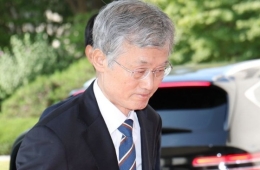
Prime Minister nominee Han Seong-sook is arriving at the hearing preparation office set up at the Financial Supervisory Service Training Institute in Tongui-dong, Jongno-gu, Seoul on June 24, 2026. Photo by Yonhap News Agency
View original imageThe Ministry of Foreign Affairs and the Financial Services Commission are both considered to be at a crossroads between replacement and retention for stability. The Ministry of Foreign Affairs, with pending follow-up actions from the President’s overseas trips, ROK-U.S. and ROK-Japan relations, and the situation in the Middle East, would send a significant signal if replaced. Similarly, the Financial Services Commission, which is responsible for capital market revitalization, household debt management, and financial reforms, will likely be assessed in terms of both continuity and change in key economic policy lines.
Hot Picks Today
!["Just by Parking Money at the Bank? Unusually High Parking Account Rates Lately [Practical Asset Management]"](https://cwcontent.asiae.co.kr/asiaresize/93/2026092308565839400_1790121417.png) "Just by Parking Money at the Bank? Unusually High Parking Account Rates Lately [Practical Asset Management]"
"Just by Parking Money at the Bank? Unusually High Parking Account Rates Lately [Practical Asset Management]"
- "The 'Financial Tip' Known Only to Gangnam Mothers Now Available to All: How Will the National Pension Change for 18-Year-Olds?"
- "Such an Extent?" Shocking Change Observed in Japan... How Severe Is the 'Economic Stagnation'?
- Tax Accountant Candidate Given Suspended Sentence for Using AI to Cheat by Stealing Test Papers and Writing Answers on Palm
- "If Captured, You're a Traitor"... Why the North Korean POW in Ukraine Suffered Severe Facial Injuries
The next key question is whether Han will pass the National Assembly’s confirmation hearing and the approval process on June 25-26. If she is confirmed without major controversy, the sequential reshuffle could gain momentum from early to mid-July. Conversely, if there are significant questions over her ethics or management responsibilities, the reshuffle may be delayed and its scope adjusted. There is also interest in whether President Lee will continue his pragmatic approach of selecting personnel from across the political spectrum, as he did in forming his first cabinet. A senior ruling party official stated, "President Lee faces the simultaneous challenges of restoring public trust, advancing reform agendas, and ensuring personnel vetting stability," adding, "The second-year reshuffle will be the first real test of whether pragmatic appointments can deliver tangible results."
© The Asia Business Daily. All rights reserved. Unauthorized AI training and use prohibited.