[Financial Planning for the 100-Year Life] The Second National Pension: Retirement Pension

Jinwoong Kim, Research Fellow at the 100-Year Life Research Institute, NH Investment & Securities
View original imageAccording to the 2025 Korea Retirement Pension Investment White Paper (Ministry of Employment and Labor), the total accumulated retirement pension assets have reached 501 trillion won, up by around 70 trillion won from 431 trillion won in 2024. This marks an ultra-fast growth, surpassing 500 trillion won in just one year. This amount is now more than one-third of the National Pension Fund, which is the third largest in the world, with assets totaling 1,473 trillion won as of December 2025 (provisional, National Pension Service). Retirement pensions have reached a sufficient scale to serve as an essential post-retirement asset for employees, similar to the National Pension, and are establishing themselves as a crucial financial asset for living in the era of longevity.
When looking at the accumulated assets by retirement pension scheme type, there is an overall upward trend across all categories. Defined benefit (DB) plans increased by 14.3 trillion won, defined contribution (DC) plans by 23.2 trillion won, and Individual Retirement Pension (IRP) accounts by 32.2 trillion won. Notably, the growth in IRPs, which are managed directly by subscribers, was the most pronounced, followed by a significant increase in DC plans, which are also managed by employees. The proportion of DC and IRP within total retirement pension assets is rising. This is attributed to a shift in individuals’ awareness of asset management and retirement preparation, as well as the effects of system improvements such as providing a wider range of investment choices and tax benefits. The importance of the retirement pension system is expected to continue to grow, and the size of retirement pension assets, particularly those centered on DC and IRP, is also projected to maintain its upward trajectory.
Meanwhile, the share of performance-based products has increased significantly overall, indicating a major shift in the paradigm of retirement pension management in Korea. The proportion of performance-based products rose from 17.4% in 2024 to 24.6% in 2025, with all scheme types showing an upward trend. This trend is seen as the result of growing recognition that stable principal-guaranteed products alone are insufficient to deliver adequate returns in a low interest rate environment. The sharp increase in performance-based products in DC and IRP plans suggests that participants are increasingly seeking active investment outcomes. Expectations for growth in domestic and global stock markets, as well as heightened social interest in growing retirement assets, also appear to be contributing factors. Subscribers are showing greater interest in diversifying investments and portfolio management within the retirement pension market.
Changes are also occurring in the share by financial sector. While the banking sector, which currently accounts for more than half of retirement pension assets, saw its share increase by only 0.3 percentage points compared to 2024, the securities sector expanded its share from 24.1% to 26.2%, a 2.1 percentage point rise. Conversely, life insurance and non-life insurance sectors declined by 1.5 percentage points and 0.2 percentage points, respectively. The main reason for the securities sector’s increasing presence in the retirement pension market appears to be the activation of investment within retirement pensions. When looking at the share of performance-based products by financial sector, securities firms dominate at 45.2%, far outpacing banks (19.1%) and life insurers (14.9%). This suggests that the leadership of the retirement pension market is expected to shift toward performance-based financial investment products.
The statistics reviewed so far clearly show the trends and direction of retirement pension asset management. There is a need to focus more on defined contribution plans than defined benefit plans, to transition from principal-guaranteed management to performance-based management, and to prioritize management capabilities over stability. Retirement pensions have now become a second National Pension that individuals must design and manage themselves. A shift in perception about retirement pensions will soon result in a gap in living standards during retirement.
Hot Picks Today
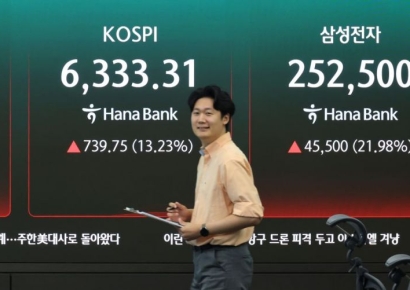 "Is This a Stock Market or a Casino? Predictions Meaningless"...After Repeated Crashes, KOSPI Surges 18% at the Last Minute
- "Next Week Will Be Even Worse"... Hottest Heat Wave in 53 Years, and It's Not Over Yet
- Seven-Month-Old Weighed Only 3kg... Couple in Their 20s Indicted for Son's Death After Gaming Negligence
- "30,000 Won Per Night, Is This for Real?"... What Is the Korean Experience Drawing Foreigners?
- "You Said It Would Rise If Left Alone" Chairman Chey Tae-won Bets 4.9 Billion Won... Earns 1.3 Billion in a Day
Jinwoong Kim, Research Fellow at the 100-Year Life Research Institute, NH Investment & Securities
© The Asia Business Daily. All rights reserved. Unauthorized AI training and use prohibited.