"Do Not Disrupt the 360 Trillion Won Semiconductor Project"... Mayor Lee Strongly Opposes Calls for Public Debate
Sangil Lee: "The National Semiconductor Industrial Complex Is Not a Subject for Public Debate"
Mayor Lee Criticizes Prime Minister's Social Reform Committee's Call for 'Public Discussion on Semiconductor Investment'
Calls for Uninterrupted Progress of the Yongin Semiconductor National Industrial Complex Project
Mayor Lee: "Attempts to Undermine the National Semiconductor Complex Will Not Be Tolerated by the Citizens"
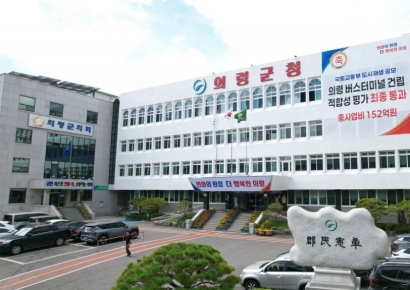
Sangil Lee, Mayor of Yongin Special City, delivered strong criticism of the Prime Minister's Office’s Social Reform Committee's call for 'public debate on national semiconductor industry policy,' urging the uninterrupted progress of the Yongin Advanced System Semiconductor National Industrial Complex project.

On June 23, Mayor Lee issued a statement saying, "If the intention behind bringing the Yongin Idong and Namsa Advanced System Semiconductor National Industrial Complex project, which has already been designated as a national policy and is being implemented as a government-led project, into the arena of public debate is to shake its foundation by drawing it into civic society disputes, the citizens of Yongin Special City will never accept it."
Regarding the Social Reform Committee's demand for public debate, Mayor Lee stated, "Corporate investment is a matter for companies to decide on their own, bearing the risks themselves," and argued, "It is not appropriate for civic society groups connected to the government to intervene in semiconductor investments." He continued, "I question how much public agreement there will be if the current administration, under the guise of public debate, interferes in corporate investment as if it has the final say."
In particular, referring to the Social Reform Committee’s claim that "the current national semiconductor industry policy was decided without adequate public debate," Mayor Lee said, "I would like to ask what the true intention behind such claims is," and demanded, "They must clarify whether they intend to turn the ongoing Yongin National Industrial Complex into a target of trial by public opinion."
Was the SK hynix Cluster, Decided During the Moon Jae-in Administration, Ever Subjected to Public Debate?
Mayor Lee pointed out the inconsistency in the Social Reform Committee’s argument by mentioning the SK hynix Yongin Semiconductor Cluster in Wonsam-myeon, which was approved in 2019 during the Moon Jae-in administration.
He said, "There was no public debate involving civic society at that time, so why is only the current administration's project being targeted?" He further questioned, "If you want to challenge the Yongin National Industrial Complex, shouldn’t the same standards be applied to the entire past process of establishing semiconductor industrial complexes as well?"
Mayor Lee also criticized, "The Social Reform Committee’s rhetoric about ‘the public’ will only lead to accusations that it is trying to divide the public and incite regional and national conflict."
In addition, Mayor Lee said, "The Social Reform Committee attempted to hold a 'Public Square Civic Debate' on the feasibility of the Yongin Semiconductor National Industrial Complex in Seoul on February 10 this year, but postponed it due to strong opposition from Yongin citizens. On February 26, in a debate in Busan on the 'principles and standards for power grid construction,' they again attempted to undermine the Yongin National Industrial Complex." He added, "I cannot help but suspect that the Social Reform Committee’s calls for public debate are in line with the intent to obstruct the development of the Yongin National Industrial Complex, as evidenced by the debates in Seoul and Busan."
Mayor Lee emphasized that securing competitiveness in the semiconductor industry should be based on industrial judgment, not political logic. He stated, "Companies make comprehensive decisions about semiconductor investment based on factors such as electricity, water supply, logistics, research and development capabilities, securing skilled personnel, the ecosystem of partner companies, and supply chain efficiency." He added, "The global trend is for governments to respect corporate decisions and focus on national-level support."
He went on to say, "Please present a case among leading semiconductor nations such as the United States and Taiwan where investment or cluster location decisions were made through civic society public debate." He stressed, "The semiconductor industry should be governed by industrial logic, not politics."
"The Argument for Relocating Yongin National Industrial Complex Semiconductor Fabs to the Provinces Is a Politically Motivated Attempt to Reward Pro-Government Regions"
Mayor Lee also raised suspicions that the Social Reform Committee’s push for public debate is politically motivated and connected to favoritism toward certain regions.
He said, "Rather than being aimed at strengthening semiconductor competitiveness, this push to relocate the semiconductor fabs of the Yongin National Industrial Complex to the provinces is a political ploy to reward pro-government regions." He pointed out, "The inclusion of the President’s emphasis on the 'local production and local consumption principle' in the Social Reform Committee’s statement stems from such political intentions."
Mayor Lee reiterated, "The semiconductor industry should operate according to industrial logic, not politics," adding, "Semiconductor investments should be autonomously determined by companies, taking into account factors such as electricity, water supply, logistics, research and development capabilities, securing skilled personnel, the ecosystem of partner companies, and supply chain efficiency. The government should respect these decisions and provide active national-level support for the sake of the national economy, as this is the global norm and common sense."
He argued, "There is no advanced country where the location of a semiconductor cluster is determined by non-experts from civic society through a majority vote under the guise of public debate."
The Yongin Advanced System Semiconductor National Industrial Complex is a government-led project designated in 2023 as a National Strategic Advanced Industry Specialized Complex. It received government approval for its master plan in 2024. Samsung Electronics has signed a land sales contract for industrial use with Korea Land & Housing Corporation (LH) in line with its investment plan of KRW 360 trillion. The land compensation procedures are currently underway.
"What Is the Intention Behind Making a Project, Already Finalized by the Executive and Judged Lawful by the Judiciary, a Target of Political Controversy?"
Mayor Lee stated, "The Seoul Administrative Court dismissed all claims in a lawsuit filed by some environmental groups in January this year seeking to nullify the approval of the national industrial complex plan," and criticized, "To make a project, already finalized by the executive branch and judged lawful by the judiciary, a target of political controversy undermines the credibility of national policy and legal stability."
He added, "If already decided national policies are shaken just because the administration changes, international trust in the Republic of Korea will inevitably decline."
Hot Picks Today
 "Regardless of Income, 500,000 Won Per Person, 2 Million for a Family of Four"... This Place Begins Livelihood Support Payments
- 14 Out of 15 at the Bottom: "Truly the Outcasts"—Single-Stock Leveraged ETFs Post the Worst Returns
- "I Thought Weak Hands Were Just a Sign of Aging"... This Was Found in 85% of Seniors
- Beomsu Park Appointed as 8th Secretary General of Arts Council Korea
- "Cooler Than Air Conditioning?"...Sudden Midnight Stench and Burst: The Story Behind China's 'Natural Cooling Item'
Meanwhile, Mayor Lee also addressed Assemblyman Jung Jinuk of the Democratic Party, who has advocated for attracting a semiconductor fab to Gwangju, saying, "If you want to bring in new investment and build a semiconductor plant in Gwangju, by all means, pursue it actively," but added, "When it comes to the Yongin National Industrial Complex, I hope you refrain from unnecessary commentary and focus on the development of Gwangju."
© The Asia Business Daily. All rights reserved. Unauthorized AI training and use prohibited.