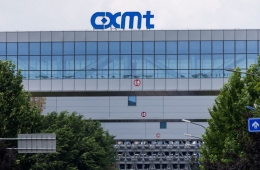
"Stock Surges from 255,000 Won to Over 2.2 Million"... Up 773% Yet Set to Climb Higher [This Week's Hot Stock]
Up 773.73% Year-to-Date, Taking the Top Spot
MLCC and FC-BGA Growth Fueled by the AI Cycle
Target Price Projections Reach 3 Million Won
Riding the artificial intelligence (AI) cycle, Samsung Electro-Mechanics, which produces high-end multilayer ceramic capacitors (MLCCs)—a key infrastructure component—has seen its stock price soar sharply. Although it is already the top gainer this year, securities firms are continuing to raise their target prices, citing ongoing supply shortages and related factors.

Samsung Electro-Mechanics Grows 773% This Year Alone
!["Stock Surges from 255,000 Won to Over 2.2 Million"... Up 773% Yet Set to Climb Higher [This Week's Hot Stock]](http://www.asiae.co.kr/news/img_view.htm?img=2026062216403619136_1782114037.jpg)
As of June 22, Samsung Electro-Mechanics closed at 2,228,000 won, down 1.85% from the previous trading day. On June 19, the stock hit an intraday high of 2,417,000 won, setting a new 52-week record. The company's market capitalization has swelled to 166 trillion won, making it one of the top five companies in South Korea by market cap.
The rise in Samsung Electro-Mechanics' stock price this year has outpaced that of Samsung Electronics and SK hynix, the two leading stocks on the KOSPI. The stock, which was at 255,000 won at the beginning of the year, had surged 773.73% as of June 22, making it the biggest gainer among KOSPI-listed stocks. The second spot also went to Samsung Electro-Mechanics Preferred shares, which rose 722.41% during the same period. Compared to SK hynix (+348.39%) and Samsung Electronics (+194.83%), the growth rate is two to four times higher.
In the first quarter of this year, Samsung Electro-Mechanics recorded sales of 3.2091 trillion won, up 17.2% year-on-year, and operating profit of 280.6 billion won, a 39.9% increase over the same period last year. The operating profit met the market consensus of 273.4 billion won.
MLCC and FC-BGA Drive Growth... Some Expect Target Price of '3 Million Won'
!["Stock Surges from 255,000 Won to Over 2.2 Million"... Up 773% Yet Set to Climb Higher [This Week's Hot Stock]](http://www.asiae.co.kr/news/img_view.htm?img=2026062216403619135_1782114036.jpg)
Even greater growth is expected for Samsung Electro-Mechanics this year. The key driver is the MLCC, which has become a vital component of AI infrastructure. MLCCs store electricity and supply it stably to components like semiconductors as needed. Whereas a typical server contains thousands of MLCCs, an AI server that needs to handle training and inference requires around 20,000 high-capacity MLCCs. Samsung Electro-Mechanics is one of the very few companies capable of producing such high-performance MLCCs.
The surge in AI demand has led to MLCC shortages and rising prices, further fueling Samsung Electro-Mechanics' growth. Yang Seungsoo, a research analyst at Meritz Securities, explained, "Recently, ultra-small and high-capacity MLCCs for AI applications are experiencing heightened shortages due to increased unit usage and the growing complexity of production from higher layer counts. As demand is increasing while supply expansion remains limited, end customers are now fiercely competing to secure volumes of these products. We believe a price upcycle similar to that seen in memory is likely to unfold." On June 22, market research firm TrendForce also diagnosed that the expansion of suppliers' production capacity cannot keep pace with growing AI demand, increasing the likelihood of a structural supply shortage in the second half of this year.
The FC-BGA (ABF) substrate is another factor boosting Samsung Electro-Mechanics' valuation. FC-BGA substrates are advanced semiconductor packaging substrates that connect GPUs or CPUs to the mainboard. Since AI chips are larger than regular chips, the demand for these substrates is significantly higher, making them increasingly important. Park Junseo, a research analyst at Mirae Asset Securities, stated, "FC-BGA, which has emerged as a core component of AI semiconductors, is now a direct beneficiary of the global supply chain reorganization driven by geopolitical risks. The demand for non-China sourcing from major North American tech clients is concentrating on Samsung Electro-Mechanics, and mid- to long-term volume and price increases are becoming more visible."
However, unlike HBM, which has high entry barriers, the MLCC market is shared by multiple companies, so it should be distinguished from the supply shortages seen in memory semiconductors. Last year, Japan’s Murata Manufacturing held the top global MLCC market share at over 40%, followed by Samsung Electro-Mechanics in the 20% range, and Japan’s Taiyo Yuden at about 10%. For this reason, unlike HBM manufacturers, which are considered 'super-powerful suppliers', MLCC makers are affected by competitors’ pricing policies and facility investment plans. There is also a risk that focusing on high-end MLCCs could lead to a loss of market share in general-purpose products like smartphones.
For high-end products used in AI servers, Murata and Samsung Electro-Mechanics virtually split the market. Some observers point out that if these two companies engage in aggressive investment competition, the price rise due to supply shortages could weaken. Park Hyungwoo, a research analyst at SK Securities, commented, "Unless Murata and Samsung Electro-Mechanics, the leading players, engage in excessive competitive investment, there will be a shortage of MLCCs in the future. The fact that the shortage hasn't begun yet means the upcoming price upcycle could be that much stronger."
!["Stock Surges from 255,000 Won to Over 2.2 Million"... Up 773% Yet Set to Climb Higher [This Week's Hot Stock]](http://www.asiae.co.kr/news/img_view.htm?img=2026062214205018801_1782105650.jpg)
Securities firms are raising their target prices for Samsung Electro-Mechanics even higher. On June 10, Meritz Securities raised its target price from 2.4 million to 2.8 million won. KB Securities also raised its target price from 2.2 million won on May 27 to 3 million won on June 19. DB Securities likewise set a target price of 3 million won for Samsung Electro-Mechanics.
Hot Picks Today
 Despite "Insufficient Balance" Notices, They Board Anyway... Reports of Foreign Fare Evasion Mounting
- "If It Helps My Child's Studies, It's Worth Every Penny"... U.S. Parents Open Their Wallets for $10,000 Tests
- [Exclusive] "We Came for a KRW 140,000 Trip": Following Chinese Tourists in Korea Uncovers a 'Suspicious' Tour
- "I'm paying to stay, and you want me to do the laundry and dishes too?" ... Airbnb bans excessive cleaning demands
- "Baek Jongwon Had Been Quiet, Then Hit It Big"... Waits in the 100s in U.S. Despite KRW 46,000 Pork Belly
Lee Changmin, a research analyst at KB Securities, explained the rationale for the target price increase: "We raised our estimate of the compound annual growth rate of operating profit over the next five years from 68% to 73%, considering the entry into a super boom for MLCCs and packaging substrates. If the stock reaches our target price, the 12-month forward price-to-earnings ratio (PER) would be 117.3 times and the price-to-book ratio (PBR) would be 19.64 times."
© The Asia Business Daily. All rights reserved. Unauthorized AI training and use prohibited.