US and Iran Reshape Lebanon Policy... "Netanyahu in a State of Panic"
Channel 12 Cites Senior Israeli Official
'Deconfliction Mechanism' Established in Switzerland
Israel Excluded, Lebanon Included in New Consultative Body
Foreign media have reported that Israeli Prime Minister Benjamin Netanyahu has expressed strong concerns over the "deconfliction mechanism" for Lebanon that was discussed during the U.S.-Iran negotiations in Switzerland.

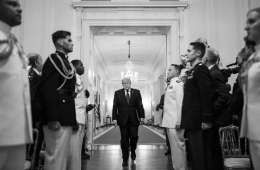
Israeli Prime Minister Benjamin Netanyahu is giving a speech at an event in Jerusalem on the 21st (local time). Photo by Reuters Yonhap News
View original imageOn June 22 (local time), Israeli media outlet Channel 12, citing a senior Israeli official, reported that Prime Minister Netanyahu is virtually in a "state of panic" over the initiative. He believes the new mechanism could restrict Israel's freedom of military action and weaken its influence within the existing framework for addressing the Lebanon issue.
The deconfliction mechanism is a newly established consultative body that involves the United States, Iran, Lebanon, Qatar, and Pakistan. According to Channel 12, this mechanism is expected to replace the existing framework—which included Israel, Lebanon, the U.S., France, and the United Nations—launched under the Biden administration in 2024 through U.S. mediation.
While the previous framework focused on coordinating the collection and removal of Hezbollah weapons between Israel and Lebanon, the new mechanism is expected to prioritize preventing accidental clashes between the Israel Defense Forces (IDF) and Hezbollah, a militant group backed by Iran, from escalating into a broader conflict.
Prime Minister Netanyahu, who has repeatedly emphasized the right to take military action against Hezbollah and the necessity of maintaining an Israeli presence in southern Lebanon, subsequently launched a diplomatic campaign to secure Israel’s interests, according to Channel 12. To this end, he has put forward Ron Dermer, former Minister of Strategic Affairs, as the main point of contact for negotiations with the U.S. It is reportedly believed that Dermer is more suitable for this role than any other Israeli official, including the current Israeli Ambassador to the United States, Michael Herzog.
In fact, senior U.S. officials are said to have held multiple phone calls with Dermer in Switzerland during the negotiations, sharing updates on the progress—including discussions related to Lebanon. Channel 12 also reported that U.S. President Donald Trump's warning, posted on his social media platform Truth Social the previous day—stating that the U.S. would take military action if Iran failed to control Hezbollah—was made at Dermer’s request.
Hot Picks Today
 "Loans? We Pay All Cash": 60% of Buyers Show Massive Financial Power in Japan's Penthouse Market
- SK Hynix Hits 3 Million Won but Turns Lower on Profit-Taking
- "Actually, I'm Married" 17 Weeks Pregnant Bride-to-Be Faces Shocking Confession... "Concealed Singlehood" Shakes Japanese Society
- New Mayor Elected by 262 Votes Found Dead... Conspiracy Theories Spread as Japan in Shock
- "I Wouldn't Eat That Even If Given"... Ridicule Over 'Cake on Rice' Draws Criticism for 30 Years of Devotion
President Trump's remarks created a significant stir during the high-level U.S.-Iran talks in Switzerland. Iran's Tasnim News Agency reported that the Iranian delegation strongly protested after President Trump directly pressured Iran over the Hezbollah issue. While some raised the possibility that the negotiations could collapse, the Iranian delegation did not leave the meeting room, and the high-level talks were ultimately concluded as scheduled.
© The Asia Business Daily(www.asiae.co.kr). All rights reserved.