Former Fed Chairman Greenspan Dies: The Light and Shadow of a Global Economic "Maestro" (Comprehensive)
Fed Chairman Who Contributed to U.S. Economic Boom
Also Blamed for Global Financial Crisis
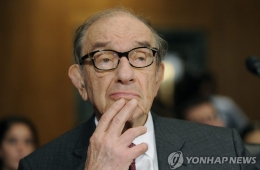
Alan Greenspan, former Chairman of the U.S. Federal Reserve (Fed), who wielded significant influence over the global financial markets at the end of the 20th century, passed away on June 22 (local time). He was 100 years old.
The Fed announced his passing in a statement, saying, "His contributions to monetary policy and economic theory have left a lasting legacy at the Federal Reserve, in the field of economics, and in American society." According to foreign media reports, he died at his home in Washington, D.C., due to complications from Parkinson's disease.

Alan Greenspan, former Chairman of the United States Federal Reserve Board (FRB)
View original imageGreenspan was nominated as Fed Chairman by former President Ronald Reagan in 1987 and led the U.S. central bank for nearly 19 years until 2006. He served under four administrations—Ronald Reagan, George H. W. Bush, Bill Clinton, and George W. Bush—across both the Republican and Democratic parties, establishing himself as one of the most powerful policymakers in the global economy.
His tenure was tested immediately after he took office. In October 1987, during "Black Monday," the Dow Jones Industrial Average plunged more than 22% in a single day. Greenspan calmed market fears by pledging to inject liquidity into the financial system. Subsequently, the United States enjoyed a prolonged economic boom in the 1990s, marked by low inflation, improved productivity, and falling unemployment, earning him the nickname "the Maestro."
Greenspan's influence extended beyond monetary policy. His remarks could shake global stock and bond markets as well as the flow of the U.S. dollar. He was well known for using deliberately ambiguous language during testimonies and speeches before Congress, believing that overly clear signals could unnecessarily provoke the markets. The so-called "briefcase indicator"—speculation over the thickness of the briefcase he carried into meetings—became a widely discussed hint of potential policy changes.
Born in Manhattan, New York, Greenspan displayed exceptional talent in mathematics as a child. He once attended the Juilliard School to study clarinet and saxophone, and during his teenage years, he performed with a touring jazz band.
He later studied economics at New York University and built his reputation as an economic consultant on Wall Street. After entering Washington politics as an economic adviser to the Republican Party, he served as Chairman of the Council of Economic Advisers under the Gerald Ford administration before being appointed to lead the Federal Reserve.

Alan Greenspan, former Chairman of the U.S. Federal Reserve (Fed), is taking an oath before testifying at the Financial Crisis Inquiry Commission under the U.S. Congress.
View original imageHowever, his legacy underwent a dramatic reassessment following the financial crisis. The Financial Times reported that just two years after Greenspan stepped down from the Fed in 2006, the United States was plunged into a massive financial crisis, prompting criticism that his monetary policy and regulatory philosophy had contributed to the worst boom-and-bust cycle in modern financial history.
Critics argue that the Fed kept interest rates excessively low for too long in the early 2000s and ignored the need for strong oversight of the financial system. Greenspan himself admitted before a congressional hearing after the collapse of Lehman Brothers that there was a "flaw" in his previously held free-market philosophy.
In particular, under his leadership, the Fed lowered the federal funds rate to 1% in the early 2000s after the dot-com bubble burst and the 9/11 terrorist attacks. While these actions were considered necessary to prevent deflation at the time, critics later argued that the prolonged period of low interest rates fueled an overheated housing market and credit expansion. Additionally, the Fed's lax supervision of derivatives and the mortgage market has been blamed for allowing financial institutions to take excessive risks unchecked.
Hot Picks Today
 "'Samsung Electronics Preferred Shares' Bought on Margin, 130 Million Won in Dividends Alone... 2 Billion Won Windfall for Teacher Couple Born in 1993"
- [Exclusive] Prostitution Near Elementary Schools for 18 Years... Police Seize Even the Beds
- Their Life Savings of 1.5 Billion Won Nearly Lost in an Instant... Police Prevent Voice Phishing Scam Targeting Elderly Couple in Their 80s
- 254 Dead but "Index Case Still Unknown" as Ebola Outbreak Reaches Record Severity
- Fully Shielded with Hat and Mask: Chinese Woman Develops Rash While Trying to Avoid UV Rays
He is survived by his wife, Andrea Mitchell, a veteran journalist at NBC. In a statement, Mitchell remembered him as "a giant who shaped the American economy for decades under presidents from both parties" and "a man who was honest enough to admit his own mistakes."
© The Asia Business Daily(www.asiae.co.kr). All rights reserved.