JD Vance: "Iran Agrees to IAEA Inspectors' Return... Activities to Resume This Week"
Ensuring the Strait of Hormuz Remains Open
Establishing Conflict Prevention Mechanisms for Lebanon
Vance Denies Reports of Iranian Walkout from Negotiations
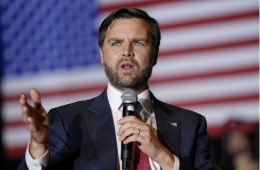
JD Vance, U.S. Vice President, announced on June 22 (local time) that the United States and Iran have agreed to resume the activities of the International Atomic Energy Agency (IAEA) inspection team in Iran.
Vice President Vance held a press conference at the Bürgenstock Resort in Lucerne, Switzerland, after concluding the first follow-up negotiations following the signing of a memorandum of understanding (MOU) to end hostilities with Iran. He stated, "Iran has agreed to invite the IAEA inspection team back into the country."

As the chief representative of the U.S. delegation, Vice President Vance emphasized, "This is a significant event for the American people and represents the first step toward either permanently denuclearizing or permanently ending Iran's nuclear weapons program."
Vice President Vance explained that the resumption of IAEA inspection activities is scheduled to take place within this week and that it could begin as early as today.
Vice President Vance stated that, with Iran accepting IAEA inspections, technical negotiations to implement the end-of-hostilities MOU will continue in Switzerland over the coming weeks.
He clarified that these negotiations are related to Article 8 of the MOU. Article 8 stipulates that "Iran reaffirms that it will not acquire or develop nuclear weapons," and provides that Iran's stockpile of enriched uranium will be handled "according to mutually agreed mechanisms," with "at minimum, dilution taking place on-site under IAEA supervision."
Vice President Vance also stated that a mechanism has been established with Iran to keep the Strait of Hormuz open, and that "conflict prevention mechanisms" have also been set up for the region, including Lebanon.
He explained that, regarding the issue of passage through the Strait of Hormuz and potential armed clashes between the Iran-backed militant group Hezbollah and Israel or groups in Lebanon, a framework has been established for the parties in conflict to communicate directly.
Vice President Vance described the clashes between Israel and Hezbollah as a "chicken or egg" issue. He gave the example, "If lower-ranking Hezbollah members launch drones without approval from their leadership, Israel must respond."
He noted that, even in situations where Israel, Lebanon, and Hezbollah each invoke the right to self-defense and conflict could erupt, a dialogue framework has been set up to prevent the situation from spiraling out of control, and that this mechanism has already begun to operate.
Vice President Vance introduced that, in accordance with the MOU, even if Iran's overseas frozen assets are released, Jared Kushner, President Donald Trump's eldest son-in-law, has devised a solution with Qatar to ensure that these funds are not used to finance terrorism.
He said, "If Iranian assets are released, the process will be subject to approval by both the United States and Qatar," adding, "The money will be used to purchase American soybeans, corn, and wheat for the Iranian people."
Vice President Vance described this as "a very fine and quintessentially Trump-style deal," emphasizing that "it is good for the American people and good for the Iranian people."
He denied reports that the Iranian delegation had walked out of the negotiations in protest of President Trump's 'threat of attack.'
Hot Picks Today
 "'Samsung Electronics Preferred Shares' Bought on Margin, 130 Million Won in Dividends Alone... 2 Billion Won Windfall for Teacher Couple Born in 1993"
- [Exclusive] Prostitution Near Elementary Schools for 18 Years... Police Seize Even the Beds
- Their Life Savings of 1.5 Billion Won Nearly Lost in an Instant... Police Prevent Voice Phishing Scam Targeting Elderly Couple in Their 80s
- 254 Dead but "Index Case Still Unknown" as Ebola Outbreak Reaches Record Severity
- Fully Shielded with Hat and Mask: Chinese Woman Develops Rash While Trying to Avoid UV Rays
Vice President Vance stated, "Iran did not leave the negotiating table," and added, "Their technical team is still here at this very moment, working with our technical team."
© The Asia Business Daily(www.asiae.co.kr). All rights reserved.