To Prevent a Second JTBC Crisis: "Cable TV Needs Policy Support and an Exit Strategy"
SO Broadcasting Business in the Red for Four Consecutive Years
"Non-Broadcast Revenues Are Offsetting Losses"
Broadcast Subscription Fee Revenue Could Drop by Over 220 Billion Won by 2030
"Timing Is Critical... Government Must Respond with Measures Like Managed Withdrawal"
Concerns have been raised that if there is no policy support or exit strategy for cable TV, a second crisis similar to the JTBC incident could occur. As cable TV system operators (SOs) have recorded operating losses for four consecutive years, there are projections that, should this trend continue, broadcasting subscription fee revenues could decrease by more than 220 billion won by 2030.

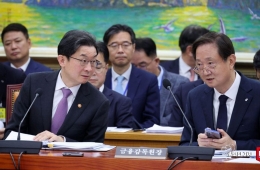
On the afternoon of the 22nd, panelists are discussing at the seminar titled 'Establishing Paid Broadcasting Policy in Response to Structural Changes in Broadcast Media' held at the Korea Press Center. Photo by Gyojo Noh
View original imageJongkwan Lee, Senior Specialist at SEJONG Law LLC, stated at the seminar titled "Establishing Measures to Redefine Pay-TV Policies in Response to Structural Changes in Broadcast Media," held at the Korea Press Center on the afternoon of the 22nd, "If we miss the window for a short-term response, a crisis similar to the JTBC incident could happen in the cable TV sector. Policies are needed in the short term to reduce the cost burden."
Specifically, he suggested providing production cost support for local channel operations, having government and local authorities place advertisements on regional channels, and ensuring the actual implementation of support measures for small and medium-sized SOs as stipulated in the Broadcasting Act. In addition, he emphasized the need to improve the method of calculating content fees, adjust the collection rate for the Broadcasting and Communications Development Fund, and, in the mid-to-long term, ease regulations on terms and conditions as well as on pricing and channel operations.
For SOs whose business sustainability is threatened by declining subscribers and deteriorating profitability, experts proposed developing an exit strategy and introducing a "managed withdrawal system." Changhee Noh, Director of the Digital Industry Policy Institute, commented, "If market difficulties persist, the responsibility will inevitably fall on the government," adding, "It is necessary to proactively establish a comprehensive response system that includes guaranteeing service continuity, protecting users, maintaining regional characteristics, and safeguarding the broadcasting ecosystem."
The SO broadcasting business has recorded significant operating losses for four consecutive years. According to an analysis by Professor Jeong Hoon of Cheongju University, which applied accounting separation to the SO broadcasting business, the operating margin was -6.65% in 2022, -10.78% in 2023, -10.94% in 2024, and -7.04% in 2025, resulting in four consecutive years of losses. In contrast, the Broadcasting, Media, and Communications Commission’s publication on the financial status of broadcasters showed a surplus of 0.9% to 7.3% during the same period, due to the inclusion of non-broadcast business revenues, creating a discrepancy.
The gap between the reported profit/loss and the actual profit/loss of the broadcasting business reached 9 to 15 percentage points. As the proportion of non-broadcast revenue expanded from 35.4% to 40.1%, it began to offset the decline in broadcast revenue. After accounting separation, operating losses in the broadcasting business were calculated at 116.4 billion won in 2022, 181.6 billion won in 2023, 179.1 billion won in 2024, and 112.3 billion won in 2025.
Professor Jeong emphasized, "Profits from non-broadcast businesses such as high-speed internet are masking the deficits in the broadcasting business. The reduction in losses last year was not due to revenue recovery, but rather to cost-cutting in sales and administration. As long as revenue continues to shrink, structural turnaround to profitability is difficult." He projected that SO broadcasting subscription fee revenue will decrease from 571.9 billion won in 2024 to between 348.5 billion and 424 billion won in 2030. If the current structure is maintained, it is estimated that the subscription fee funding could decline by more than 220 billion won by 2030.
Hot Picks Today
![[Exclusive] "Forecasts of Over 10 Billion, but Only 100 Million Earned"... 95% Followed This Pattern: Why Are KOSDAQ Special Exception IPOs Inflated? [KOSDAQ Inflated IPOs]①](https://cwcontent.asiae.co.kr/asiaresize/93/2026100609060151026_1791245160.jpg) [Exclusive] "Forecasts of Over 10 Billion, but Only 100 Million Earned"... 95% Followed This Pattern: Why Are KOSDAQ Special Exception IPOs Inflated? [KOSDAQ Inflated IPOs]①
[Exclusive] "Forecasts of Over 10 Billion, but Only 100 Million Earned"... 95% Followed This Pattern: Why Are KOSDAQ Special Exception IPOs Inflated? [KOSDAQ Inflated IPOs]①
- "How Well Is It Selling? Samsung and SK Selectively Clear Space for HBM"
- "My Debt Is 73 Million Won"... Sharing Every Repayment Led to an Unexpected Turn
- "Drinking This in the Morning Is Like Drinking Alcohol"..."Doctors Warn: Never Consume It"
- Is 'KOGUMA' Coming Too?... "Japan in Serious Trouble" - Archipelago on High Alert Ahead of Holidays
During the subsequent discussion, experts also voiced strong concerns that the pay-TV industry is "on the edge" and urged the government to respond quickly. Doosik Kim, Professor at Dongguk University, said, "The demise of the entire pay-TV sector is not a matter of possibility but of time," adding, "I expect that with pay-TV policy being transferred to the Broadcasting, Media, and Communications Commission, we will see a different approach than in the past." Professor Sungmin Lee of Korea National Open University remarked, "We should determine which is more beneficial—levying the Broadcasting and Communications Development Fund or injecting public subsidies."
© The Asia Business Daily. All rights reserved. Unauthorized AI training and use prohibited.