Kim Junggwan: "Building an 'AI Shipbuilding Supply Chain' in Regional Industrial Complexes as a Substantial Foundation for Regional Growth"
Ministry of Trade, Industry and Energy Hosts Joint Mini Alliance Meeting for Daebul, Myeongji Noksan, and Gunsan Industrial Complexes
M.AX Expands from Individual Complexes to the Entire Shipbuilding Supply Chain
"Regional Industrial Complex
The government has officially begun efforts to foster regional industrial complexes as innovative shipbuilding supply chain clusters, driving regional growth under the “5 Core Regions and 3 Specialized Zones” strategy.
On June 22, the Ministry of Trade, Industry and Energy announced that it had hosted a joint mini alliance meeting for the three industrial complexes specializing in shipbuilding—Daebul, Myeongji Noksan, and Gunsan—at Hotel Hyundai in Mokpo. During the meeting, participants discussed strategies for promoting Manufacturing Artificial Intelligence Transformation (M.AX) in the shipbuilding industry and plans for inter-complex linkage.

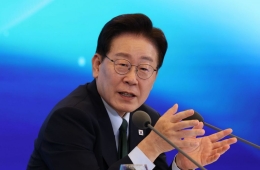
Minister of Trade, Industry and Energy Kim Jungkwan (first from the right) is presiding over the 'Daebul, Myeongji Noksan, and Gunsan Industrial Complex Mini Alliance Meeting' in Mokpo on the 22nd, discussing shipbuilding M.AX promotion strategies and plans for inter-complex linkage. Ministry of Trade, Industry and Energy
View original imageThe shipbuilding industry is a representative supply chain sector, where major shipbuilders, small and medium-sized shipyards, component manufacturers, and partner companies all operate in tandem. It is seen as a key industry capable of supporting the 5 Core Regions and 3 Specialized Zones regional growth strategy. In particular, the three industrial complexes participating in this meeting each play a vital role within the shipbuilding supply chain and serve as a model for synergy created through cooperation among the core regions and specialized zones.
Daebul Industrial Complex is a major domestic shipbuilding and marine cluster, home to large shipyards and supporting small and medium-sized enterprises. Gunsan Industrial Complex is concentrated with marine mobility manufacturers specializing in small and medium-sized vessels. Myeongji Noksan Industrial Complex hosts approximately 60% of domestic shipbuilding equipment companies, making it effectively the largest shipbuilding equipment cluster in the country.
An official from the Ministry of Trade, Industry and Energy stated, “This meeting is significant in that it expands the M.AX initiative for industrial complexes—previously pursued at the individual complex level—to the entire shipbuilding supply chain. There has been a growing recognition in the field that, in order to accelerate the spread of industrial complex AX, it is necessary to connect the same industries across the boundaries of different complexes and regions.”
Accordingly, through this meeting, which reflected on-the-ground feedback, the ministry discussed concrete cooperation measures to link the strengths of the core industrial complexes for large shipyards, small and medium-sized shipyards, and shipbuilding equipment, and to spread the shipbuilding M.AX model throughout the entire supply chain. Moreover, they explored ways for the AX model at industrial complexes—based on an ecosystem that integrates academia, industry, and research institutes—to enhance productivity and drive company growth in regional manufacturing, serving as a practical implementation tool for the 5 Core Regions and 3 Specialized Zones strategy.
The mini alliance is not about each complex pursuing independent tasks. Instead, participants agreed on the need to jointly establish a comprehensive AI utilization system that collects data, connects knowledge, and supports end-to-end decision-making in design, production, and quality through artificial intelligence (AI).
During the meeting, each complex presented its own plans for linking shipbuilding industry M.AX initiatives. Daebul proposed building common infrastructure in the shipbuilding sector so that manufacturing data and AI models can be utilized at worksites. Myeongji Noksan presented plans for developing and disseminating a shipbuilding-specialized AI search engine to support design, manufacturing, and management. Gunsan announced plans to develop AI models for design simulation and manufacturing quality control. Attendees agreed that the performance and proliferation of AI models ultimately depend on securing high-quality data, and emphasized the need for infrastructure to support the entire process of collecting, transmitting, and processing shipbuilding data. They also called for active government support in this area.
Hot Picks Today
 Chey Tae-won's One Remark Sends Stocks Soaring to 'Limit-Up'... This Stock Jumps Despite SK hynix's 3% Drop
- Cho Kuk: "90 Searches of My Family ... 'Zero' Searches in Han Donghoon's Daughter's 'Fake Credentials' Probe"
- "Now We're in Our 30s and 40s, and My Husband's the Only One Still Going Strong?" ... Women Tire First While Shopping: What's Happening in Japan?
- "Apparently, you can easily make 3.3 million won a month in Korea"... The "easy-money gig" making waves among international students
- "'100% Cat Fur' - It Seemed Unbelievable, but It Was Real... Chinese Shopping Mall Rocked by Shocking Revelation"
Minister of Trade, Industry and Energy Kim Jungkwan stated, “The shipbuilding industry is a quintessential supply chain sector, where countless companies and processes—from large, medium, and small shipyards to component suppliers—operate in concert, and it is a core industry supporting regional economies. By having these three hub complexes jointly create and utilize data and models on the ground to build an ‘AI-powered shipbuilding supply chain,’ we will not only enhance the competitiveness of K-Shipbuilding but also establish a genuine foundation for regional growth through the 5 Core Regions and 3 Specialized Zones strategy.”
© The Asia Business Daily. All rights reserved. Unauthorized AI training and use prohibited.