Strengthened Property and Capital Gains Taxes Loom Amid Semiconductor-Driven Housing Boom... Will the Official Assessment Ratio Be Raised?
Following President Lee Jaemyung, Kim Yongbeom, policy chief at the Blue House, has also signaled a sweeping overhaul of the real estate tax system, stating that "normalization of taxation by adjusting property holding tax and capital gains tax is necessary." As housing prices have surged amid a liquidity boom driven by the semiconductor sector, there is growing speculation inside and outside the government that the tax reform plan to be announced next month will include measures to increase both the property holding tax and the capital gains tax. The government's current priority for strengthening real estate taxes is expected to focus on scenarios such as raising the fair market value ratio for the comprehensive real estate tax, which would increase holding taxes for owners of multiple homes and high-priced single homes, and reducing the long-term holding special deduction for non-resident single-homeowners.

If an increase in the property holding tax materializes in next month's tax law revision, the most likely option is to raise the fair market value ratio, thereby increasing the tax burden on owners of multiple homes or high-priced single homes. The fair market value ratio is the percentage applied to the publicly announced price when calculating the tax base for the comprehensive real estate tax, and the government can adjust it simply by revising the enforcement decree. If the current ratio of 60% is returned to around 80%, the tax base increases even for the same official price, immediately raising the tax burden on high-priced and multiple-home owners. The previous Moon Jae-in administration raised this ratio from 80% to 95%, but the Yoon Suk-yeol administration lowered and maintained it at 60%. If this review is implemented, it would effectively reverse previous deregulation measures.
Other options under consideration include expanding the scope of the comprehensive real estate tax surcharge to those with two homes in regulated areas, and establishing or raising the threshold for ultra high-priced single homes. However, both expanding the surcharge target and raising tax rates require legislative amendments, so immediate implementation is unlikely and will depend on political and legislative circumstances. The Moon administration previously applied the same punitive tax rate to owners of two homes in regulated areas as to those with three homes. The Yoon Suk-yeol administration removed this surcharge for two-home owners and lowered tax rates for multiple-home owners. If the current administration reinstates the surcharge, it would send a strong signal to curb demand for multiple homes in regulated areas. A market insider commented, "This approach sends a clear message about protecting genuine homebuyers and strengthening taxation on asset holders. However, by broadly raising property holding taxes, it could also increase concerns over market stagnation and the shifting of tax burdens, thus acting as a burden on the market."
On the capital gains tax front, reducing the long-term holding special deduction for non-resident single-homeowners appears to be a key variable. Currently, as long as the owner meets the two-year residency requirement and holds the property for 10 years, up to 40% of the capital gains can be deducted. The government is moving to reduce tax benefits for properties that have been held for a long time without being occupied, and such measures are already under discussion.

Experts have expressed concerns about the possibility of raising both the property holding tax and the capital gains tax at the same time. The basic principle of the market is that if the holding tax is increased to stabilize the market, the capital gains tax should be lowered to provide an exit for multiple-homeowners to sell their properties. Punitive taxation inevitably leads to a lock-up in available listings. Under the previous two progressive administrations, the combination of increased property holding and capital gains taxes created a "tax trap," forcing homeowners into a dilemma: facing high taxes whether they sold or kept their homes. This led to a shortage of available listings and resulted in surging home prices being passed on directly to rental prices, ultimately rendering the policy ineffective and fueling political resistance. A professor specializing in tax policy noted, "If the property holding tax is raised without sufficient supply measures, it will only increase the tax burden and provoke dissatisfaction among real demand buyers, making it difficult to expect significant stabilization in home prices."
On June 20, Kim Yongbeom stated on Facebook, "Real estate taxation needs to be normalized. It is necessary and right to rationally adjust both the property holding tax and the capital gains tax." Previously, in his first-anniversary press conference on June 8, President Lee Jaemyung had emphasized aligning the property holding tax burden with advanced country standards, effectively formalizing a property holding tax hike within the year. Kim further stated, "This time, it is more likely that those with cash will move, rather than those taking on debt. If people are convinced that there is profit to be made even after paying taxes, then regulatory measures may not be enough." This has been interpreted as hinting at the possibility of expanding regulated areas to prevent the massive funds generated by the semiconductor boom from flowing into the real estate market.
Hot Picks Today
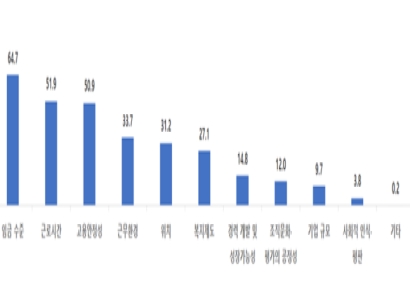 "Please Pay Me at Least 3 Million Won a Month": More Than Half of Young People Today Prioritize "Working Conditions" Over Company Size
- Selling Like Crazy Every Year... 30-Year-Old Hetbahn Takes on a New Challenge: Tastes Better Than "Mom's Home Cooking" [On-Site Report]
- He Left It in the Car and Forgot... "I Nearly Collapsed with Joy": Man Wins $1.48 Million Lottery
- Ran 18 km With 9-Year-Old Tied to Him at the Waist... "Man Banned From Competing for 3 Years"
- Beachgoer Finds 'Plastic' That Turns Out to Be Perfume Ingredient Worth More Than Twice as Much as Gold
Following the confirmation of performance bonuses at Samsung Electronics and SK hynix, the Dongtan housing market has surged, with home prices rising by more than 500 million won in the past month alone. According to Korea Real Estate Board, apartment sale prices in Dongtan-gu, Hwaseong, during the third week of June rose by 2.22% compared to the previous week, marking the highest increase among all cities and districts nationwide. Over the past two weeks, prices have climbed more than 4%, and the cumulative increase for this year stands at 9.57%.
© The Asia Business Daily. All rights reserved. Unauthorized AI training and use prohibited.