[Seoul, Now] The Dark Side of Moatown That Seoul’s Mayor and District Chiefs Must Know
![[Seoul, Now] The Dark Side of Moatown That Seoul’s Mayor and District Chiefs Must Know](http://www.asiae.co.kr/news/img_view.htm?img=2026062208060117836_1782083161.jpg)
Seoul City's 'Moatown' project was launched with the goal of rapidly redeveloping old low-rise residential areas and increasing housing supply within the city center. The policy holds significance as it streamlines the complex redevelopment process and accelerates the pace of such projects. Since its inception in 2022, Moatown has become one of Mayor Oh Se-hoon's flagship housing supply policies and is spreading quickly.
However, the reality on the ground is quite different from the policy's original intent. A closer look at recent developments in several residential areas in northern Seoul raises questions as to whether this is truly a proper urban renewal project.
The storyline that has unfolded over the past few years in districts such as Jungnang-gu, Seongbuk-gu, and Gangbuk-gu is roughly as follows. In areas where there has been no movement towards redevelopment, women in their 40s to 60s, hired as 'OS agents' (promoters and consent form collectors employed by certain companies), appear. They begin collecting consent forms from residents. After building relationships with elderly residents and obtaining their consent, they secure control over the subsequent project. A cooperative is formed under the direction of the company. With the help of the OS agents, the cooperative selects a president and executive members.
To some single-family and multi-family homeowners, they promise, "If the area is designated as Moatown, you will be able to receive two to three apartment units." Residents are led to dream that they can acquire two to three apartment units either without any contribution or with minimal contribution.
The bigger problem comes after that. The company that engaged the OS agents and participated in the consent-gathering process becomes a co-developer. A structure emerges in which this company controls the entire local redevelopment project. Even the selection of the construction contractor can fall under the influence of this particular company. The cooperative can be reduced to a mere formality. Sometimes, the cooperative president and executive members neither fully understand the complex project structure or contract details nor have the ability to review them properly.
The project proceeds with outside business operators, not residents, at the center, and conflict inevitably follows. The company, already deeply rooted in the area (having hired the OS agents), wields power at every critical juncture through "written consent forms."
When conflicts arise, the administrative response is passive. At the designation stage, Seoul City and district offices actively promote that they have increased housing supply. However, when disputes actually occur, they avoid involvement, calling it "a matter between private parties." Even when complaints pour in, substantial mediation or oversight is rarely seen. Among residents, there is growing distrust that the authorities might even be siding with certain business operators.
It is necessary to assess whether the confusion and conflict in the field are merely transitional phenomena or stem from structural flaws in the system's design. In particular, the co-developer system is at the heart of the current controversy. Depending on the intentions of the legally empowered developer, residents and working-class people could be taken advantage of.
Hot Picks Today
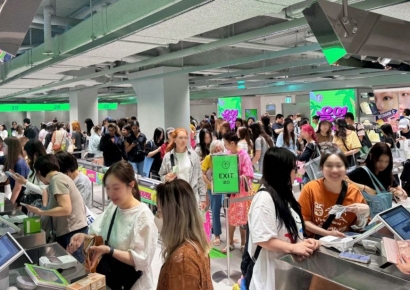 "She Comes Every Three Months to Stock Up"... Surge of Foreign Visitors Entering Korea for Olive Young Sale
- "'Samsung Electronics Preferred Shares' Bought on Margin, 130 Million Won in Dividends Alone... 2 Billion Won Windfall for Teacher Couple Born in 1993"
- Man Takes Off Shoes and Stretches Out Across Three Priority Seats for Pregnant Women; Passenger Criticizes, Calling It "Dirty"
- Chinese Customers Disappointed by Fake McDonald's Father's Day Set Menu Poster Promising Free Meals for Saying "I Am Your Father"
- Foods That Make Your Face Look Worse, According to a Plastic Surgeon... What Ranked Above Ham and Ramen?
Even now, Seoul City must conduct a comprehensive on-site inspection and overhaul the system. The government cannot be free from responsibility either. Because the framework of the urban renewal system is based on law, this is not an issue that the National Assembly and central government can simply ignore. If problems revealed in the field are neglected, it could undermine not only policy credibility but also the overall effectiveness of future housing supply policies.
© The Asia Business Daily(www.asiae.co.kr). All rights reserved.