Already Expensive..."I Eat Two Eggs Every Morning—This Is Too Much": Early Heatwave Sparks Egg Price Fears
Egg Prices Up 39% and Chicken Up 19% Compared to Last June
Government Mobilizes All Options to Prevent Supply Disruptions from Weather Disasters
Amid rising prices for some agricultural, livestock, and fisheries products, concerns have emerged that the early onset of hot weather could further drive up inflation.

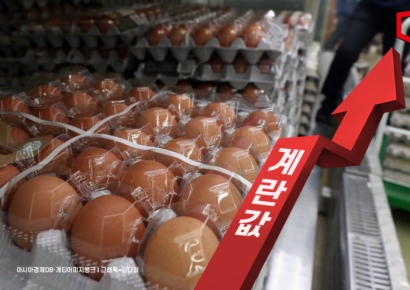
According to Dabom, the Livestock Product Distribution Information system operated by the Korea Institute for Animal Products Quality Evaluation, the nationwide average purchase price for a pack of 10 premium eggs this month is 5,222 won. This represents an increase of 38.6% compared to June 2025 (3,786 won), and a 16.7% rise from last month (4,476 won). Notably, this is the first time that the monthly average consumer price for a pack of 10 premium eggs has exceeded 5,000 won.
This month, the nationwide average consumer price for chicken (broilers) is 6,650 won per kilogram, up 19.4% from June 2025 (5,568 won). The price has continued its upward trend: around 5,900 won in February, 6,300 won in March, and 6,500 won in April and May, now surpassing the 6,600 won mark this month.
The primary cause cited for the rise in egg and chicken prices is a supply shortage. This resulted from the culling of laying hens due to the outbreak of highly pathogenic avian influenza (HPAI) last winter, as well as improvements in laying hen stocking density, both of which reduced supply. In addition, the earlier-than-usual onset of hot weather has rapidly increased demand for summer health foods, which has also contributed to price hikes.

According to the Korea Consumer Agency's "True Price" index, the average price for a single serving of samgyetang (ginseng chicken soup) in Seoul surpassed 18,000 won in August 2025, and averaged 18,154 won from January to May this year. In many major commercial districts across Seoul, samgyetang now costs more than 20,000 won. However, with abnormal weather conditions this summer, there are expectations that samgyetang prices will rise even further.
According to the Korea Agro-Fisheries & Food Trade Corporation (aT)'s KAMIS agricultural distribution information, the retail price of green onions this month is 2,827 won per kilogram, up 18.4% compared to June 2025. The nationwide average retail price for 100 grams of red leaf lettuce and green leaf lettuce, both key products in the restaurant industry, has returned to the 1,000 won range this month. Prices of watermelon and mackerel also surged during the same period by 8.9% and 26.5%, respectively.
There are growing concerns that so-called "heatflation"—a portmanteau of heat and inflation, referring to rising prices caused by higher temperatures—is becoming a reality, as rising temperatures are leading to reduced crop growth and increased livestock mortality, thereby pushing up prices. In mid-June, the average high temperature in Seoul typically ranges from 27 to 28 degrees Celsius. However, this year, temperatures have already exceeded 30 degrees during this period, indicating the onset of a heatwave.
Hot Picks Today
 Already Expensive..."I Eat Two Eggs Every Morning—This Is Too Much": Early Heatwave Sparks Egg Price Fears
- "Wow, This Is Addictive": Justin Bieber's Wife Raves About 'Ddungbaratte'... Foreign Tourists Flock to K-Convenience Stores [K-Holic]
- "Exorbitant Food Prices" Beer Costs 30,000 Won per Glass... Locals Outraged Over Record Price Gouging at the World Cup [Current Affairs Show]
- Foods That Make Your Face Less Attractive, According to a Plastic Surgeon... What Ranked Above Ham and Ramen?
- "Getting Your Hair Pulled and Kicked Is Routine... '9 Inmates Packed into 5 Pyeong' Cheongju Women's Prison, the Reality of Sweltering Heat [Reportage]"
The government has announced plans to mobilize all available resources to prevent additional supply disruptions caused by weather disasters such as heatwaves and heavy rain. The Ministry of Agriculture, Food and Rural Affairs is conducting weekly inspections and securing reserve stocks of key products under intensive supply management, while the Ministry of Oceans and Fisheries is expanding the supply of government-reserved seafood and strengthening support for fish farms to cope with high water temperatures.
© The Asia Business Daily(www.asiae.co.kr). All rights reserved.