Hundreds of Billions in Election Expenses Unrecovered by Election Commission... "3.5 Billion Won Now Irrecoverable"
86.5% of Funds Subject to Repayment Remain Uncollected
Nearly 3.6 Billion Won Lost Due to Expired Statute of Limitations
The Central Election Commission has failed to recover hundreds of billions of won in election expenses that were subject to repayment due to violations of election law for an extended period.
On June 21, Yonhap News reported, citing data submitted to Democratic Party lawmaker Chae Hyunil’s office by the Central Election Commission, that as of January 31 this year, 86 individuals had failed to pay back election expense reimbursements and deposits despite being ordered to do so.
The total amount left unpaid by these individuals was calculated at 23,661,150,000 won. While the original total amount ordered for repayment was 27,354,210,000 won, only around 3,690,000,000 won was actually recovered. This means that 86.5% of the amount subject to repayment remains outstanding.

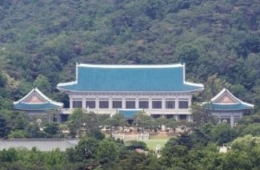
The Central Election Commission in Gwacheon-si, Gyeonggi-do. Photo by Yonhap News
View original imageThe system of election expense reimbursement allows the state to cover campaign costs for candidates who achieve a certain level of votes. If a candidate receives 10% or more of the vote, they are reimbursed for half of their expenses; if they receive 15% or more, they are fully reimbursed. However, if their election is later annulled due to violations of the Public Official Election Act, they are required to return both the deposit and the reimbursement.
There are 23 cases in which repayment orders were issued up to 2015 but remain unpaid, with the related amount reaching 11,290,810,000 won—nearly half of the total outstanding repayments. In the case of former Seoul Metropolitan Office of Education superintendent Kwak Nohyun, whose election was annulled in 2012, he was ordered to repay 3,537,490,000 won, but as of now, 3,143,010,000 won remains unpaid.
Additionally, under the National Finance Act, claims for the return of election expenses are subject to a five-year statute of limitations. Because the Election Commission failed to take appropriate legal action to extend this statute of limitations, 3,574,000,000 won has already become unrecoverable due to expiration.
The Commission explained, "After issuing repayment orders, we entrust collection to the tax office, but in cases where there are no seizable assets, recovery becomes difficult," adding, "Since 2019, we have filed lawsuits to extend the statute of limitations, and since then, only three cases totaling about 198,000,000 won have become time-barred."
Hot Picks Today
 Already Expensive..."I Eat Two Eggs Every Morning—This Is Too Much": Early Heatwave Sparks Egg Price Fears
- "Wow, This Is Addictive": Justin Bieber's Wife Raves About 'Ddungbaratte'... Foreign Tourists Flock to K-Convenience Stores [K-Holic]
- "Exorbitant Food Prices" Beer Costs 30,000 Won per Glass... Locals Outraged Over Record Price Gouging at the World Cup [Current Affairs Show]
- Foods That Make Your Face Less Attractive, According to a Plastic Surgeon... What Ranked Above Ham and Ramen?
- "Getting Your Hair Pulled and Kicked Is Routine... '9 Inmates Packed into 5 Pyeong' Cheongju Women's Prison, the Reality of Sweltering Heat [Reportage]"
Experts point out that responsibility for management and collection of repayment claims is unclear, as these duties are divided among several agencies, including the Election Commission and the National Tax Service. They highlight the structural limitations of the current system and call for improvements, such as clarifying the responsible agency and deadlines for collection by law, to make the process more effective.
© The Asia Business Daily(www.asiae.co.kr). All rights reserved.