Mayor-elect Park Gwanyul Holds Solo Protest in Front of Samsung Seocho Office: "Do Not Demand Sacrifice Only from Gwangju Citizens"
Park Gwanyul, Mayor-elect of Gwangju, Criticizes Yongin Semiconductor Water Supply Project
Controversy Over the 25.6km Pipeline Passing Through Gwangju
"Acceptable Solutions Needed," Says Park Gwanyul
Transition Committee to Promote 'Life Cycle Welfare Navigation'
Park Gwanyul, the Mayor-elect of Gwangju City, continued his one-person protest in front of the Samsung Seocho building following his demonstration at the Samsung Electronics headquarters, urging the government and corporations to establish concrete measures for coexistence regarding the integrated water supply project for the Yongin Semiconductor Industrial Complex.

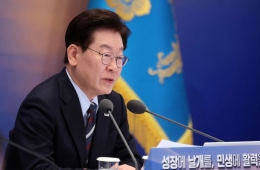
Park Gwanyul, the elected mayor of Gwangju, Gyeonggi Province, is holding a solo protest in front of the Samsung Seocho Building in Seocho-gu, Seoul on the 19th. Provided by Gwangju, Gyeonggi Province
View original imageOn June 19, in front of the Samsung Seocho building in Seocho-gu, Seoul, Park stated, "While I am willing to actively cooperate with national policies to strengthen the competitiveness of the semiconductor industry, I cannot agree to policies that demand only the sacrifice of Gwangju citizens."
This protest stemmed from concerns that there are insufficient measures for coexistence between the government and corporations, compared to the sacrifices and burdens Gwangju City must bear during the process of advancing the integrated water supply project for the Yongin Semiconductor Industrial Complex. Previously, on June 17, Park had also held a one-person protest with the same purpose in front of the Samsung Electronics headquarters.
In June of last year, regarding the integrated water supply project, Gwangju City officially requested a total of eight items from relevant authorities as fair compensation and measures for mutual development to address the additional sacrifices and inconveniences for Gwangju citizens.
The main requests included: ▲ creation of industrial complexes within Gwangju City, ▲ easing of regulations in the nature conservation zone, ▲ changes to pipeline routes and the use of alternative bypass roads for National Highways 43 and 45, ▲ inclusion of the Gyeonggang Line extension in the 5th National Rail Network Construction Plan, ▲ early completion and increased water supply for the 6th water supply system adjustment project in the lower Han River, ▲ establishment of an emergency linkage supply system for Gwangju City's local waterworks, ▲ priority use of local workers, equipment, materials, and companies in Gwangju City, and ▲ active reflection of residents' and landowners' opinions and transparent sharing of project progress.
However, the responses received from relevant authorities this year fell short of expectations. Samsung Electronics and SK hynix stated that it would be "difficult to accommodate" the request for the creation of industrial complexes, while the Ministry of Land, Infrastructure and Transport did not provide a separate response. The Ministry of Environment and K-water (Korea Water Resources Corporation) reportedly gave only basic replies, saying they would review or consider some items in the future.
Park remarked, "It is very regrettable that no substantive coexistence measures have been prepared, despite this being a national project premised on the sacrifices and inconveniences of Gwangju citizens," adding, "We cannot accept an attitude that seeks to push ahead with the project while effectively excluding Gwangju citizens."
He continued, "The construction of the approximately 25.6-kilometer pipeline section passing through Gwangju will be difficult to proceed smoothly unless coexistence measures that are acceptable to Gwangju citizens are established," and urged, "The government and corporations must present substantive coexistence measures through sincere consultations with Gwangju City."
Park also stated that he would continue to raise the issue until the government, relevant agencies, and corporations listen to the voices of Gwangju citizens and devise appropriate coexistence measures.

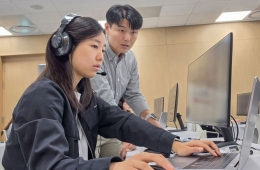
Park Gwanyeol, the president-elect's direct transition committee, is discussing ways for citizens to utilize idle educational facilities and school sports facilities on the 19th. Provided by Park Gwanyeol, president-elect's transition committee.
View original imageMayor-elect Park Gwanyul's Direct Transition Committee to Promote 'Life Cycle Welfare Navigation'
Meanwhile, on the same day, Mayor-elect Park's direct transition committee announced a plan to promote the "Life Cycle Welfare Navigation" project, a core pledge aimed at strengthening citizen-centered, customized welfare services.
The Life Cycle Welfare Navigation project is designed to systematically provide welfare information tailored to each stage of life—from birth to old age—in order to reduce cases where citizens miss out on benefits due to a lack of knowledge about welfare programs.
Instead of establishing a separate system, the transition committee plans to actively leverage the Ministry of Health and Welfare's "Welfare Membership (Personalized Benefit Guidance)" program to reduce budget burdens and improve administrative efficiency.
Through this initiative, the committee aims to enhance guidance on customized welfare services for each life stage—including birth, children, adolescents, young adults, middle-aged, and seniors—while also providing information on Gwangju City's own welfare initiatives and specialized local projects.
Furthermore, the committee will organize support programs for various life crises such as unemployment, illness, caregiving, and housing, making it easier for citizens to find the welfare services they need.
In addition, the committee plans to strengthen efforts to promote membership in the welfare program through local administrative welfare centers and related welfare agencies, expand outreach to information-vulnerable groups, increase the utilization rate of welfare services, and address blind spots in the welfare system.
Hot Picks Today
 "Please Pay Me at Least 3 Million Won a Month": More Than Half of Young People Today Prioritize "Working Conditions" Over Company Size
- Selling Like Crazy Every Year... 30-Year-Old Hetbahn Takes on a New Challenge: Tastes Better Than "Mom's Home Cooking" [On-Site Report]
- I Thought Only 'Old Guys' Ate It... Young People Are Hooked on This 'Unusual Food' at Risk of Disappearing? [Delicious Stories]
- "Hey, Lady, Teach Your Kids to Behave!" ... 300,000 Won in Cash and a Bodily Injury Claim Demanded Over Child's Door Ding
- Beachgoer Finds 'Plastic' That Turns Out to Be Perfume Ingredient Worth More Than Twice as Much as Gold
A committee representative stated, "Rather than building a new system, our focus is on actively utilizing the existing national welfare framework and linking it with Gwangju City's specialized projects so that citizens can easily access the information they need," adding, "We will establish a dense welfare system that enhances information accessibility and ensures that no citizen misses out on essential services."
© The Asia Business Daily. All rights reserved. Unauthorized AI training and use prohibited.