Park Kyuhwan: "Jeong Cheongrae Is the Number One Pro-Lee Figure in the Democratic Party" [So Jongseop's Current Affairs Show]
[Interview] Park Kyuhwan, Supreme Council Member of the Democratic Party of Korea, Known as a Pro-Jeong Figure
"Having Jeong Cheongrae Not Run, Creating a Situation Where the President Appoints the Party Leader, Is Abnormal"
"There Is a Move
■ Broadcast: The Asia Business Daily ‘So Jongseop’s Current Affairs Show’ (Monday to Friday, 4–5 p.m.)
■ Host: So Jongseop, Political Specialist ■ Director: Lee Miri, Producer
■ Guest: Park Kyuhwan, Supreme Council Member of the Democratic Party of Korea (June 18)
※ Please be sure to cite ‘So Jongseop’s Current Affairs Show’ when quoting from this article.
So Jongseop: Hello, everyone. This is So Jongseop’s Current Affairs Show. We are now connected by phone with Park Kyuhwan, Supreme Council Member of the Democratic Party of Korea. Council Member Park, hello?
Park Kyuhwan: Yes, nice to meet you. This is Park Kyuhwan, Supreme Council Member of the Democratic Party of Korea.
So Jongseop: Thank you for taking the time to join us.
Park Kyuhwan: Yes, thank you.

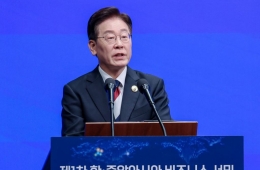
President Lee Jae-myung, returning home after the G7 summit and a tour of Europe, is greeting Jeong Cheong-rae, leader of the Democratic Party of Korea, who came to welcome him at Seongnam Seoul Airport on the 18th. Photo by Yonhap News
View original imageSo Jongseop: President Lee Jaemyung has returned to Korea. Jeong Cheongrae, party leader, also went to Seongnam Airport to welcome him. There was a report that he greeted with a 90-degree bow. When the president departed, only Prime Minister Kim Minseok went to see him off, while Leader Jeong did not, which drew much attention. What was your impression of the president’s return?
Park Kyuhwan: There was a lot of talk about Leader Jeong Cheongrae not attending the send-off event for the president’s overseas trip. Many articles were published about it. In fact, if you look at it plainly, it’s not a big deal. There’s no need for speculation or misunderstanding, but I think there was also some intentional media play. According to the Blue House, the explanation was straightforward. Due to the prolonged Middle East war and issues like the Election Commission’s poor management, the party and the Blue House agreed to minimize the number of people at the send-off, which is why Leader Jeong did not attend. People read too much into it. Today, the party leader went out to greet the president as he usually does, and it was a respectful occasion to thank the president for his efforts during the overseas trip.
So Jongseop: So you don’t see it as the president ‘passing over’ Leader Jeong or trying to support Prime Minister Kim Minseok?
Park Kyuhwan: Of course not. There is protocol for these events. In the past, when there were major pending issues or fierce political conflicts between parties, party leaders also refrained from attending send-off events. Referring to those precedents, Leader Jeong did not attend last time. Today, since the European tour was significant and the president was away for a relatively long time, it was only right to go out and greet him respectfully. Overanalyzing and politicizing this is unnecessary. Also, our president is not someone who would exclude or pick certain people based on these events. So those interpretations are just speculation; that’s what I want to say.
※ Click the video to watch the full content.
So Jongseop: Wasn’t all this speculation because Prime Minister Kim Minseok attended the send-off while the party leader did not?
Park Kyuhwan: In fact, it is unusual for the prime minister to attend the send-off. But as I heard later, he had an urgent report to deliver, so he went to the event. That’s understandable. Since the president was going to be away for an extended period, he probably needed to meet him in person to report and exchange words. That seems to have been the situation.
So Jongseop: After the local elections, President Lee Jaemyung said, “We lost where we should have won.” This sparked the so-called ‘responsibility debate’ within the ruling party. It’s hard to say definitively whether the party won or lost, and with this debate over responsibility, what are your thoughts?
The claim that ‘the Democratic Party lost’ does not reflect the facts
Park Kyuhwan: At the press conference, the president put it exactly this way: “We lost where we should have won.” He thought deeply about this, saying, “We must take this as a warning from the people. It is the public’s warning to the government. We must be more humble and modest.” In fact, this is the same perception as the Democratic Party’s leadership. Compared to the local elections four years ago, we objectively won based on the numbers. In the competition between the People Power Party and the Democratic Party, the Democratic Party clearly won. However, as you mentioned, we lost where we should have won—Seoul, for example. That was especially painful, and it was more than just disappointing; it was truly painful. We have been reflecting on why we lost and what we did wrong.
So, although we won, we could not be fully satisfied with the results. The people gave the Lee Jaemyung administration a victory, but at the same time, they also issued a warning. The warning was simply that we should have done better and that we need to do better in the future. I think the public has different expectations for conservative governments and for progressive, democratic governments. They expect much more from us and hold us to higher standards. We are taking that warning deeply to heart and are determined to work even harder and be even more devoted going forward.
Therefore, saying that the Democratic Party lost or suffered a crushing defeat is not accurate. To base the responsibility debate on this premise could lead to internal division or disarray within our party, which would make it impossible to look to the future. We need to look clearly at what we have achieved and what we have failed to do, what pains us and what we regret, and on that basis, discuss together how to move forward.
Responsibility debates are not desirable; blaming individuals is unreasonable
So Jongseop: In short, you’re saying the responsibility debate is not desirable.
Park Kyuhwan: That’s right. It’s unreasonable to single out a particular person and assign blame. Claims like “step down because we were crushed” are based on an incorrect premise. What matters is reflecting on the areas the president pointed out—where we lost and the public’s warning. We should discuss what policies and attitudes we need to adopt to meet the people’s expectations going forward. Taking responsibility as the ruling party means exactly that.
So Jongseop: Recently, Assemblywoman Lee Eonju mentioned that Leader Jeong Cheongrae’s comment that “governments are short-lived” touched a nerve and that the party convention dynamics have shifted to Jeong Cheongrae versus President Lee Jaemyung. What do you think?
Jeong Cheongrae is the number one pro-Lee figure; everyone in the party is pro-Lee
Park Kyuhwan: I think such a narrative reflects the wishes of those who want to create that kind of dynamic. The comment that “governments are short-lived” actually means that President Lee Jaemyung has said there is no time to waste, and the next four years must be spent working as if they were eight years. He also said, especially, that everyone should work as if today is the last day of the term. Since there isn’t much time, this is not the moment to fight over who is right or wrong but to work—there are urgent tasks piling up. For example, by October 2, the Public Prosecutors’ Office and the Serious Crimes Investigation Agency must be established. But it’s already mid-June, and as you know, the regular National Assembly session starts in September. So, while the convention will proceed as planned, the National Assembly must keep working, and that is our duty and our obligation to the people who entrusted us with power.
So in that sense, the meaning was that four years is not a lot, time is short, and we must work. Interpreting these comments differently and using that interpretation as a basis for attacks or to claim a shift in dynamics is not factual or appropriate. There is no one in the Democratic Party who is not pro-Lee. If you insist on ranking, Jeong Cheongrae would be number one. All the leadership is pro-Lee. Framing it otherwise is not something that can exist within the ruling party.
So Jongseop: Some have said that Jeong Cheongrae should not run for party leader. Assemblymen Park Ji-won, Kim Young-jin, Shin Jeong-hoon, and Jin Seong-joon and others have made similar comments. However, most interpret Jeong Cheongrae as preparing to run. What is your view?
There is a movement among party members calling for Jeong Cheongrae to seek re-election
Park Kyuhwan: Honestly, telling someone not to run is not very pleasant. Any Democratic Party member has the right to vote and to run for office. Why should anyone be told not to run? Wouldn’t it be more honest to say whom you want to run? I think some people do have preferences over who should run. For healthy debate, it’s better to openly say who you support.
Especially regarding Jeong Cheongrae, there is also a significant movement among party members who believe he has achieved reform initiatives like abolishing the prosecution office, the three broadcasting laws, dedicated rebellion trial panels, correction of distortion lawsuits, and other judicial reforms, and has backed President Lee Jaemyung’s national agenda. They think he should seek re-election. It would be better if many people ran for party leader, shared their plans and visions, and competed openly. Excluding anyone would be inappropriate.
So Jongseop: You’re saying it’s premature to comment on whether Jeong Cheongrae will run or not at this point.
Park Kyuhwan: I do have my own thoughts. From an internal party perspective, Jeong Cheongrae has contributed greatly to realizing party member sovereignty and the people’s sovereignty under the Lee Jaemyung administration. He has played a significant role in establishing the Democratic Party as a party rooted in member sovereignty.
So Jongseop: It’s generally believed that President Lee Jaemyung wants Prime Minister Kim Minseok to become the next party leader. In this situation, if Jeong Cheongrae runs, it might be seen as opposing the president. Wouldn’t that be burdensome?
It is not normal for the president to effectively appoint the party leader by Jeong Cheongrae not running
Park Kyuhwan: Well, from a commentator’s viewpoint, the opposite scenario is also possible. If President Lee wants Prime Minister Kim Minseok and, therefore, Jeong Cheongrae does not run, it would be as if the president is appointing the party leader. That is not normal. The president might have someone in mind as party leader. Prime Minister Kim Minseok is certainly qualified to serve as party leader, and so is Jeong Cheongrae. Prime Minister Kim has gained experience in the cabinet, while Jeong Cheongrae has gained experience through a year of party leadership. Whoever serves, all party members have their own favorites or candidates they consider most suitable.If the two compete, wouldn’t that actually be a good thing? I hope this convention becomes a festival for the party. I do not think the president will appoint or support a particular person in this way.
So Jongseop: There are predictions that Jeong Cheongrae, Kim Minseok, and even Song Younggil will run, making it a three-way race. What do you think will be the decisive factors in winning?
Party members will focus on a strong leader who realizes member sovereignty
Park Kyuhwan: We are in the second year of the administration, and next year, notably, there are no elections. Therefore, the main concern for party members is who will be the strong leader who can firmly support President Lee Jaemyung’s national agenda. Another issue is party member sovereignty. Although it is somewhat embarrassing to say, there have been entrenched interests within the party. Breaking down these structures and realizing a party centered on member sovereignty—making party members true owners—is an important issue. I believe these two factors will be the main focus for party members.
Another thing is that the recent local elections have revealed some of our weaknesses. For instance, we feel we owe something to voters in their 20s and 30s. Party members will be interested in detailed policies for young people, the Democratic Party’s future direction, and policy details. If each candidate presents their plans and visions to address these areas, I believe our members will be excited and optimistic about the upcoming convention.
So Jongseop: Thank you for your insightful comments.
Hot Picks Today
 "Additional 25% Mobile Bill Discount From Today" Causes Stir Online... The Truth Revealed
- "The Clothes My Dad Used to Wear"... Ralph Lauren, Beanpole, and Hazzys See Sales Surge as MZ Generation Embraces the Trend
- Paik Ilseob's Photo Used Without Permission for 30 Years... Court Orders Kitchenware Company to Pay 100 Million Won in Damages
- "Please Take Off Your Shoes"—From Crawling onto the Bed to Changing Habits, Young Americans Lead the Shift
- "Famous Actress on KBS Is Perpetrator's Sister"... KBS Responds to 'Busan Fall Death' Family's Plea
Park Kyuhwan: Thank you.
![Park Kyuhwan: "Jeong Cheongrae Is the Number One Pro-Lee Figure in the Democratic Party" [So Jongseop's Current Affairs Show]](http://www.asiae.co.kr/news/img_view.htm?img=2026061910044515652_1781831085.jpg)
© The Asia Business Daily. All rights reserved. Unauthorized AI training and use prohibited.