Government Participates in Climate Negotiations Ahead of COP31, Emphasizes Implementation of Greenhouse Gas Reduction
Amid ongoing international discussions on climate action despite the energy crisis originating from the Middle East, the government shared its experience in implementing the Nationally Determined Contribution (NDC) for greenhouse gas reduction and discussed ways to expand support for developing countries.
According to the Ministry of Climate, Energy and Environment and the Ministry of Foreign Affairs on June 19, the government participated in the 64th Session of the Subsidiary Bodies to the United Nations Framework Convention on Climate Change (SB64), held in Bonn, Germany from June 8 to 18. At the meeting, it discussed key agenda items for the 31st Conference of the Parties to the UNFCCC (COP31), which is scheduled to take place in Antalya, Türkiye in November.
The major topics addressed at this session included the clean energy transition and electrification, greenhouse gas reduction, climate adaptation, climate finance, carbon markets, and agriculture and food security. Türkiye, as the COP31 presidency, presented a target to increase the proportion of electricity in global final energy consumption to 35% by 2035, as well as ten key action agendas, including zero waste initiatives.

Lee Hohyun, Vice Minister of the Ministry of Climate, Energy and Environment, is taking a commemorative photo with attendees at the 3rd UN Climate Change Convention Climate Week High-Level Ceremony held on the 24th at the Yeosu Expo Convention Center in Yeosu, Jeonnam. Photo by Yonhap News Agency
View original imageThe Korean delegation emphasized the importance of each country's greenhouse gas reduction targets and the submission of Biennial Transparency Reports (BTR), and shared its experience in setting the 2035 national reduction goal based on the results of the Global Stocktake (GST). In addition, the Korean delegation hosted a side event to discuss ways to build support systems to strengthen transparency capacity in developing countries.
During the meeting, disagreements persisted between developed and developing countries over issues such as expanding adaptation finance, supporting developing nations, and securing operating funds for carbon markets. These issues are expected to be further discussed at COP31 in November.
The government also highlighted the need for a balanced discussion on compliance costs and interoperability challenges related to climate-related trade measures during the inaugural Trade-Climate Change Dialogue held this year.
Hot Picks Today
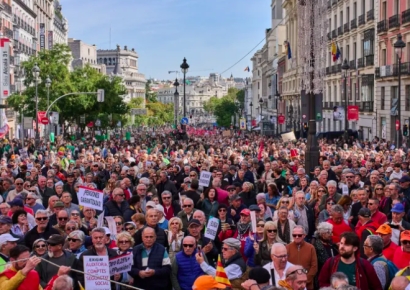 "They're Coming After My Pension Too?" Public Unease Mounts... Spain Sees Mass Protest Over Reform Push
- "300,000 Won Grant" Shelved at Chuseok to Go to All Residents After All... This City Says It Will Pay Before Lunar New Year
- "A Really Beautiful Butt"... How Did Nicki Minaj React to Trump's Unexpected Remark?
- [Click e-Stock] "North American Foldable Quality Issues Could Be a Buying Opportunity for Pinemtec... Target Price Raised"
- "Stockpile 9 Liters of Bottled Water and Three Days' Worth of Food"... UK on Edge as Nationwide Emergency Preparedness Alert Issued
Meanwhile, the meeting was attended by more than 7,000 participants from over 190 Parties, international organizations, and civil society groups. Korea sent a joint inter-ministerial delegation led by Ambassador for Climate Change at the Ministry of Foreign Affairs, Kyeon Jongho.
© The Asia Business Daily. All rights reserved. Unauthorized AI training and use prohibited.