MSCI Says "Broader Range of Investment Products in Korean Stock Market"... Assessment Upgraded
Annual Market Accessibility Review Released: Minus Ratings Remain for Foreign Exchange Market Liberalization
Decision on Inclusion in Developed Markets Watch List to Be Announced Next Week
Before Morgan Stanley Capital International (MSCI) announces whether Korea will be added to its Developed Markets Watch List next week, the firm stated that investment product availability in the Korean stock market has improved.
On June 19, MSCI raised its assessment of investment product availability in the Korean stock market from 'minus' (needs improvement) to 'plus' in its annual market accessibility review. MSCI explained the upgrade by stating, "With derivatives linked to Korean indices now listed on international exchanges, the range of investment products available to global investors has broadened."

As a result, the number of 'minus' ratings for the Korean stock market out of 18 assessment categories decreased from six last year to five this year. However, the following areas still received a minus rating: ▲level of foreign exchange market liberalization ▲investor registration and account opening ▲information flow ▲clearing and settlement ▲securities transferability.
MSCI commented, "Korean authorities have continued to implement the reform agenda introduced last year and have announced additional measures across various areas." However, the firm pointed out that "fundamental accessibility issues remain unresolved." Specifically, it noted, "Based on measures such as the launch of the 24-hour foreign exchange market this year and the pilot operation of the offshore won settlement system, additional plans have been established to align the foreign exchange framework with global standards." Nevertheless, "a fully operational offshore foreign exchange market has not yet been established."
MSCI also highlighted that "corporate information is not always provided smoothly in English." With mandatory English disclosures for all KOSPI-listed companies set to begin next year, MSCI stated, "The effectiveness of this system should be evaluated after full implementation is completed." In addition, MSCI pointed out that "the transition from the Foreign Investor Registration Certificate (IRC) to the Legal Entity Identifier (LEI) system is still underway" and that "the coexistence of the two systems is a barrier to the practical adoption and use of the omnibus account structure."
Furthermore, regarding the short-selling ban that was fully lifted at the end of March last year, MSCI stated, "Since the removal of the short-selling ban, there have been significant operational frictions, compliance burdens, and regulatory complexities," adding that "the effectiveness and stability of this system will continue to be monitored going forward."
As a global index provider, MSCI classifies the world's stock markets into developed, emerging, frontier, and standalone markets. Despite the Korean market's size and corporate competitiveness already being at developed market levels, Korea remains included in the Emerging Markets (EM) Index. Inclusion in the Developed Markets Index is also a policy pledge of the Lee Jaemyung administration. In line with the roadmap reflecting feedback from foreign investors, 24-hour foreign exchange trading is scheduled to begin on July 6.
To be included in MSCI's Developed Markets Index, a market must remain on the Watch List—the index's candidate list—for at least one year. Whether Korea will be added to the Watch List will be announced as part of the annual market reclassification results scheduled for June 24, Korea time. If Korea is successfully added to the Watch List this time, the earliest possible scenario would be an inclusion announcement in June 2027 and actual implementation in 2028.
Related Articles
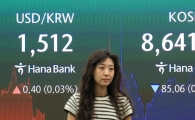 If Added to MSCI Watch List, Korean Stock Market Expected to See 44 Trillion Won Inflow
- [KOSPI 10,000 Era] ⑤ Will South Korea Be Included in the MSCI Developed Markets Index... What Are the Remaining Upgrade Tasks for the Korean Stock Market?
- [Korea’s Bid for MSCI Developed Status]① Will Korea’s Inclusion Gain Momentum This Year?
- [Korea’s Bid for MSCI Developed Status]①"FX Market Liberalization Is Key"
NH Investment & Securities researcher Kyu Jin Kim stated in a report released the previous day, "The likelihood of Korea being included in the Developed Markets Watch List is increasing in MSCI's annual review," adding, "Our government plans to implement 71.8% of the 39 roadmap tasks by the first half of the year." Kim further noted, "Improvement in the level of foreign exchange market liberalization during the observation period will be the key factor for inclusion."
© The Asia Business Daily. All rights reserved. Unauthorized AI training and use prohibited.