Producer Prices Rise for Ninth Consecutive Month... Post-War Oil Surge Drives Delayed Price Increases
May Producer Price Index Rises 0.8% Month-on-Month
Coal and Petroleum Products Turn Downward, But...
Lagged Effects of Post-Middle East War Oil Price Surge
Emerge in Chemical Products, Industrial City Gas, and Airline Services
Last month, the producer price index (PPI) rose by 0.8%, marking a ninth consecutive month of increases. This is the longest period of gains since the 13-month streak from November 2020 to November 2021. Despite declines in coal and petroleum products, the impact of the oil price surge that followed the Middle East war appeared with a time lag in chemical products, industrial city gas, and airline services. The strong stock market also pushed up financial and insurance services.

According to the "Tentative Producer Price Index for May 2026" released by the Bank of Korea on June 19, last month's producer price index stood at 129.82 (2020=100), up 0.8% from the previous month. This increase was mainly due to higher prices for chemical products and financial and insurance services. The PPI has been on an upward trend for nine months in a row since September last year. Compared to the same month a year ago, prices for coal and petroleum products as well as chemical products increased, resulting in an 8.5% year-on-year jump. This is the highest growth rate since July 2022 (9.2%).
By item, manufactured goods rose 0.7% from the previous month, as chemical products (such as sulfuric acid and container boxes) increased by 1.8%, basic metal products (such as primary refined copper and primary tungsten products) by 1.4%, and computer, electronic, and optical equipment (such as semiconductors and computer memory devices) by 1.6%. In contrast, coal and petroleum products such as solvents (-9.4%) and naphtha (-8.8%) declined.
Lee Moonhee, head of the Price Statistics Team at the Economic Statistics Department 1 of the Bank of Korea, explained, "Gasoline, diesel, and kerosene prices saw almost no change from the previous month due to maximum price regulations, but items like solvents and naphtha fell." He added, "As supply disruptions eased in May, prices fell from the previous month, which is reflected in the data." He continued, "International oil prices have been falling in June compared to the previous month, and the ceasefire agreement between the U.S. and Iran is also expected to affect international oil prices (downward). The pace of restoration of oil facilities in the Middle East and the degree of freedom in ship passage through the Strait of Hormuz will also impact domestic coal and petroleum product prices." He noted that the prices of gasoline, diesel, and kerosene will also be affected by how the seventh maximum price regulation is applied and how the system is maintained in the future.
Service prices rose by 1.2% from the previous month. Financial and insurance services increased sharply by 8.3% due to higher brokerage fees on the back of the rising stock market. Transportation services also rose by 1.8% as international air passenger and cargo rates climbed due to fuel surcharge hikes. Electricity·gas·water and waste saw a 0.5% month-on-month increase as industrial city gas prices surged by 10.3% due to higher raw material costs. On the other hand, prices for agricultural, forestry, and fishery products fell by 0.8% from the previous month as prices for agricultural products (such as oriental melons, which reported a good harvest) dropped by 3.9%.
Lee further explained, "When compensation for intermediary services, such as brokerage fees, is determined by multiplying the transaction value of the underlying asset by the commission rate, the price of intermediary services (commission per unit of the underlying asset) fluctuates depending on changes in the underlying asset price and the commission rate." He added, "If the commission rate remains unchanged and stock prices continue to rise, we can expect brokerage fees to keep increasing."

Meanwhile, the domestic supply price index, which measures price changes for goods and services supplied domestically (including domestic shipments and imports), showed no change from the previous month. Intermediate goods (up 1.2%) and final goods (up 0.3%) rose, mainly due to domestic shipments, while raw materials (down 8.1%) declined, largely due to imports. Year-on-year, the index rose by 11.7%, the highest since September 2022 (12.8%) in three years and eight months.
Hot Picks Today
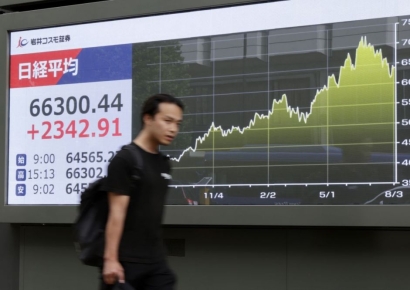 "Ruined Because of Korea" Even with a Sharp Rally, No One Buys... Japanese Market Sways with KOSPI
- '1,670,000 Won to 1,170,000 Won': SK hynix Hits Lower Limit Shock, Pre-market Opening Price Controversy
- Seoul’s 39-Degree ‘Extreme Heat’ Is Just the Beginning... Experts Warn: “It Will Persist Until 2050”
- "Don't Be Sad, Mom Was Very Happy"... Son Battling Illness for Life Saves Four Before Passing Away
- "Don't Worry, That's Just How It Is"... Thai Tourists in Korea Touched by Elderly Man Who Paid for Their Meal
The total output price index, which measures price changes for goods and services based on total output (including exports in addition to domestic shipments), rose by 1.2% from the previous month, as manufactured goods (up 1.4%) increased mainly due to exports of computer, electronic and optical equipment, and chemical products. Year-on-year, the index jumped by 16.7%, the highest since the statistics began in 2010. Lee explained, "This is mainly due to a sharp rise in export prices, especially for computer, electronic and optical equipment, rather than domestic prices. This means improvements in the terms of trade and an increase in overseas sales revenue for domestic producers."
© The Asia Business Daily. All rights reserved. Unauthorized AI training and use prohibited.