[Namsan Stroll] "True Education" Seen Through the Eyes of a Teacher Rights Protection Committee Member
It Takes Tremendous Resolve Just to Raise an Issue
School Administrators Must Take a More Active Role in Protecting Teachers' Rights
![[Namsan Stroll] "True Education" Seen Through the Eyes of a Teacher Rights Protection Committee Member](http://www.asiae.co.kr/news/img_view.htm?img=2025031414221868563_1741929738.jpg)
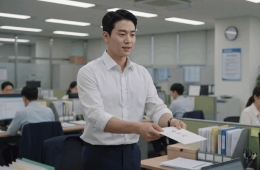
Recently, the Netflix drama "True Education" has become a sensation, rising not only to the top spot domestically but also reaching number one worldwide. "True Education" deals with various issues of violence and power surrounding schools. The topics covered are very diverse, including excessive violence among students, the influence of students with social media followings that surpass even teachers, complaints from parents that corner teachers, and cases of teacher misconduct that arise in the midst of these issues. At first glance, these numerous problems may seem impossible to resolve, but in the drama, heroes from an extraordinary organization called the "Teacher Authority Bureau" employ all sorts of methods to solve them.
The drama has faced criticism for simplifying real-life problems and too readily presenting violence as a solution. However, most people are enthusiastic because it vividly portrays a range of issues faced in schools. Each episode is partly based on true stories, evoking the "testimonies" of many teachers on the ground. In fact, it is not uncommon to hear that problems or complaints in real schools can be even more severe than what is depicted in the drama.
As a screening member of the "Teacher Rights Protection Committee," I have had opportunities to witness various cases of violations against teachers' rights in schools. My role involved investigating children who infringed on teachers' rights and determining appropriate measures. Although I have seen all sorts of cases, the ones that end up at the Teacher Rights Protection Committee beyond the school are never resolved within a day or two. Minor or one-off incidents are handled by the school's own "Student Life Education Committee." However, when a case cannot possibly be resolved by the school's internal system, only then does a teacher, after enduring for some time, request support from the external Teacher Rights Protection Committee. Most teachers who come to the committee have already suffered extreme psychological distress, requiring psychiatric counseling and even medication for depression by the time they seek help. Some, trembling with guilt for sending their student to such a place, share their situation with us.

Teachers also say that even sending a case to the Teacher Rights Protection Committee requires tremendous resolve. They worry about whether they are being overly sensitive, whether they are causing trouble for the school, or if expelling or giving up on a student means they have failed as educators. These worries make them hesitate to even request a proper review. Sometimes, the school community puts pressure on them for causing a fuss over something "not a big deal." After causing problems in class after class for years, students finally end up at the committee because of a teacher's decision. Teachers do not ask for expulsion or severe punishment. They simply hope that "the student at least realizes what they did wrong."
Personally, I hope the Teacher Rights Protection Committee system becomes more active. Since penalties, admonishments, or the school's own life education committee often have limitations, it would be better if problematic students could be more effectively connected with external organizations rather than being handled solely by the school. For this to happen, vice principals and principals within the school must also be more proactive in protecting teachers' rights. When students are called outside the school even once, it creates an awareness that they need to be more careful in various ways.
An extralegal organization like the Teacher Authority Bureau, where all means are permitted, is something that can only exist in a drama. In reality, there is a need for more sophisticated and constitutional systems that simultaneously protect teachers' authority and students' right to learn. The important thing is to continuously listen to the stories of teachers working in the field and to keep filling the gaps in the system.
Hot Picks Today
![[Exclusive] "Are We Supporting Chinese Families with Hundreds of Thousands of Won per Person?"...National Pension Expands Family Allowances to Foreign Parents and Children Living Overseas](https://cwcontent.asiae.co.kr/asiaresize/93/2026082710182594858_1787793505.jpg) [Exclusive] "Are We Supporting Chinese Families with Hundreds of Thousands of Won per Person?"...National Pension Expands Family Allowances to Foreign Parents and Children Living Overseas
[Exclusive] "Are We Supporting Chinese Families with Hundreds of Thousands of Won per Person?"...National Pension Expands Family Allowances to Foreign Parents and Children Living Overseas
- “The Road From Apartment to Han River Is Dark and Dangerous”…Banpo ‘This Park’ Gets Approved, Apgujeong, Seongsu, and Yongsan Also Celebrate [The Future of Parks ⑨]
- "Who Would Buy This?"... Why a 31 Million Won Humanoid Robot Appeared at Convenience Stores
- Samsung Electronics and SK Hynix Gain Relief as Nvidia Delivers Surprise Results
- "Banks Roll Out 'High-Interest Specials' Offering Up to 7-13% a Year: 'Why Not Choose Savings Over Stocks?'"
Jiwoo Jung, Culture Critic and Attorney
© The Asia Business Daily. All rights reserved. Unauthorized AI training and use prohibited.