"80 Times Faster Than Humans"... China Deploys Robots in Desertification Prevention Industry
Capable of Planting 2,000 Seedlings Per Hour
"Launch of a Low-Cost, High-Efficiency Eco-Friendly System"
Chinese robots are being deployed in deserts to plant vegetation as part of the desertification prevention industry.
On June 18, China Central Television (CCTV) released a video, stating, "The technological limitations of robots for desertification prevention are being surpassed." The video shows autonomous robots demonstrating precise techniques such as digging trenches and planting seedlings. This is part of a project promoted by Chinese authorities to combat desertification, in which robots plant desert-adapted vegetation in the desert, much like transplanting rice seedlings in a paddy field.

CCTV described this as the "Desertification Prevention 2.0 era," explaining, "In the past, efforts relied on people manually planting seedlings little by little, but now robots can plant one seedling every five seconds."
According to the report, the robots are equipped with visual navigation and autonomous driving systems. They can dig trenches, plant seedlings, cover them with soil, and water them—all in a single operation. It takes just 19 minutes to plant seedlings across approximately 660 square meters of land, consuming only 2.1 liters of fuel. The robots can plant 2,000 seedlings per hour, which is 80 times faster than humans.

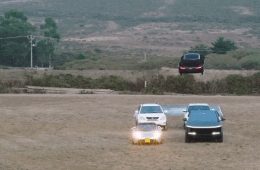
China CCTV reported on robots deployed for desertification prevention. Photo by China CCTV.
View original imageNotably, the robots can also calculate which types of trees are most efficient to plant in specific areas, determine how to lay straw to save materials, and even predict the direction of approaching sandstorms.
Hot Picks Today
![[Exclusive] "We Came for a KRW 140,000 Trip": Following Chinese Tourists in Korea Uncovers a 'Suspicious' Tour](https://cwcontent.asiae.co.kr/asiaresize/93/2026102016394567831_1792637138.jpg) [Exclusive] "We Came for a KRW 140,000 Trip": Following Chinese Tourists in Korea Uncovers a 'Suspicious' Tour
[Exclusive] "We Came for a KRW 140,000 Trip": Following Chinese Tourists in Korea Uncovers a 'Suspicious' Tour
- "With studio rent alone at 1.5 million won, discontent across all walks of life was bound to erupt"... France seethes over economic hardship
- Despite "Insufficient Balance" Notices, They Board Anyway... Reports of Foreign Fare Evasion Mounting
- A 'Premium Dessert' from Korea... 'Orion Custard' Hits Big in China and Vietnam as Production Lines Expand
- "I've Never Seen a Dolphin Like This"... 'Pink Dolphin' Spotted off Oman
CCTV commented, "A low-cost, high-efficiency eco-friendly system has been introduced," and added, "As large-scale desertification prevention models advance and AI models are fully applied in the field, the success rate of desertification prevention is expected to increase dramatically."
© The Asia Business Daily. All rights reserved. Unauthorized AI training and use prohibited.