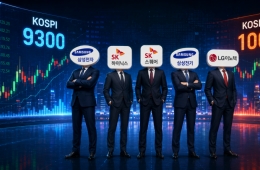
Why Does the KOSPI Keep Rising Despite Rate Hikes in Korea and the US? [Weekend Money]
Stock Rally Driven by AI
Strength Expected to Continue Despite Interest Rate Hike Risks
![Why Does the KOSPI Keep Rising Despite Rate Hikes in Korea and the US? [Weekend Money]](http://www.asiae.co.kr/news/img_view.htm?img=2026061814502114528_1781761821.png)
In the past, stock prices tended to fall during periods of rising interest rates, but with the advent of the artificial intelligence (AI) revolution, this traditional pattern has disappeared, according to a recent analysis.
According to the report "Stock Market: Exclude Interest Rates" by Shinhan Investment Corp. released on June 21, since the 2008 global financial crisis, the stock market has lived under the dominance of monetary policy and interest rates.
Since 2008, interest rate cuts have led to rising stock prices, while rate hikes have caused stock prices to fall. The report explains that this experience became even more deeply ingrained among investors in 2020, when the U.S. Federal Reserve (Fed) implemented unlimited quantitative easing, and in 2022, when a sharp monetary tightening triggered a bear market.
Seonghwan Kim, an analyst at Shinhan Investment Corp. who authored the report, stressed, "In the 2010s, the global economy and stock markets were easily swayed by interest rate fluctuations. Fundamentally, this was because demand was weak. For demand to improve, interest rates 'had to' go down, which meant that interest rates held the decisive influence over the stock market."
However, Kim explained, "Since 2023, AI has created a demand-driven inflationary environment that seemed to have disappeared for the first time in 20 years. Led by Big Tech, for the first time since the financial crisis, the capital expenditure (Capex) and credit cycles are overlapping, which represents the strongest demand-side inflationary pressure."
He diagnosed, "The demand generated by AI is not simply a result of low interest rates. Big Tech companies are not ramping up Capex or driving up intermediate goods prices just because rates are low." He added, "In a situation where both Capex and credit cycles are rising together, the order of causality is reversed. Now, corporate investment activities and stock prices are becoming variables that determine interest rates."
Hot Picks Today
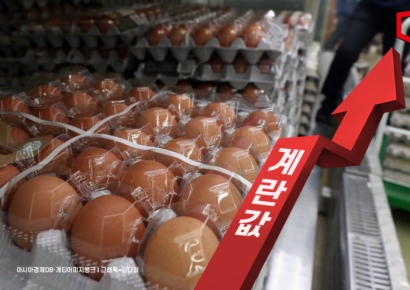 Already Expensive..."I Eat Two Eggs Every Morning—This Is Too Much": Early Heatwave Sparks Egg Price Fears
- "Wow, This Is Addictive": Justin Bieber's Wife Raves About 'Ddungbaratte'... Foreign Tourists Flock to K-Convenience Stores [K-Holic]
- "Exorbitant Food Prices" Beer Costs 30,000 Won per Glass... Locals Outraged Over Record Price Gouging at the World Cup [Current Affairs Show]
- [2026 World Cup] Japan Sets New Record for Most Goals by an Asian Nation in World Cup Finals with 4-0 Rout of Tunisia
- "Getting Your Hair Pulled and Kicked Is Routine... '9 Inmates Packed into 5 Pyeong' Cheongju Women's Prison, the Reality of Sweltering Heat [Reportage]"
Kim stated, "Stock prices and interest rates have already been rising together since 2023. Unless interest rates rise to transcendental levels or the Fed implements radical tightening, the strategic value of monetary policy and interest rates for stock investment will be limited."
© The Asia Business Daily(www.asiae.co.kr). All rights reserved.