Despite FOMC Rate Freeze, Tightening Concerns Remain... Koo Yoon-chul: "Support Measures for Vulnerable Borrowers Under Review"
Government Holds Expanded Macroeconomic and Financial Meeting

Deputy Prime Minister and Minister of Economy and Finance Koo Yoon-cheol is taking a commemorative photo before the start of the expanded macroeconomic finance meeting held at the Government Complex Seoul in Jongno-gu, Seoul on the 18th. From left: Lee Chan-jin, Financial Supervisory Service Commissioner; Deputy Prime Minister Koo Yoon-cheol; Shin Hyun-song, Governor of the Bank of Korea; Lee Eog-weon, Financial Services Commission Chairman. Ministry of Economy and Finance
View original imageThe government has decided to introduce measures to ease the burden on vulnerable sectors resulting from rising domestic market interest rates, as well as support plans for vulnerable borrowers, amid the shift toward tighter monetary policies in major economies.
At the expanded macroeconomic and financial meeting on the 18th, Deputy Prime Minister and Minister of Economy and Finance Koo Yoon-chul stated, "As changes in financial market conditions are increasing the interconnection between sectors, we will fully implement an integrated risk monitoring system that covers not only the stock, bond, and foreign exchange markets, but also the real estate market. We will systematically monitor and respond to the risks and spillover effects in each sector."
At the meeting, which was attended by Shin Hyun-song, Governor of the Bank of Korea, Lee Ok-won, Chairman of the Financial Services Commission, and Lee Chan-jin, Governor of the Financial Supervisory Service, participants discussed the FOMC's rate freeze, as well as trends and response strategies in domestic and international financial and foreign exchange markets resulting from the Middle East war.
The U.S. Federal Open Market Committee (FOMC), which was held overnight, kept the benchmark interest rate unchanged at 3.50-3.75 percent, as expected. This marks the fourth consecutive freeze since December of last year. However, in response to inflation, the Fed reversed its interest rate outlook for this year from a cut to a hike.
The global financial market viewed the rate freeze decision as in line with market expectations. Nonetheless, it focused on changes in the Fed's outlook, which now projects lower growth and higher inflation. As a result, U.S. Treasury yields surged, particularly in the 1- to 2-year short-term sector, and the dollar strengthened.
Despite the hawkish FOMC, the KOSPI opened slightly higher and reached an intraday record high of 8,975.52 shortly after the market opened. On the same day, the won-dollar exchange rate at the Seoul foreign exchange market opened at 1,525.0 won, up 11.6 won from the previous session.
Participants evaluated that the strong commitment to price stability emphasized during the first meeting chaired by Kevin Warsh, the new Chair of the Federal Reserve, could lead to a more tightening-oriented U.S. monetary policy going forward.
They also agreed that, ahead of the FOMC, recent moves by the Bank of Japan (BOJ) and the European Central Bank (ECB) to raise their policy rates highlight the need for a thorough analysis of the macroeconomic and financial market impacts of such rate hikes by major economies.
Hot Picks Today
![When SK hynix Rose 1,200%, This Stock Soared 1,800%... Headed for 1.85 Million Won [Click e-Stock]](https://cwcontent.asiae.co.kr/asiaresize/93/2026061515490510080_1781506145.jpg) When SK hynix Rose 1,200%, This Stock Soared 1,800%... Headed for 1.85 Million Won [Click e-Stock]
When SK hynix Rose 1,200%, This Stock Soared 1,800%... Headed for 1.85 Million Won [Click e-Stock]
- "Insurance Covers It"—Unaware Patients at Risk as Repeated Extracorporeal Shock Wave Therapy May Lead to Loss of Indemnity Coverage
- "Samsung Electronics Eyes Special Dividend of Up to 125 Trillion Won"...Foreign Investors Shift from Common to Preferred Shares
- "What About Those Who Paid 220,000 Won?"... Chinese Maotai Faces Major Setback and Plummeting Prices
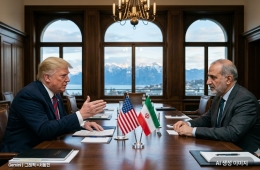
Recently, the news of a U.S.-Iran ceasefire agreement is expected to act as a positive factor for the financial and foreign exchange markets. However, participants agreed to continue closely monitoring the details and implementation of the agreement, to maintain 24-hour real-time monitoring of market conditions, and to make every effort to ensure market stability.
© The Asia Business Daily(www.asiae.co.kr). All rights reserved.