"Shocking Forecast" for Bitcoin: "Even After 100 Years, Only 0.6% Annual Return" Bubble Concerns Resurface
$120,000 Projection by 2140
Supply Limit and Slowing Network Growth
Trading Contraction and Accelerating Capital Outflows
Low Expectations Despite Policy Variables
Skepticism about the long-term growth potential of Bitcoin is resurfacing. As Bitcoin’s price is influenced by the influx of new investors and the expansion of its network, some point out that changes in market structure due to a decrease in new issuance could slow growth over the long term. There are projections that the annual rate of supply increase may remain below 1% for more than 100 years.
"Supply Limit Reached... Growth Rate Slowdown Inevitable"
According to U.S. financial media outlet MarketWatch on June 16 (local time), Mark Hulbert, a senior columnist, applied the network value evaluation model known as ‘Metcalfe’s Law’ to forecast that the price of Bitcoin will converge to around $120,000 (approximately KRW 181.5 million) by 2140. Metcalfe’s Law theorizes that the value of a network is proportional to the square of the number of participants. When applied to Bitcoin, this suggests that network expansion is the key driver of price appreciation.

The issue lies in the supply structure. Bitcoin’s total supply is capped at 21 million coins, and more than 20 million have already been mined. As the issuance limit approaches, the speed of new supply will slow dramatically, which in turn could lead to a decrease in the network’s growth rate. Based on this model, the long-term expected annual return is calculated to be around 0.6% on average.
Hulbert commented on the recent price correction, describing it as “a process of returning to fair value from overheated levels.” He particularly noted that the price surge in the second half of last year, fueled by high expectations for crypto-related policy, was excessive.
Price Halved... Liquidity Drops Sharply
Market trends also remain bearish. Bitcoin has declined more than 50% from its peak in October last year, recently fluctuating around the $60,000 level.
Capital inflows are also slowing. There have been significant outflows from spot Bitcoin exchange-traded funds (ETFs), and institutional funds have shifted from net inflows to net outflows, increasing market volatility.
The cascading liquidation of leveraged positions has also been cited as a factor behind the larger decline. Additionally, as stock-based products have expanded in the derivatives market, investment demand has become more dispersed, which has negatively affected liquidity in the crypto asset market.
Domestic Exchanges 'Cooling'... Accelerating Individual Outflows
The contraction in the domestic market is also evident. For example, Upbit’s trading volume last month was $30.1 billion, a drop of more than 40% compared to the beginning of this year. This downward trend has continued for four consecutive months since February, and average daily trading volume has also nearly halved compared to last year. Bithumb is exhibiting a similar trend, with trading sluggishness persisting.

Within the market, it is widely believed that individual investors who entered during last year’s bull run have shifted to domestic and international stock markets or alternative investment assets. In particular, the expansion of global investment opportunities, such as large-scale initial public offerings (IPOs), has accelerated the outflow of funds from the crypto asset market.
Hot Picks Today
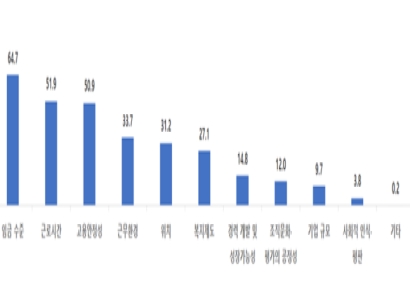 "Please Pay Me at Least 3 Million Won a Month": More Than Half of Young People Today Prioritize "Working Conditions" Over Company Size
- Selling Like Crazy Every Year... 30-Year-Old Hetbahn Takes on a New Challenge: Tastes Better Than "Mom's Home Cooking" [On-Site Report]
- "It's so popular you can't get it": 'Legendary liquor' returns after 11 years, causing a stir... 'Newtro' craze takes over convenience stores [How We Shop Today]
- "Hey, Lady, Teach Your Kids to Behave!" ... 300,000 Won in Cash and a Bodily Injury Claim Demanded Over Child's Door Ding
- Beachgoer Finds 'Plastic' That Turns Out to Be Perfume Ingredient Worth More Than Twice as Much as Gold
Policy Variables Remain... But Long-Term Expectations Are Low
Going forward, the market’s direction is expected to be heavily influenced by policy variables. Key factors include U.S. legislative efforts related to digital assets and discussions over strategic Bitcoin reserves. Some expect that if Bitcoin is classified as a national strategic asset, institutional investment demand could expand, potentially changing the market structure once again. However, for now, skepticism about long-term expected returns is growing, as both growth is slowing due to the supply structure and liquidity is decreasing at the same time.
© The Asia Business Daily. All rights reserved. Unauthorized AI training and use prohibited.





![[Market ING] KOSPI Seeks Rebound in Superweek Packed with Corporate Earnings and FOMC](https://cwcontent.asiae.co.kr/asiaresize/307/2026102514484873155_1792907327.jpg)