[Q&A] Shin Hyunsong: "Do Not Attach Too Much Significance to Falling Oil Prices... Inflation Will Persist for Quite Some Time"
Briefing on the Operational Status of the Price Stability Target for the First Half of 2026
On June 17, Bank of Korea Governor Shin Hyun-song commented on the recent drop in oil prices following the declaration of an end to hostilities between the United States and Iran, stating, “We should not attach too much significance to this,” and emphasizing that consumer price inflation is expected to persist for quite some time.
At a press briefing held at the Bank of Korea that day to review the operational status of the price stability target for the first half of 2026, Governor Shin said, “Oil prices have recently fallen significantly, and the market has breathed a sigh of relief.” He added, “However, the financial market should not react excessively to short-term changes; rather, decisions should be made based on fundamentals in the short term.”
Regarding future price trends, he explained, “There is a primary effect, such as on gasoline prices or fuel surcharges. The secondary effect is even more important,” and added, “The indirect effect spreads over time, following a parabolic trajectory, because rising costs through the value chain eventually influence goods and the service sector.”
He further cautioned, “If inflationary pressures extend to secondary effects, it could influence corporate pricing decisions and expected inflation, resulting in a vicious cycle. There may come a point where it could be said that monetary policy has come too late.”
In addition, special performance bonuses at Samsung Electronics and SK hynix, resulting from the semiconductor boom, are also expected to be factors pushing up prices.
The following is a Q&A session.

--As recently as May, the economic outlook was clouded by uncertainty over the Middle East conflict, but now an end-of-war declaration has been made. Has this affected the Bank of Korea’s policy direction as previously indicated by Governor Shin?
▲Governor Shin = Even in the May forecast, we assumed to some extent that oil prices would stabilize. One important figure we used in our projection was that, by the end of this year, the volume of crude passing through the Strait of Hormuz would recover to 60% of pre-war levels. Of course, oil prices have indeed fallen recently. Today, Brent crude prices dropped to 78–79 dollars per barrel, which I believe brought relief to the market. Market prices reflect a great deal of risk appetite and tolerance. If you look at other asset prices over the past two or three days, it seems we are in a ‘risk-on’ state. Rather than overreacting to the financial markets day by day, we should make judgments based on long-term fundamentals. What has changed since the May outlook? Not much, really. There have been no changes that would overturn our previous assessment. It will likely take time for oil prices to fully normalize. I think we need to consider this in three ways. In the short term, ships trapped in the Strait of Hormuz can now quickly leave and supply oil. Short-term oil supply will likely improve. That is a rather encouraging effect, but experts say it will be difficult for production to fully resume. Oil production cannot be restarted as easily as turning a tap on and off. If production is halted, the wax component—paraffin—hardens and clogs the pipes. To restart production, pipes have to be reheated or pressurized, and the longer production is halted, the greater the pressure required, which can damage the pipes themselves. The process of resuming production may require injecting water or detergent to clear the blockage, and the first oil that comes out is often full of impurities and thus not very useful. So, it will take considerable time for supply itself to recover to pre-war levels. Oil prices, like other financial asset prices, are highly correlated with risk appetite, so we need to see how long the current price drop lasts. There is a third element regarding costs: even if production resumes technically, shipping companies must be willing to transport the oil. For that to happen, issues like insurance resumption and risk management—ensuring a certain degree of safety—remain unresolved from a management perspective. While there is talk of a signing ceremony for a US-Iran agreement on Friday, we need to wait and see the details. Even if the technical issues are resolved, there are still managerial issues for shipping companies to actually transport the oil. On the wage and demand side, I think the pressures are stronger than in the May monetary policy meeting. Wages are rising, and there will be further wage negotiations and demands, especially since exports have been doing so well and the gap between gross domestic income (GDI) and gross domestic product (GDP) is significant. We need to keep monitoring these wage flows. While I have continuously stressed the cost side, this time, the demand side also seems to be exerting stronger upward pressure on prices than in May.
-It is said that the inflation control effect of interest rate hikes is weakened by expansionary fiscal policy. Is there a possibility of a faster rate hike?
▲Governor Shin = You asked about concerns that expansionary fiscal policy could be out of sync with monetary policy. In some cases, price controls have been used to suppress prices. If you ask whether subsidies have affected aggregate demand, I still believe that aggregate demand has not been significantly affected. The fiscal situation is stable, so there is little upward pressure on bond yields from additional bond issuance. Discussion will continue on how to use future tax revenues, but rather than short-term, consumption-focused subsidies, there is ongoing debate about introducing systems and mechanisms for long-term investment. To summarize, there does not seem to be any major conflict at this time. Of course, if fiscal policy adds to the upward pressure from demand, we will make a judgment at that time.
-The KRW/USD exchange rate has remained in the 1,500 won range. Will this level become entrenched, and when do you expect it to stabilize?
▲Governor Shin = Today, I will limit my explanation mainly to inflation. When the Korean won weakens, it amplifies the impact of rising oil prices. Since oil is priced in US dollars, a strong dollar and a weak won amplify the effects when oil prices rise. This same phenomenon was clearly observed during the Russia-Ukraine war in 2022. When the war began at the end of February, oil prices rose to 120 dollars per barrel, the dollar strengthened, and the strong dollar persisted, causing significant damage to oil-importing countries due to rising oil prices. Korea, Japan, the Eurozone, and the United Kingdom were hit hard by this combined effect. For this reason, Europe experienced even greater inflationary pressure. The recent 20%+ increase in oil prices was also driven by the combined effect of a strong dollar and a weak won, along with strong oil prices. To reiterate: there is a primary effect, such as on gasoline prices and fuel surcharges, but secondary and indirect effects are even more important. As costs rise through the value chain, they influence goods and the service sector, and this impact spreads over several months in a parabolic fashion. This is a cause for concern. If inflationary pressures extend to secondary effects, especially influencing pricing, and expected inflation, then the situation may arise where monetary policy is said to be too late. For that reason, it is fortunate that oil prices have fallen and the exchange rate has stabilized somewhat in the short term. In a risk-on environment, everything may seem positive—stock prices rise, bond yields fall, and oil prices drop—so it is easy to think everything is over, but market prices change quickly. We should not be swayed by short-term market prices, but look at the economy from a medium- to long-term perspective. Of course, a short-term drop in oil prices is welcome, but we must remain vigilant.
-You mentioned the Ukraine war and demand-side pressures, but the May employment figures show the number of employed persons fell into negative territory for the first time in 17 months. How is this different from the post-Ukraine war situation?
▲Lee Jiho, Senior Deputy Governor = It is true that there is a gap between different indicators and the May employment figures. As we have been saying since the second half of last year, K-shaped growth is occurring, driven by semiconductors and IT. We are continuing to monitor the causes and persistence of this trend. From a wage perspective, even without going into detail, many companies are facing increasing wage pressures. Due to legal changes, issues like direct employment and wages continue to surface. It seems this will operate through channels that increase wages.
-The minutes of the Monetary Policy Board meeting were released yesterday, and some board members argued that excess tax revenue should be used to repay national debt.
▲Governor Shin = Regarding fiscal policy, the market situation at the time is important, but we also need to think in the medium to long term. Compared to other countries, Korea’s fiscal position is relatively strong. Looking at our tax revenue flow, revenues are likely to be strong this year. As I mentioned at the May monetary policy press conference, the large gap between GDI and GDP signals that the export price index has risen significantly, improving the terms of trade. There are many macroeconomic implications of this. When tax revenues are high, repaying debt may be possible in the short term, but there may be debate over whether it is the top priority. Given our sound fiscal position, there may be other higher-priority projects, and discussions are starting on whether there are national projects or measures that should be funded by the fiscal windfall. Looking at the big picture beyond monetary policy, this could be a very good opportunity for the Korean economy to take a leap forward. Debt repayment is one option, but there may be others, and priorities will be determined as circumstances evolve.
Hot Picks Today
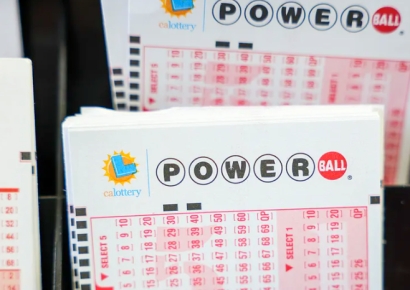 He Left It in the Car and Forgot... "I Nearly Collapsed with Joy": Man Wins $1.48 Million Lottery
- Goldman Sachs Cuts KOSPI Target by 25%... "Excessive Pessimism, Still Attractive"
- "'Nodding Off' on the Subway? Here's Why Koreans Are Getting Even Less Sleep"
- "Please Pay Me at Least 3 Million Won a Month": More Than Half of Young People Today Prioritize "Working Conditions" Over Company Size
- Beachgoer Finds 'Plastic' That Turns Out to Be Perfume Ingredient Worth More Than Twice as Much as Gold
-Recently, Governor Shin mentioned three rate hikes, and there has been talk in the market of an emergency policy meeting or a “big step” (a 0.5 percentage point rate hike at once). Today, you mentioned stronger demand-side pressure. What is the Bank of Korea’s position regarding market expectations for a faster rate hike?
▲Governor Shin = Today, I will not go into detail about the direction of monetary policy. What I can say is that the key factor influencing the direction of monetary policy today is inflation, and I have addressed that. You mentioned a “big step” in your question. The market situation at any given time tends to define the overall outlook. In a risk-on market, it feels like all issues have been resolved, while in a difficult market, sentiment worsens. The central bank takes special care not to be swayed by daily market fluctuations. When talk of a “big step” emerged, the market was struggling and bond yields were high. That was in stark contrast to today. The exchange rate was also much higher then. In such a market, speculation tends to arise about whether the central bank will take exceptional measures. The central bank, however, focuses on the underlying trends when conducting monetary policy, without getting carried away by market sentiment. This does not mean that markets are unimportant, but we will continue to pursue policies that are not overly influenced by short-term market conditions.
© The Asia Business Daily. All rights reserved. Unauthorized AI training and use prohibited.