"Extending Retirement Age Benefits Only Large Corporations... Options Like Re-Employment and Contract Extension Needed"
Academic Seminar on Retirement Age Extension Policy
There are concerns that uniformly raising the statutory retirement age to match the pension eligibility age would primarily benefit large corporations and the public sector. Suggestions have been made that, rather than solely extending the retirement age, various options such as re-employment, abolition of the retirement age, or contract extension should be chosen according to the circumstances of both workers and companies.
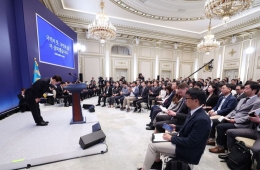
The Forum for Advanced Labor Research for Empathy, Public Interest, and the Future, together with the Future Labor Law Innovation Association, held an academic seminar on the theme "Will the State's Welfare Responsibility Be Shifted to Companies? - Lessons and Challenges from the Cases of Japan and Singapore, the Future of Statutory Retirement Age Extension and Employment" at the LW Convention Center in Jung-gu, Seoul, on June 17.

Jisoon Park, a professor at Korea University, stated at the seminar, "The basic direction for employment extension should be to simultaneously address the income gap between pension eligibility and retirement, the dual structure of the labor market, youth employment, and the burden on companies."
Professor Park pointed out, "It is necessary to control the treatment gap so that employees whose employment is extended do not become stuck in a low-wage track," adding, "Discussions on extending the retirement age should not only focus on job security, but also address issues such as anti-discrimination, unfavorable changes to work rules, wage adjustment, and legal issues related to status after retirement, as a package."
Recently, the Democratic Party of Korea has been discussing ways to gradually extend the statutory retirement age. Professor Park analyzed, "The party's bill carries legal risks," and explained, "In a seniority-based pay structure, not only would raising the retirement age result in significant cost shocks for companies, but there is also a high likelihood of disputes and lawsuits related to work rules, discriminatory re-employment selection criteria, wage reductions, and the timing of reaching retirement age. Additionally, there is a significant risk of persistent conflicts over youth hiring and the entrenchment of low-wage re-employment."
Jinyoung Kim, a professor at Korea University, argued that it would be difficult to maintain a seniority-based wage system while extending the retirement age and emphasized the need for flexible labor market reforms.
He added, "The positive effect of extending the retirement age on increasing employment among older workers is unclear and may actually increase early retirements," and "Unlike flexible foreign labor markets, the rigid domestic labor market has consistently shown in research that youth employment decreases."
On this day, Atsushi Yashiro, a professor at Showa Women's University, said, "Japan implemented the 'Act on Stabilization of Employment of Elderly Persons' in 2006, which requires companies to choose one of three options—extend the retirement age to 65, abolish the retirement age, or extend employment to 65—to ensure employment until age 65." He explained, "As of the end of last year, 3.9% of companies had abolished the retirement age, 31% had extended it to 65, and 65.1% had adopted continued employment options such as re-employment."
Professor Yashiro added, "There is no uniform way to extend the retirement age. If it is made uniform, problems such as increased wage costs and discrimination regarding the positions of those reaching retirement age arise, which is why a combination of retirement age extension and continued employment is used."
Jiweon Jeong, advisor at Yulchon LLC, who participated in the discussion, commented, "It would be appropriate to retain the statutory retirement age at 60, as in Japan, but make it mandatory for companies to ensure employment until 65." He added, "However, when re-employing workers after retirement, their desired roles should be reflected as much as possible, and companies' discretion should be limited."
Hot Picks Today
!["How Little Do Koreans Read? Who Will Acquire Munhakdongne Now on the Market [Weekend Money]"](https://cwcontent.asiae.co.kr/asiaresize/93/2026091716280432990_1789630084.jpg) "How Little Do Koreans Read? Who Will Acquire Munhakdongne Now on the Market [Weekend Money]"
"How Little Do Koreans Read? Who Will Acquire Munhakdongne Now on the Market [Weekend Money]"
- "Bank Offers 3.5%, but... Which ETF Hit a 21% Dividend Yield? [Weekend Money]"
- 'Chinese Sea Cucumber Labeled as Domestic'... Incheon City Uncovers 16 Cases of Seafood Origin Labeling Violations
- "Please Be Quiet"... China to Fine Up to 210,000 Won for Disruptive Passengers Using Speakerphones
- "Raised a Stray Kitten, but..." Scientific Community Stunned: First New Wild Cat Species Discovered in 100 Years
Heeseong Kim, a professor at Kangwon National University, pointed out various legal issues that could arise if the Democratic Party's statutory retirement age extension is implemented and expressed concern about confusion in the industrial sector. As a solution, he suggested, "It is necessary to revise the wage system provision in the Elderly Employment Act, which is currently only declarative, into an effective provision to make it mandatory. In addition, the prohibition on unfavorable changes to work rules should not apply in the case of employment extension, and the Act on Fixed-Term and Part-Time Employees should be amended so that repeated renewals of employment contracts for re-employed older workers can continue in order to alleviate their job insecurity."
© The Asia Business Daily. All rights reserved. Unauthorized AI training and use prohibited.