Increasing Compensation for Local and Essential Healthcare While Cutting High Test Fees
Ministry of Health and Welfare Holds Public Hearing on "National Health Insurance Fee Structure Innovation"
Strengthening Compensation for Pediatric, Maternal Care and Undercompensated Essential Medical Services
Over 2 Trillion Won Reduction in Health Insurance Spending Due to Excessive Testing
The government will significantly reduce the reimbursement rates for tests such as blood tests, computed tomography (CT), and magnetic resonance imaging (MRI), which have been set excessively high, in order to save 2 trillion won in annual national health insurance expenditures. On the other hand, for local, pediatric, maternal, severe, and emergency care services that are at risk of decline, the government will raise consultation fees and strengthen compensation.

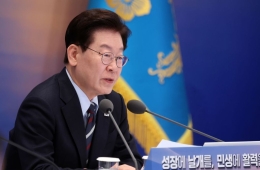
On June 17, the Ministry of Health and Welfare held a "National Health Insurance Fee Structure Innovation Public Hearing" at the President Hotel in Jung-gu, Seoul, and presented these innovation measures. The public hearing was held to discuss health insurance innovation plans under the current administration's key policy initiative of "responsible healthcare for public health," and to widely gather opinions from field experts, consumer groups, and the public.
First, the government will make significant adjustments to the excessive spending on specimen tests such as blood tests, as well as CT and MRI scans, based on the cost-to-revenue ratios of medical institutions.
According to the National Health Insurance Service's analysis of medical institutions' accounting data, the average cost-to-revenue ratio for specimen tests like blood tests was 190% last year, while that for CT and MRI scans reached 200%. This means that for every 100 won invested by a medical institution in equipment and personnel, they received an excessive reimbursement of 190 won and 200 won, respectively.
Accordingly, as a first step, the Ministry of Health and Welfare plans to lower the reimbursement rates for tests with a cost-to-revenue ratio exceeding 150% to 150%. In 2028, two years later, an additional analysis will be conducted to further adjust the rates and achieve revenue balance. The government estimates that the first phase of adjustments alone will save over 2 trillion won annually.

At the same time, the government will significantly increase compensation for essential medical services such as local, severe, emergency, pediatric, and maternal care, thereby strengthening the role of national health insurance in supporting local, essential, and public healthcare.
To enhance local healthcare capabilities, the government will establish and gradually expand the principle of preferential reimbursement rates for non-metropolitan regions and vulnerable areas within the metropolitan region. In addition, by raising health insurance reimbursement rates for severe and emergency treatments, compensation for critical surgeries and anesthesia will be increased. Furthermore, even for the same surgery, greater compensation will be provided in emergency situations to improve final treatment capabilities for saving emergency patients.
In particular, to address the chronic issue of the "3-minute consultation" system in medical practice, consultation fees—which had been frozen for over 20 years—will be raised. The intention is to create an environment where doctors can adequately counsel and thoroughly examine patients.
Reflecting the unique characteristics of pediatric care, which differs from adult medical care, compensation will be greatly increased for primary care of infants and young children as well as for complex pediatric surgeries. To enhance treatment capabilities for high-risk deliveries and newborns, the health insurance reimbursement system will be revised in conjunction with the restructuring of maternal and child medical centers. Additionally, compensation will be strengthened for building a rehabilitation medical delivery system that connects patient recovery, rehabilitation after treatment, and post-discharge home care.
Previously, the government shortened the adjustment cycle for relative values in health insurance fees from the existing 5–7 years to within 2 years, in order to rationally revise health insurance rates and quickly reflect changes in the medical environment and cost analysis results.
Jung Eun-kyung, Minister of Health and Welfare, stated, "By establishing the principle of preferential health insurance reimbursement for local areas, we will enable people to access medical care quickly during emergencies in their communities and ensure that citizens can receive quality essential medical services any time, anywhere. To this end, we will drastically innovate national health insurance to focus on local and essential healthcare."
The Ministry of Health and Welfare plans to actively incorporate the proposals from this public hearing into its plan for innovating the health insurance fee structure to strengthen local and essential healthcare. The final plan will be confirmed and announced at the end of this month after review by the National Health Insurance Policy Deliberation Committee and other relevant bodies.
Hot Picks Today
 Selling Like Crazy Every Year... 30-Year-Old Hetbahn Takes on a New Challenge: Tastes Better Than "Mom's Home Cooking" [On-Site Report]
- "Maybe I Should Open a Cafe?" Investor Sent 100 Million Won... Cafe Brand Founder Quietly Altered Contract
- A 12-Year-Old Girl Went to the Hospital After Her Blood Pressure Hit 225 and Was Stunned: "What Is This Coral Reef-Like Thing in Her Aorta?"
- "Hey, Lady, Teach Your Kids to Behave!" ... 300,000 Won in Cash and a Bodily Injury Claim Demanded Over Child's Door Ding
- Beachgoer Finds 'Plastic' That Turns Out to Be Perfume Ingredient Worth More Than Twice as Much as Gold

© The Asia Business Daily. All rights reserved. Unauthorized AI training and use prohibited.