[New York Stock Exchange] S&P 500 and Nasdaq Close Lower on Tech Stock Sell-Off
Awaiting June FOMC Meeting
Interest Rates Expected to Remain Unchanged
As the United States and Iran approach the signing of a memorandum of understanding (MOU) to end hostilities, the three major U.S. stock indexes closed mixed on June 16 (local time) as investors took profits on technology stocks.
On the New York Stock Exchange (NYSE), the Dow Jones Industrial Average rose by 328.64 points (0.64%) from the previous trading day, closing at 51,999.67. The S&P 500, which focuses on large-cap stocks, fell by 42.94 points (0.57%) to end at 7,511.35, while the tech-heavy Nasdaq lost 307.59 points (1.15%) to close at 26,376.34.

Inside the New York Stock Exchange. New York (USA) – Special Correspondent Yoonjoo Hwang
View original imageOn this day, the market saw a sell-off in technology stocks for profit-taking, causing both the S&P 500 and Nasdaq to turn lower. Investors, anticipating a possible economic recession amid declining international oil prices, were seen rotating into cyclical stocks sensitive to economic conditions.
Kevin Warsh, Chair of the Federal Reserve, will hold his first Federal Open Market Committee (FOMC) press conference on June 17. The benchmark interest rate is expected to remain unchanged. The market's attention is focused on Chair Warsh's remarks. As this will be the first opportunity for him to communicate directly with the market about his approach to inflation, Brett Kenwell of eToro noted that it will offer insights into the future path of monetary policy.
Mona Mahajan of Edward Jones stated, "The market believes that a ‘prolonged period of high interest rates’ could have a positive impact on corporate valuations, rather than a new tightening cycle," adding, "This is especially true if such a stance reflects robust economic growth and gradually easing inflationary pressures."
Market participants are closely watching how Chair Warsh may change the way he communicates with investors, particularly whether there will be any adjustments to the Summary of Economic Projections (SEP), which includes forecasts for key economic variables and the 'dot plot' showing policymakers' expectations for the future path of interest rates. Chair Warsh has previously expressed criticism of forward guidance tools such as the dot plot.
TD Securities forecasted a weakening of the accommodative monetary policy stance, an upward revision of inflation projections, and no rate cuts either in 2026 or next year. Chair Warsh is also expected to align himself with a hawkish (tightening-oriented) policy stance.
SpaceX closed at $201.80, up 4.83% from the previous session. The stock has risen for three consecutive days since its listing, at one point during the session surpassing Microsoft and Amazon in market capitalization. SpaceX announced it would acquire AI coding startup Cursor for $60 billion, which is interpreted as an effort to catch up with competitors in the coding tools sector.
Semiconductor stocks mostly ended lower, with Nvidia down 2.37%, Qualcomm down 3.05%, Microchip Technology down 4.68%, and Intel down 8.45%.
International oil prices ended lower. Brent crude fell below $80 per barrel for the first time since March this year. This came after news that the U.S. would lift sanctions on Iranian oil immediately upon signing the MOU.
At the ICE Futures Exchange, August delivery Brent crude settled at $78.96 per barrel, down 5% from the previous session. On the New York Mercantile Exchange, July delivery West Texas Intermediate (WTI) fell 5.8% to close at $76.05 per barrel.
President Donald Trump announced that the Strait of Hormuz would be fully reopened without Iranian tolls from June 19. However, there are expectations that it may still take time for the strait to return to normal operations.
Jotaro Tamura, CEO of Mitsui OSK Lines, said in an interview with the Financial Times (FT), "Simply reaching an agreement among the relevant countries is not enough. Only when measures are implemented to reflect the actual situation in the Strait of Hormuz will vessels be able to pass safely." CNBC interpreted this as meaning that many shipping companies may have to wait several weeks before allowing oil tankers to transit the strait again.
Hot Picks Today
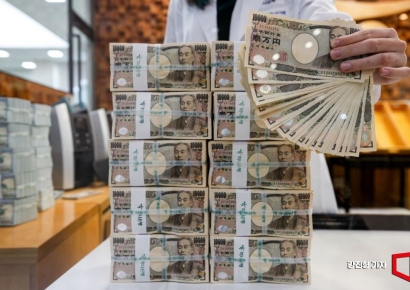 "Average Summer Bonus per Person Tops 1 Million Yen" Japanese Major Corporations Hit All-Time High
- "I Always Made Sure to Eat Naengmyeon..." Food Poisoning Cases Surge by 28%—What's Behind the Increase?
- "Luxury Goods? No Thanks": 50 Million Visitors, But Spending Drops 44%... The Fall of Hong Kong's Shopping Paradise
- “Told to Apply as a New Graduate Without Experience”…Samsung Employees Frustrated as Path to SK hynix Is Blocked
- "At Age 11, I Was a Joy Brigade Candidate... Forced to Undress in Front of Men": Shocking Testimony from North Korean Defector
Meanwhile, gold prices ended slightly higher as expectations for an interest rate hike eased ahead of the MOU signing ceremony to end hostilities.
© The Asia Business Daily. All rights reserved. Unauthorized AI training and use prohibited.