U.S. to Immediately Allow Iranian Oil Exports... Initial Sanctions Relief in Exchange for Ceasefire
Sanctions Waiver for Iranian Oil to Take Effect Upon MOU Signing
Financial Support Considered if Nuclear Program is Dismantled
The administration of U.S. President Donald Trump has decided to immediately allow Iran to export crude oil in accordance with the terms of the ceasefire agreement with Iran. The plan is to provide early economic incentives to end the war, while linking long-term sanction relief to the full opening of the Strait of Hormuz and the abandonment of Iran's nuclear program.

According to the Wall Street Journal (WSJ) on June 16 (local time), the United States plans to implement a sanctions waiver for Iranian oil sales concurrently with the final signing of the U.S.-Iran ceasefire Memorandum of Understanding (MOU) scheduled for this week. The scope of the waiver includes banking payments, shipping, and insurance services for oil transactions.
This marks the first substantial economic benefit provided to Iran by the United States. Until now, since April, the U.S. has effectively blocked Iran's oil exports through a maritime blockade.
Meanwhile, the WSJ, citing United Against Nuclear Iran, an American anti-nuclear weapons group, reported that a very large crude carrier loaded with Iranian oil recently departed the port of Chabahar and sailed across the Gulf of Oman, bypassing the U.S. blockade. This is the first confirmed case since the blockade was imposed in April.
However, the United States does not regard this measure as a complete lifting of sanctions. A senior U.S. official told the WSJ, "While Iran may gain some breathing room through oil sales, sustainable sanction relief depends on Iran's actual implementation." The key conditions cited were the full opening of the Strait of Hormuz and restrictions on Iran's nuclear program.
In particular, the United States is also considering greater financial support if Iran either disposes of or ships abroad its stockpile of highly enriched uranium and effectively dismantles its nuclear program.
Farzin Nadimi, an Iran expert at the Washington Institute, a U.S. think tank, commented, "Allowing oil exports means the U.S. is giving up part of its key bargaining chip," adding, "The White House judged that such economic incentives are necessary to extract concessions from Iran."
One of the most sensitive issues in this agreement is the unfreezing of Iranian assets. The WSJ reported that the United States is willing to allow access to a portion of the frozen assets, but only for payment purposes designated by the Central Bank of Iran.
Iran’s overseas frozen assets are estimated at approximately $100 billion. The majority of these funds are proceeds from oil sales and foreign currency reserves. Under the initial agreement, Iran will first receive $12 billion, and during the subsequent 60-day negotiation period, it has demanded an additional $24 billion. Most of these frozen funds are held in China, Qatar, Oman, and Iraq.
Hot Picks Today
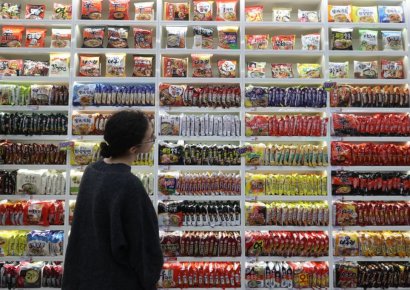 "They Really Might Take No.1"... Nongshim Narrows Gap with Japan from 9.2% to 1.9% in a Year, Closing In on Market Leader
- Jensen Huang Reacts to Douzhi; HYROX Female Champion Faces Ordeal Mid-Race: Was a 'Chinese Drink' to Blame?
- Japanese "Short Sleeper" Who Claimed to Be Fine on 30 Minutes of Sleep a Day Caught Napping During Live Broadcast
- "Please Take Off Your Shoes"—From Crawling onto the Bed to Changing Habits, Young Americans Lead the Shift
- "The Clothes My Dad Used to Wear"... Ralph Lauren, Beanpole, and Hazzys See Sales Surge as MZ Generation Embraces the Trend
Meanwhile, the United States and Iran previously reached agreement on the draft ceasefire MOU via electronic signatures, and the final signing ceremony is scheduled to take place in Switzerland this week. The MOU reportedly includes the extension of the cessation of hostilities, mutual lifting of blockades between the United States and Iran, and the resumption of nuclear negotiations.
© The Asia Business Daily. All rights reserved. Unauthorized AI training and use prohibited.