Free Bus Rides for Seniors? City Council Proposes "Senior Citizen Support Ordinance"
For Seoul residents aged 70 and older
Support limited to city and village buses; express and intercity buses excluded
Free bus rides for seniors already implemented in Daegu and North Gyeongsang Province
An ordinance to expand fare support for the elderly from only subways to buses in Seoul has been proposed at the city council. Currently, support for the elderly is limited to urban railways.
According to the Seoul Metropolitan Council on June 16, Councilman Lee Byungyun (People Power Party, Dongdaemun 1), who chairs the Transportation Committee, recently sponsored the "Seoul City Transportation Fare Support Ordinance for Senior Citizens." Councilman Lee explained the background, stating, "The current Elderly Welfare Act only designates urban railways as free transportation for seniors, which results in disparities in transportation welfare depending on the area of residence."

The ordinance bill stipulates that, within the city’s budget, Seoul may provide full or partial transportation fare support to residents aged 70 or older who are registered as residents of Seoul and meet the criteria set by the mayor. It also requires the mayor to establish an annual plan for senior citizen transportation fare support.
The buses eligible for fare support are limited to city and village buses as defined by the Enforcement Rules of the Passenger Transport Service Act. Express buses and intercity buses are excluded.
Unlike subways and other urban railways, free rides for the elderly are not currently applied to buses, leading to concerns that transportation welfare is not universally provided. In some other regions, such as Daegu and North Gyeongsang Province, free bus rides for the elderly are already in place.
However, unlike other areas, Seoul has excellent subway accessibility, and supporting free bus rides would require a massive budget. Therefore, it remains uncertain whether this ordinance will pass the full session of the city council.
According to estimates by the council’s secretariat, issuing free bus transportation cards to residents aged 70 or older would require a total budget of 578.86 billion won over the next five years. This figure was calculated by applying the proportion of bus use and average bus fare to the average number of monthly public transportation trips, then converting the monthly usage fee to an annual amount.
Given that the population aged 70 or older increases by about 5% annually due to aging, the financial burden is expected to grow each year. The council’s secretariat analysis projects that the budget required for free bus rides would start at 104.7 billion won in the first year, next year, and increase annually to reach 127.5 billion won by 2031.
Hot Picks Today
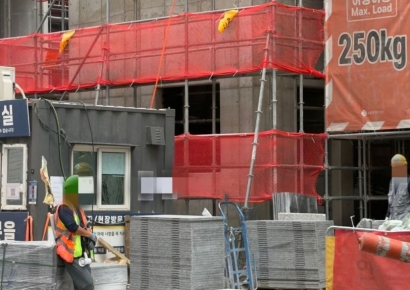 "Even With 400,000 Won a Day, No Takers... Here, Even Workers in Their 50s Are the 'Youngsters': The Aging Construction Site"
- "Tired of Buying and Selling"...Where SamjeonNix Investors Are Turning Their Attention [Click eStock]
- "Lilly Paid Nine Times More to China"... Contract Reveals True Value of K-Bio [Korea-China Bio Comparison] ①
- The Fruit That Disappeared from Japan Returns as "Korean" and Becomes a Hit
- "Why Are Only Japanese Fans So Welcomed?"... Fans Pull Out Trash Bags After the Match
Even Seoul Metro, which operates the city’s subway, faces annual deficits. Last year, the company recorded a net loss of 826.8 billion won, a 14.2% increase from the previous year’s 724.1 billion won. This is equivalent to the 816.7 billion won the company paid last year for public service costs. Last year, the company spent 448.8 billion won on free rides for the elderly and others, 290.7 billion won on bus transfers, and 77.2 billion won on transit pass support as part of public service support. Notably, losses from free rides have increased by about 70% over five years, rising from 264.3 billion won in 2020 with each passing year.
© The Asia Business Daily(www.asiae.co.kr). All rights reserved.