EU Begins Accession Talks with Ukraine and Moldova: "A Significant Milestone"
EU Accelerates After Leadership Change in Hungary
Germany: "At Least Grant Associate Membership Status"

The European Union (EU) has begun negotiations to admit Ukraine, which is at war with Russia, and Moldova, which faces the threat of invasion, as member states. The process accelerated after the fall of the Viktor Orban regime in Hungary, which had previously opposed the accession of these countries. Within the EU, as concerns grow over Russia's westward expansion, some believe that even granting associate member status to the two nations is necessary.
According to Deutsche Welle (DW), Germany's public broadcaster, on the 15th (local time), the EU began discussions on the first cluster (stage) of accession negotiations for Ukraine and Moldova at a meeting of foreign ministers from the 27 member states held in Luxembourg. Taras Kachka, Ukraine's Deputy Prime Minister, who was invited to the meeting, stated, "This is a significant milestone for Ukraine," adding, "EU membership is our dream."
Ursula von der Leyen, President of the European Commission, also called the start of accession talks with the two countries "tremendous progress," noting that "there has been significant advancement in reforms on issues such as anti-corruption and the rule of law, which are fundamental to the EU."
Both Ukraine and Moldova applied for EU membership starting in June 2022, following the outbreak of the war in Ukraine in February that year. After acquiring EU candidate status, they aimed to begin accession negotiations in June 2024. However, at that time, negotiations were repeatedly blocked by Hungary, led by former Prime Minister Viktor Orban, who had a pro-Russian stance. These negotiations require the unanimous consent of all 27 member states.
After former Prime Minister Orban lost power in Hungary's general elections in April for the first time in 16 years, an opportunity arose to resume the talks. Hungary's new Prime Minister, Peter Magyar, recently signed an agreement to strengthen the rights of the Hungarian minority in Ukraine in exchange for supporting Ukraine's EU membership bid.
However, actual accession is expected to take considerable time. EU candidate countries must negotiate on more than 35 topics across six sectors, including rule of law, security, environment, and agriculture. Subsequently, all EU member states must unanimously agree that the candidate has met all membership requirements. The process must also pass through the European Commission and the European Parliament, and all member countries must ratify the accession treaty for the membership to be finalized.
According to the UK newspaper The Guardian, EU accession is known to take a minimum of five to six years, but can extend to several decades. The country that has been waiting the longest for EU accession is Turkey, which applied in 1987 and began negotiations in 2005, but the process is still ongoing.
Some member states, such as Germany, argue that, in light of the risk of further Russian aggression, Ukraine and Moldova should exceptionally be granted associate member status. German Chancellor Friedrich Merz suggested in April that "while immediate EU membership for Ukraine and Moldova is necessary for Europe's security, it is procedurally impossible," and proposed that "Ukraine should be accepted first as an associate member without voting rights while it undergoes the full accession process."
Hot Picks Today
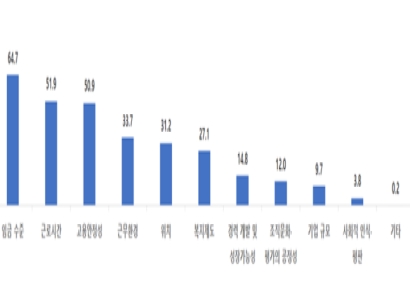 "Please Pay Me at Least 3 Million Won a Month": More Than Half of Young People Today Prioritize "Working Conditions" Over Company Size
- Selling Like Crazy Every Year... 30-Year-Old Hetbahn Takes on a New Challenge: Tastes Better Than "Mom's Home Cooking" [On-Site Report]
- He Left It in the Car and Forgot... "I Nearly Collapsed with Joy": Man Wins $1.48 Million Lottery
- Ran 18 km With 9-Year-Old Tied to Him at the Waist... "Man Banned From Competing for 3 Years"
- Beachgoer Finds 'Plastic' That Turns Out to Be Perfume Ingredient Worth More Than Twice as Much as Gold
On the other hand, there are member states that oppose the accession of the two countries. Quoting a European diplomat who requested anonymity, AFP reported, "If Ukraine joins, it would immediately become the third largest country in the EU in terms of territory and population, which would present significant structural and political challenges for future EU decision-making." The diplomat also pointed out that "issues such as the ongoing war and organized crime, including corruption, must be resolved."
© The Asia Business Daily. All rights reserved. Unauthorized AI training and use prohibited.