Keidanren: Government Action Needed Against Activist Fund Interventions Threatening National Security

The Japanese business community has recently expressed concerns about activist funds that are expanding their influence in Asian capital markets. There have also been calls for government-level responses to management interventions that could undermine national security or the public interest.
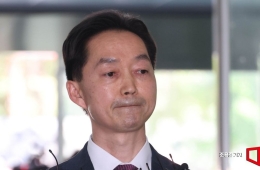
Yoshihisa Masaki, Director General of the Social Communication Bureau at the Japan Business Federation (Keidanren), articulated this stance during a lecture on "Shareholder Activism in Japan and Corporate Responses" at the Management Rights Defense Academy hosted by the Korea Enterprises Federation.
Director Masaki analyzed that, following corporate governance reforms by the Japanese government and shareholder value enhancement policies by the Tokyo Stock Exchange (TSE), there has been a significant increase in activist fund activities in the Japanese market.
He stated, "While the governance system itself has improved, it is necessary to reflect on the fact that corporate profits have become excessively focused on short-term shareholder returns, such as stock buybacks and increased dividends." He emphasized, "For sustainable corporate growth, management resources must be allocated to securing medium- to long-term competitiveness through research and development (R&D), capital investment, and human capital investment."
He particularly pointed out that, in recent Japanese mergers and acquisitions (M&A) cases, the government should actively respond to external interventions aimed at short-term profits or those that could affect core industries related to national security.
A representative case mentioned was the management rights dispute involving Makino Milling Machine, a Japanese mold and parts manufacturer. When Nidec, a comprehensive motor manufacturer, attempted a hostile takeover bid (TOB) without prior consultation, the Japanese court recognized the legitimacy of Makino Milling Machine's measure to issue stock acquisition rights without charge. As a result, Nidec withdrew its acquisition attempt.
Subsequently, global private equity fund MBK Partners participated as an acquirer, but in April, the Japanese government, citing the Foreign Exchange and Foreign Trade Act, recommended that MBK Partners halt its takeover bid. This was due to security concerns that the defense equipment production base and sensitive information could be transferred to foreign capital.
This case is seen as illustrating that, while the Japanese government has been encouraging foreign capital inflows, it may prioritize protecting sovereignty over capital market openness in areas related to national security.
Director Masaki also commented on the management rights dispute involving Korea Zinc, a domestic company.
He said, "If Korea Zinc is considered a key industry related to national security, government intervention may be necessary, just as in the case of Makino Milling Machine."
He added, "If the Korean government determines that it is difficult to regard MBK as a purely domestic fund, it may intervene or impose restrictions. In that process, there may be a need to verify the source of MBK's funds."
Director Masaki pointed out the side effects of activist funds, specifically their focus on short-term profit-driven investment strategies. He said, "Because activist funds fundamentally pursue short-term profits, they can restrict companies from making decisions necessary for future growth. There needs to be an increase in investors who grow together with companies from a long-term perspective."
Hot Picks Today
 "A Seafood Feast and a Fraudulent Act: The Fate of a 20-Something American Who Tried to Dine and Dash $63"
While the Japanese business community acknowledges the positive aspects of enhancing corporate value and protecting shareholder rights, it maintains that a separate response system is needed for short-term interventions that could undermine the foundations of national strategic industries and sustainable corporate growth.
© The Asia Business Daily. All rights reserved. Unauthorized AI training and use prohibited.