U.S. Considers $300 Billion Reconstruction Fund for Iran... Will South Korea Join?
Sanctions Relief in Exchange for Nuclear Abandonment
The administration of U.S. President Donald Trump is reportedly considering allowing the creation of a reconstruction investment fund worth up to USD 300 billion (approximately KRW 454 trillion), provided that Iran faithfully implements the existing memorandum of understanding (MOU) and nuclear agreement. This is interpreted as a strategy to induce the dismantlement of Iran's nuclear program by offering large-scale economic incentives.
According to the Financial Times (FT) on the 15th (local time), the Trump Administration is discussing the possibility of establishing an investment fund worth USD 300 billion, alongside the easing of sanctions against Iran.
This fund would not involve direct investment from the U.S. government; instead, it would be structured to attract private capital interested in investing in Iran once sanctions are lifted. Iran is considered to have significant investment demand if sanctions are removed, given its market of 90 million people and abundant energy resources.

A source familiar with the talks stated, "Many companies in Asia, including those from Korea and Japan, as well as European and American firms, are showing interest," adding, "If sanctions are lifted, this fund will become enormous in size."
The creation of the fund is linked to the implementation of the MOU. According to negotiation sources, the United States has presented the following as key preconditions: an additional 60-day extension of the ceasefire; reopening of the Strait of Hormuz; and further progress in nuclear negotiations.
U.S. Vice President J.D. Vance explained in an interview with CBS, "It is a type of funding that Iran can access as long as it faithfully fulfills its obligations."
However, large-scale economic incentives are expected to become a political controversy within the United States. President Trump has previously strongly criticized the nuclear agreement (Joint Comprehensive Plan of Action, JCPOA) under the Barack Obama Administration, accusing it of providing Iran with "pallets of cash." There are suggestions that the scale of support currently under discussion could far exceed the level of relief granted at that time.
The core issue is the method of handling Iran's enriched uranium. According to the FT, the United States and Iran have reached a basic agreement on the mechanism for handling enriched uranium stockpiles, with a minimum requirement being the dilution of all uranium on-site under the supervision of the International Atomic Energy Agency (IAEA).
Currently, Iran possesses over 9,000 kg of enriched uranium, of which approximately 440 kg is believed to be close to weapons-grade. The Trump Administration believes that a significant portion of Iran's nuclear facilities was destroyed by the U.S. airstrike in June of last year, but maintains the position that additional safeguards are needed to prevent the rebuilding of Iran's nuclear program.
Hot Picks Today
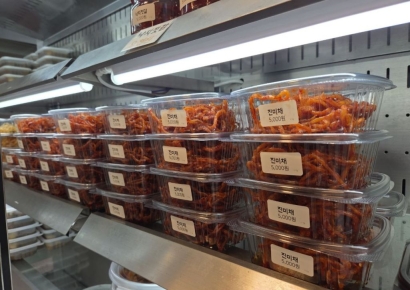 "Auntie, When Will Dried Shredded Squid Return as a Side Dish?"...Once Vanished from Restaurants, Now Making a Comeback
- "When Will It All Be Used? Korean Air's Mileage Deferred Revenue Surpasses 3 Trillion Won"
- "They Thought They Hit the Jackpot: Thieves Steal Nvidia-Branded Trailer, Flee After Discovering Only Sand Inside"
- Already 1,000 Examined, Stirring Up Protest: "Why Go to the Army When We Said No?" Students Rally in the Streets
The U.S. government has stated that it may offer limited financial relaxation measures at an initial stage to build trust, but plans to grant full-scale sanctions relief and access to large-scale funding only in phases, in line with progress in nuclear negotiations.
© The Asia Business Daily. All rights reserved. Unauthorized AI training and use prohibited.