Police No Longer Forced to Endure Assaults... Exemption for 'Law Enforcement' Expanded
Sued for Abuse of Authority While Subduing an Intoxicated Suspect
Officers Sued for Property Damage While Apprehending Biker Gangs
National Police Agency Specifies "Legitimate Law Enforcement" as an Exemption Requirement
Police Inspector A, who has worked as a police officer for over 30 years, responded to a 112 emergency call and was dispatched to the scene. A man in his 60s, who was intoxicated, had taken a taxi but refused to pay the fare. After bringing him to the police precinct, officers instructed him to provide his personal information, but he refused to comply. The man resisted by even biting the officers on their calves. Although the officers subdued the unruly man and placed him in handcuffs, Inspector A and his colleagues were later sued on charges of abuse of authority under color of office. Inspector A shared, "It feels as if decades of my career as a police officer have been denied, now that even legitimate restraint is being regarded as assault."

To improve situations in which frontline police officers are exposed to complaints and disciplinary actions even when performing their duties properly, the exemption requirements for active administration will be expanded. The intent is to reduce cases in which officers are later held liable, such as when subduing intoxicated individuals who assault the police or using legitimate physical force against someone threatening with a weapon, only to be subsequently sued for "excessive force." This is expected to enable more proactive exercise of public authority for public safety.
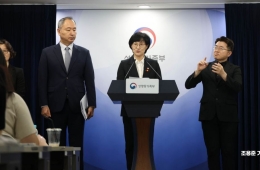
The National Police Agency announced on the 17th that it plans to implement a revised version of the exemption regulation for active administration (an internal directive) as early as this month. The exemption system is designed to prevent or mitigate disadvantages against officers when some flaws occur during the course of work for public interest. However, its application has been limited to cases such as "improvement of unreasonable regulations" or "implementation of public projects," offering little benefit for police officers who frequently need to enforce the law with physical force at the scene.
Accordingly, the National Police Agency will introduce a new clause in the exemption requirements: "legitimate law enforcement in the course of duty." The amendment was recently approved as originally proposed by the National Police Commission. A police official stated, "Most cases of exemption for active administration involve law enforcement activities such as the use of physical force during the handling of 112 emergency calls," adding, "With this revision, we will provide support so that frontline officers can actively utilize the expanded exemption system and have their difficulties addressed."
According to the National Police Agency, there were a total of 290 cases of active administration exemption granted last year. Of these, 229 involved law enforcement at the scene. By type, there were 121 cases related to loss or damage of property, 57 involving use of physical force, 39 related to traffic accidents, and 12 regarding property damage. The number of exemptions granted for active law enforcement (use of physical force) has gradually increased: 32 cases in 2023, 35 in 2024, and 57 last year. Nonetheless, officers still express concerns about the burden of post-incident liability at the scene.

Police officers are changing shifts in front of the entrance to the Handball Stadium at Olympic Park in Songpa-gu, Seoul. Photo by Yonhap News
View original imageFrontline police officers have often responded passively in situations requiring the use of physical force for public safety—such as incidents involving weapons—due to concerns about lawsuits, criminal complaints, or civil petitions. For example, in September 2024, at a police precinct in Chuncheon, Gangwon Province, a drunken man in his 60s who attempted to ride a taxi without paying bit and hit officers during the process of being subdued, but later filed charges against three police officers for abuse of authority. Last year, the court rebuked the man, stating, "Even when assaulted, police officers typically file for summary trial instead of pressing charges, as offenders often repeatedly demand settlements," and sentenced him to one year in prison. The officers who were sued reportedly experienced difficulties in their work life.
A local police precinct official said, "There was even a case where an officer was sued for property damage after causing a motorcycle to fall while apprehending a biker gang. In addition, officers who arrest suspects in domestic violence or child abuse cases are frequently sued for defamation, among other charges." Furthermore, when police use a stun gun against a suspect threatening with a weapon, they are required to follow the guideline of "aiming for the upper body but making every effort to avoid hitting the neck." Even in urgent situations, public authority is restrained due to concerns about post-incident liability.
The Active Administration Exemption Review Committee is organized at various levels, including police headquarters, provincial police agencies, and local police stations. All types of work, except for criminal offenses such as sexual misconduct, are subject to review by the active administration exemption committee. The burden is expected to be reduced for regional patrol officers who handle 112 calls and initial response, as well as for mobile units dispatched to protests and assemblies.
Hot Picks Today
 "Additional 25% Mobile Bill Discount From Today" Causes Stir Online... The Truth Revealed
- "The Clothes My Dad Used to Wear"... Ralph Lauren, Beanpole, and Hazzys See Sales Surge as MZ Generation Embraces the Trend
- "50,000 Won for Used Chapssaltteok Packaging?"... Bizarre Workarounds on Secondhand Platforms
- "Please Take Off Your Shoes"—From Crawling onto the Bed to Changing Habits, Young Americans Lead the Shift
- "Famous Actress on KBS Is Perpetrator's Sister"... KBS Responds to 'Busan Fall Death' Family's Plea
Meanwhile, this revision of the internal directive is effective only for organizational accountability such as disciplinary actions and internal investigations. In cases where actual criminal liability arises due to excessive force, a separate judgment is required in accordance with the Act on the Performance of Duties by Police Officers.
© The Asia Business Daily. All rights reserved. Unauthorized AI training and use prohibited.