"I Sold Samsung and SK Hynix Stocks, But What Is This?... Nongteuk Tax Surges in Bullish KOSPI Market"
Nongteuk Tax Collections Reach 5.7314 Trillion Won by April
Government Considers Expanding Basic Income for Rural Areas

"Why is the Special Rural Development Tax (Nongteuk Tax) collected every time I sell stocks?"
Thanks to the strong performance of the domestic stock market this year, revenue from the Special Rural Development Tax (Nongteuk Tax) is expected to surpass 10 trillion won for the first time ever. However, a significant number of individual investors are paying this tax every time they sell stocks without even realizing it exists. As a result, some are voicing complaints about why stock investors are being asked to fund rural development resources that have nothing to do with investment activities. Moreover, as the government and political circles are moving to expand and make permanent the “basic income for rural areas” based on this revenue, controversy is growing over the appropriateness of such fiscal management.
Nongteuk Tax Surges in Bullish KOSPI Market... Estimates Reach 13.6 Trillion Won This Year
According to the Ministry of Agriculture, Food and Rural Affairs and Korea Exchange, the cumulative Nongteuk Tax collected from January to April this year amounted to 5.7314 trillion won. This represents a dramatic increase of about 3.4 trillion won compared to the same period last year—when the figure surpassed 2.3 trillion won for the first time ever and ultimately exceeded 9 trillion won for the year. Officials in and around the Ministry of Economy and Finance predict that total Nongteuk Tax revenue this year could soar to as much as 13.6 trillion won.
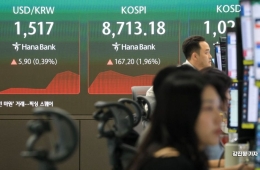
This is due to a surge in trading volume, driven by the strong performance of the domestic stock market (KOSPI). So far this year, the total amount of stock sales by individual investors on KOSPI has exceeded 2,200 trillion won—an explosive increase of 238.6% compared to the same period last year. The Nongteuk Tax is automatically withheld at a rate of 0.15% of the transaction amount every time KOSPI-listed stocks are sold. Since it is deducted silently through securities firms’ systems each time, many investors are not even aware that they are paying this tax.
“Temporary” Introduction 32 Years Ago... Burden Shared by 15 Million Investors
The Nongteuk Tax was originally launched in 1994 as a “temporary, purpose-specific tax” to quickly boost the competitiveness of rural areas in response to agricultural market liberalization following the Uruguay Round (UR) agreement. At that time, few people participated in the capital market, so the tax was widely seen as something paid mostly by well-off, high-income earners.

However, 32 years later, stock investment has become a common wealth-building tool in which the majority of people participate. While the burden of the tax has broadened to the general public, its use remains strictly confined to rural development, deepening the mismatch between who pays and where the money goes. Especially at a time when fiscal demands for future generations—such as addressing low birth rates and population aging, investing in national artificial intelligence (AI) strategies, and ensuring energy security—are mounting everywhere, critics argue that it is anachronistic for the massive funds generated by the stock market to be automatically funneled every year solely into the special rural restructuring account.
Will Soaring Nongteuk Tax Revenue Lead to Higher Basic Income for Rural Areas?
The government and political parties, both ruling and opposition, are now proposing to use the abundant Nongteuk Tax surplus as seed money for basic income in rural areas. Currently, the government is running a pilot program that pays 150,000 won per month to every resident in 17 counties designated as areas with declining populations. The goal is to have the “Basic Income for Rural Areas Act,” which passed the National Assembly’s Agriculture, Food, Rural Affairs, Oceans, and Fisheries Committee in March, enacted at a plenary session by the end of the year. Once the law is in place, the plan is to use trillions of won in surplus revenue to expand the payments to all 69 counties and to raise the monthly amount above 150,000 won.
Hot Picks Today
 Just Left Alone, 12.85 Million Won Becomes 23.3 Million Won... Variable Insurance Emerges as a Star Performer in Bull Market
- "Tired of Constant Buying and Selling"... Where SamjeonNix Investors Are Turning [Click eStock]
- "Samsung Holds Incentive Bonus Feast"... Civil Servants Also Demand 7.1% Pay Increase
- KOSPI Closes Up 2.1% Above 8,700, While KOSDAQ Ends Lower
- "Thought It Was Just Waste"... Urban Mining Pours Out 99.99% Pure Gold [Reportage]

However, some raise concerns. The Nongteuk Tax is a typical cyclical tax category, with revenues that fluctuate wildly depending on the booms and busts of the capital market. As seen this year, when the stock market is hot, the coffers overflow; but when the market enters a correction phase, tax revenues can plummet in an instant. Critics warn that linking the funding for basic income—a fixed, hard-to-reduce expenditure once started—to such a volatile stock transaction tax poses a serious risk to fiscal health. As a result, there is growing support for boldly abolishing the Nongteuk Tax, which has outlived its historical purpose, and replacing it with a Financial Investment Income Tax (Geumtuse), which would tax aggregated profits and losses from stock trading, thereby restoring fairness in the tax system.
© The Asia Business Daily(www.asiae.co.kr). All rights reserved.