Citi: "Terminal Policy Rate Could Reach 4.0% Per Annum"
Rate Hikes Likely to Exert Limited Downward Pressure on the Economy
Korea Citibank has forecast that the Bank of Korea's policy rate hikes could accelerate, potentially bringing the terminal rate to 4.0% per annum.
Jinwook Kim, economist at Korea Citibank, stated in a report on the 15th that "(the Bank of Korea) could speed up tightening at a faster pace than expected, including consecutive rate hikes in the second half of the year."
Economist Kim projected that the Bank of Korea would begin raising rates by 0.25 percentage points at the Monetary Policy Board meeting in July, followed by additional 0.25 percentage point hikes in October this year and in January and April next year, bringing the terminal rate to 3.5% per annum.
He added that there is also a possibility the central bank could raise rates twice more in the second half of next year, pushing the terminal rate up to 4.0% per annum.
He analyzed that the impact of policy rate hikes on growth and inflation has become weaker compared to the past, due to expansionary fiscal policy and changes in household debt structure. Furthermore, the government’s increased fiscal spending capacity, fueled by higher tax revenues from the semiconductor boom, could limit the downward economic pressure from rate hikes.
He also noted that household sensitivity to interest rates has decreased. Due to tighter lending regulations, a rapidly rising proportion of home purchase funds is now sourced from the sale of stocks and bonds, which means the impact of rate hikes on housing prices is expected to be smaller than in the past.
In another report, economist Kim stated, "Stock valuation gains will influence both consumption and the real estate market."

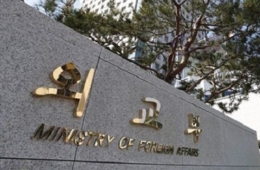
Citibank Korea announced its withdrawal from the domestic consumer finance sector. The photo shows the Citibank Korea headquarters in Jongno-gu, Seoul on the 19th. Photo by Jinhyung Kang aymsdream@
View original imageAccording to the report, the potential stock valuation gains of Korean households in the first half of this year are estimated to reach about 1,146 trillion won. The KOSPI index rose approximately 93% as of June 12 compared to the end of last year. The figure was minus 61 trillion won in 2024 and 429 trillion won in 2025.
Economist Kim explained that annual stock valuation gains could boost both gross domestic product (GDP) and private consumption by 0.4% and 0.9%, respectively.
He particularly emphasized, citing a Bank of Korea report, that nearly 70% of stock capital gains among households without homes tend to flow into the real estate market, and said, "Stock market gains are likely to accelerate the uptrend in the Seoul metropolitan area housing market in the second half of this year."
Hot Picks Today
 "South Koreans Are All Buying It to Take Home"... This "Drug" Costs 350,000 Won in Korea but Just 80,000 Won in Japan
- "Sharing Credit Card Statements Could Spell Trouble for Couples"... Conflict Erupts Over 2.2 Million Won in Weekly Beauty Spending - What Happened?
- Woman Buys All 196 Apartment Parking Spaces, Installs Locks... Then Faces Lawsuit
- "It's just a cold," you think... Ignore it, and your whole body aches... "This illness" has surged 3.7-fold from last year [The Benefits Handbook]
- "Bride Lee Dogyeong, Groom Lee Dogyeong"... Couple Share the Same Name and Date of Birth: "This Must Be Fate"
He also pointed out that "recent sources of home purchase funds are not directly linked to mortgage loans, so the Bank of Korea's rate hike cycle may have a relatively limited impact on the upward trend in the housing market."
© The Asia Business Daily. All rights reserved. Unauthorized AI training and use prohibited.