[Issue] Tensions Rise Ahead of Jeonnam Gwangju Integrated City Council Launch... Fierce Chairmanship Race and Controversy Over Cooperation
Democratic Party Secures 83 Out of 91 Seats, Gaining Control
Leadership Structure Discussions to Take Center Stage at This Week's Workshop for Elected Members
Opposition Parties and Civic Groups Protest "Virtual Exclusion of Non-Democratic Parties"
The Jeonnam Gwangju Integrated Special City Council, which is set to launch on July 1, is emerging as a fierce political battleground ahead of the election of its inaugural chairman and the formation of its leadership. With the Democratic Party of Korea securing over 90% of the seats and holding the initiative in council operations, a behind-the-scenes competition over the composition of the chairmanship is intensifying. Furthermore, controversy over cooperation has arisen even before the official launch, as the Democratic Party set the standard for forming negotiating groups at a minimum of one-tenth of the total council members, drawing backlash from civil society and opposition parties.
According to local political sources on June 15, multiple candidates, primarily among incumbent lawmakers from the Gwangju and Jeonnam regions, are being discussed as potential contenders for the inaugural chairman of the Integrated Special City Council. The chairman's post is considered highly symbolic as the first head of the unified council and is seen as a key position that will determine the direction of future council operations.
![Image illustrating the election competition for the first chairman of the Jeonnam Gwangju Integrated Special City Council and the criteria for forming negotiation groups. <br>[Graphic=ChatGPT]](http://www.asiae.co.kr/news/img_view.htm?img=2026061511525099691_1781491969.png)
Image illustrating the election competition for the first chairman of the Jeonnam Gwangju Integrated Special City Council and the criteria for forming negotiation groups.
[Graphic=ChatGPT]
Some aspirants are said to have effectively entered the race months ago, making contacts with fellow lawmakers while traveling between Gwangju and Jeonnam. In particular, as Gwangju and Jeonnam have different political and regional interests, there is active maneuvering behind the scenes to win the support of council members.
The chairmanship election will be held through a secret ballot at the first extraordinary session on July 1. Candidate registration will take place over two days, from June 25 to 26, and a joint meeting for all candidates is scheduled for June 29.
Democratic Party Holds Overwhelming Advantage... This Week's Workshop Will Be Pivotal
The biggest variable in this leadership formation process is internal coordination within the Democratic Party.
According to the results of the June 3 local elections, the Democratic Party secured 83 out of a total of 91 seats on the Integrated Special City Council. The Progressive Party secured 5 seats, the National Innovation Party for Justice secured 2 seats, and the People Power Party secured 1 seat.

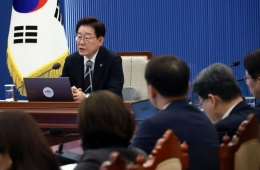
The Jeonnam Provincial Council and Gwangju City Council held a preliminary meeting for the newly elected members of the Integrated Special City Council on the 9th at Hotel Hyundai By Lahan Mokpo in Yeongam-gun, Jeonnam. Photo by Shin Jinseok
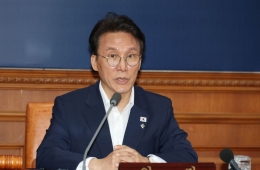
View original imageAttention is now focused on the Democratic Party's workshop for elected members of the Integrated Special City Council, which will be held in Boseong, Jeonnam, from June 16 to 17. The event, co-hosted by the Gwangju and Jeonnam branches of the Democratic Party, will also be attended by Min Hyung-bae, the mayor-elect of Jeonnam Gwangju Special City, who is expected to share the vision and future operational direction for the unified city.
While the official agenda includes topics such as the responsibilities and ethical codes of elected officials and gender equality policy education, political observers expect that discussions will also take place regarding the election of the chairmanship and the allocation of standing committee chair positions.
In particular, as the Integrated City Council will be composed of lawmakers from both Gwangju and Jeonnam, regional balance is also cited as a key variable. Analysts note that how regional and political considerations are reflected in the formation of the chairmanship and standing committee leadership will significantly influence the future structure of council operations.
A local political figure remarked, "The allocation of standing committee chair positions may be an even more sensitive issue than the election of the chairman," adding, "Even within the Democratic Party, there are complex regional and seniority-based interests involved, so a significant degree of coordination will be unavoidable."
Backlash Over "Virtual Exclusion of Opposition"... Criteria for Negotiating Groups Under Scrutiny
Concerns are mounting over the Democratic Party-led formation of the council's leadership.
On this day, civic groups from Gwangju and Jeonnam, including the Gwangju Citizens Coalition, issued a joint statement calling for a review of the criteria for forming negotiating groups within the Integrated Special City Council.
They criticized the Democratic Party for setting the requirement for forming a negotiating group at a minimum of one-tenth of the total council members, calling it "a measure that effectively restricts the legislative activities of non-Democratic Party lawmakers."
Currently, under the seat distribution of the Integrated Special City Council, at least 10 seats are required to form a negotiating group. However, excluding the Democratic Party, the Progressive Party holds 5 seats, the National Innovation Party for Justice 2 seats, and the People Power Party 1 seat, totaling only 8 seats. Thus, even if all non-Democratic Party members joined forces, they would still be unable to form a negotiating group.
Civic groups argued, "The current National Assembly requires 20 seats, which is about 6.7% of all seats, for the formation of a negotiating group," and pointed out, "The Integrated Special City Council has set an even higher bar than the National Assembly." They continued, "While the Democratic Party leadership advocates for relaxing the negotiating group requirement in the National Assembly, it is imposing stricter standards at the local council level," criticizing that, "Local councils, which should reflect the diverse voices of citizens, are in fact narrowing the space for cooperation." They added, "The Democratic Party's overwhelming seat count is the result of the structural characteristics of the current electoral system," and criticized, "Restricting opposition participation based solely on seat numbers does not meet citizens' expectations."
The National Innovation Party for Justice's Gwangju branch also issued a statement, claiming, "Preparations for the launch of the Integrated Special City Council are proceeding centered around a specific party," and called for the creation of a joint governance body that includes all parties. They further argued that minority parties must not be excluded during the process of establishing the operational framework for the next four years, including the criteria for negotiating group operations, standing committee formation, operational principles, and local ordinance revisions.
The Progressive Party, which is the second-largest party in the council, also held a press conference at the Gwangju City Council on this day, calling for the guarantee of minority party participation in the council's agenda coordination committee and demanding that the contents of such meetings be made public.
The Progressive Party's elected members stated, "Although it was agreed at the preliminary meeting for new members to form an agenda coordination committee that would include the Progressive Party and others, the committee is currently being run solely by the Democratic Party," adding, "Even the details of the meetings are not being disclosed." They continued, "This is a sign of the demise of democracy and foreshadows an autocratic, Democratic Party-centered council operation," demanding the disclosure of the committee meeting minutes and the open release of the new members' preliminary meeting records.
Hot Picks Today
 "Bitcoin Could Surge Over 20 Times—Wall Street Heavyweight Delivers Bold Forecast: 'Don't Sell Now'"
- Once Warped, Yields Plummet... The Hidden Threat That Could Decide Samsung and SK hynix's Semiconductor Supremacy [Chip Talk]
- Prosecutors Refute Legal Arguments by Hyunmoon Cho's Side in 'Attempted Coercion' Case: "Evidence Not Illegally Obtained"
- "Want to Be Like Korean Women": Where Young Chinese Head First Upon Arriving in Seoul
- "Are Koreans Really Like This?" Japanese Reactions Explode... Convenience Store Employee Lays Flat on the Floor, What Happened?
They also argued that citizen input procedures are needed regarding key issues such as the selection of the locations for city hall and the city council, the enactment of the launch ordinance, the formation of standing committees, and the criteria for negotiating groups. In particular, they emphasized, "The locations for the special city hall and city council must be decided by the citizens," and called for the preparation of citizen participation measures such as large-scale public opinion surveys.
© The Asia Business Daily(www.asiae.co.kr). All rights reserved.