[US-Iran Ceasefire] Trump Declares End of War: "Full Reopening of Hormuz"... Nuclear Talks Begin Now (Comprehensive)
Trump: "Normalize Oil Supply"
Focus Shifts to Follow-up Negotiations on Nuclear Issues

The United States and Iran have reached a dramatic agreement to end the war. However, it is difficult to say that the war has completely ended, since both countries agreed to a memorandum of understanding (MOU) under which they will implement negotiations related to Iran's nuclear weapons program during a conditional 60-day ceasefire. U.S. President Donald Trump repeatedly emphasized, as a result of the end of the war, that the Strait of Hormuz will be opened without any conditions. While the main obstacles to a complete end to the conflict remain, leading to assessments of an “uneasy ceasefire,” energy prices are expected to gradually stabilize as the strait, which accounts for 20% of the world’s oil shipments, reopens.
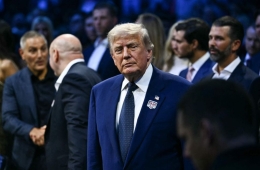
On the 15th (local time), President Trump posted on the social networking service Truth Social, “The agreement with Iran is now complete,” adding, “I fully approve the unconditional reopening of the Strait of Hormuz and will simultaneously lift the U.S. Navy’s blockade immediately.” He continued, “Normalize oil supply, let the oil flow again into the market.”
Pakistani Prime Minister Shehbaz Sharif also announced via X (formerly Twitter) that the United States and Iran had reached a peace agreement. Prime Minister Sharif stated, “Both sides have agreed to immediately and permanently end military operations on all fronts,” and noted that the Lebanese front is also included in the agreement.
Strait of Hormuz Reopens... It May Take Time for Shipping Volume to Recover

The specific details of the ceasefire MOU between the two sides are expected to be released soon. President Trump has continually emphasized that he would consider Iran’s abandonment of its nuclear program to be the main achievement of ending the war. Following this agreement, he again stressed the reopening of the Strait of Hormuz. After announcing the end of the conflict, he once again stated on Truth Social, “As soon as the agreement is signed on Friday and the (Hormuz) strait is reopened, mine clearance operations will commence, and oil will once again flow in both directions for the benefit of the region (the Middle East) and the world.” He further predicted, “This great agreement will bring peace and security to the entire region.”
Previously, President Trump had repeatedly insisted that Iran’s permanent abandonment of nuclear weapons was a necessary condition for ending the conflict. The U.S. side’s plan was to offer compensation—such as the phased release of Iran’s overseas frozen assets and the lifting of sanctions—in line with Iran’s progress in dismantling its nuclear program and disposing of nuclear materials. Axios analyzed that even with the reopening of the strait, practical tasks such as mine removal, ensuring safe navigation routes, and restoring damaged infrastructure remain, meaning it may take some time for shipping volumes to recover.
Bloomberg reported that at least three different draft agreements were discussed between the United States and Iran. These drafts were made up of 14 clauses and are reported to include the reopening of the Strait of Hormuz, the easing of sanctions on Iran, and the initiation of long-term negotiations concerning Iran’s nuclear program. According to Bloomberg, the three drafts differ in detail, but the biggest point of contention is how much economic compensation Iran will receive immediately after the MOU is signed.
Previously, foreign media reported that a plan to allow the release of $25 billion (about 37.6 trillion won) of Iran’s frozen assets was under discussion. Another draft obtained by Bloomberg included a plan for the United States and regional partners to establish an Iranian reconstruction and economic development program worth at least $300 billion (455.85 trillion won). In response, hardliners in the United States have criticized the Trump administration, arguing that excessive easing of sanctions and cash-like support could effectively hand Tehran a diplomatic victory.
It is known that both sides agreed to declare the immediate and permanent cessation of hostilities on all fronts upon signing the MOU. This includes Lebanon.
Persistent Risks... Key Issues Moved to Follow-up Negotiations
Foreign media did not interpret this agreement as meaning “the end of the war.” Instead, it has been described as an “uneasy ceasefire.” The New York Times (NYT) analyzed that this agreement essentially extends the previous ceasefire by 60 days. Most of the core issues have been deferred to follow-up negotiations.
The most sensitive issue cited is Iran’s nuclear program. The United States and Iran are expected to conduct separate technical negotiations over the next 60 days on uranium enrichment limits, the handling of highly enriched uranium (HEU), freezing nuclear facilities, and establishing international inspection and monitoring systems. The United States is demanding that Iran either downblend its HEU, which is close to weapons-grade, or export it overseas. In contrast, Iran is presenting the easing of sanctions and the release of its overseas frozen assets as preconditions.
According to Al Jazeera, Kazem Gharibabadi, Iran’s Deputy Foreign Minister, stated that Iran will first verify whether the United States actually fulfills its promises regarding the cessation of hostile acts, lifting the maritime blockade, and releasing frozen assets, before entering into final agreement negotiations. Deputy Minister Gharibabadi said, “This MOU does not mean we trust our adversary,” and added, “We will closely monitor whether the United States fulfills its promises.” This means that, contrary to President Trump’s declaration that the agreement is “complete,” Iran does not yet consider a final agreement to have been reached.
Al Jazeera also reported that the agreement includes not only a halt to direct conflict between the United States and Iran, but also a cessation of fighting between Israel and Hezbollah in Lebanon. Israel has previously attacked Iran alongside the United States. Israel has targeted Lebanon because it is the base of the Iran-aligned militant group Hezbollah. Israeli Prime Minister Benjamin Netanyahu has claimed that Israel’s attacks on Lebanon are separate from the war with Iran. Prime Minister Netanyahu has also taken a hardline stance, stating that without the removal of nuclear materials and dismantlement of enrichment capabilities, the war is not truly over.
Israel Also a Variable
Before the ceasefire agreement was announced, Israel conducted airstrikes on the southern outskirts of Beirut, the capital of Lebanon. The reason given was that Hezbollah had sent three drones into Israeli airspace. Lebanese media reported that the airstrikes killed at least three people and injured 15 others. President Trump, in a phone interview with Axios, commented, “(Prime Minister Netanyahu) Why did he have to attack? I was really angry,” adding, “It was just one hour before we were going to sign.” He strongly criticized Prime Minister Netanyahu, saying he “lacks judgment.”
President Trump’s rush to reach a ceasefire agreement despite Israel’s dissatisfaction appears to be a decision influenced by political considerations. The sharp rise in oil prices and inflationary pressures caused by the protracted Iran war was the Trump administration’s biggest burden ahead of the upcoming midterm elections in November.
Will Trump Sign in Person?
The official signing ceremony will be held on the 19th in Switzerland. Iranian National Assembly Speaker Mohammad Bagher Ghalibaf and Iranian Foreign Minister Abbas Araqchi will travel to Geneva to attend in person. On the U.S. side, Vice President J.D. Vance is expected to participate. Since President Trump will also be in Europe to attend the G7 Summit from the 15th to the 17th, there is interest in whether he will attend the signing ceremony himself. President Trump had previously announced that the signing would take place on his 80th birthday, which is the same day, but only announced the agreement and coordinated with the Iranian side to hold the official signing ceremony on the 19th. This agreement was reached after Pakistan, Qatar, Saudi Arabia, and Turkey stepped in to mediate at the last minute.
Hot Picks Today
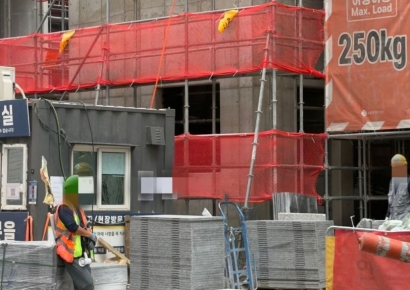 "Even With 400,000 Won a Day, No Takers... Here, Even Workers in Their 50s Are the 'Youngsters': The Aging Construction Site"
- Thought It Was Just an 'OK Sign'... World Cup Referee Faces Controversy Over 'Racist' Hand Gesture
- "I Sold Samsung and SK Hynix Stocks, But What Is This?... Nongteuk Tax Surges in Bullish KOSPI Market"
- "Refusing to Pay 100 Million Won in Damages"... Busan 'Spinning Kick' Perpetrator Allowed to Use 100,000 Won per Month from Prison Deposit
- "Too Many Spies in Korea... I Didn't Cry Because of Yoon's Sentence," Kim Gyeri Explains Her Tears
The market reaction has been positive so far. According to Bloomberg, the U.S. dollar weakened against the currencies of the Group of Ten (G10) in the Asian foreign exchange market. As risk appetite returned, the Australian dollar rose about 0.5%, and the euro rose 0.3%. The market expects that the reopening of the Strait of Hormuz will ease upward pressure on international oil prices and also reduce inflationary pressure in the United States.
© The Asia Business Daily(www.asiae.co.kr). All rights reserved.