Credit Finance Industry Welcomes New Private-Sector President... "Focus on Practical External Cooperation Over Grand Policy Agendas"
Private-Sector President Faces Test of Communication with Authorities
Expectations for External Cooperation Amid Concerns over Past Precedents
Key Challenges Include Lending Regulations and Stablecoins
Practical Solutions Needed for Bond Stabilization Fund and Eligible Cost Standards
As Dongchul Lee prepares to take office as the 14th President of the Korea Federation of Women’s Financial Institutions, there are growing calls within the specialized credit finance sector for him to demonstrate practical external cooperation skills, especially in dealings with financial authorities and the political sphere. There is an atmosphere of anticipation for Lee to serve as a “persistent president,” consistently conveying the industry’s practical on-the-ground challenges—such as stabilizing funding rates and communicating industry opinions during the review and revision of the eligible cost standards, which are used to determine preferential credit card fee rates.

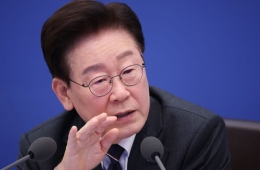
Dong Chul Lee, Candidate for the 14th President of the Korea Federation of Credit Finance Associations. The Asia Business Daily DB
View original imageAccording to the financial industry on June 16, Lee will hold his inauguration ceremony at 2 p.m. that day at the Korea Federation of Women’s Financial Institutions’ headquarters in Hanwhae Building, Jung-gu, Seoul. His first official activity on the day of his inauguration will be to attend an external event. As the industry is paying close attention to his ability to foster external partnerships, he is starting his term by engaging in external communication from day one.
An industry official said, “Even before taking office, Lee has been outlining a ‘big picture’ for the major issues that the Federation and the industry must address during his three-year term, presenting various ideas. He is expected to show his determination to work on the ground from the first day to the last day of his tenure.”
However, the industry’s expectations are not limited to rapidly pushing through major policy agendas such as easing lending regulations or introducing stablecoins. Given the precedent of previous private-sector presidents of the Federation struggling to communicate with the Financial Services Commission, many believe the priority is to steadily expand points of contact with the authorities by focusing on practical, on-the-ground issues.
Lee is reportedly aware of this sentiment. Instead of aggressively demanding immediate solutions from the authorities at the beginning of his term, he has devised a strategy to continuously relay practical challenges from the field and to address issues not only in the card industry but also in the capital and new technology finance sectors. Lee emphasized, “The Korea Federation of Women’s Financial Institutions is an organization comprising credit finance companies, not an association representing only card or capital companies. I will support card, capital, and new technology finance companies equally.”
The tasks Lee is expected to face during his tenure include: ▲ efforts to ease the third-stage stress-based debt service ratio (DSR) regulations for small-amount card loans ▲ initiatives to participate in the stablecoin distribution business ▲ and the development of policies to promote the capital and new technology finance sectors.
Industry insiders advised that, aside from these medium- to long-term tasks, Lee should start with practical issues such as stabilizing funding rates and conveying industry perspectives on preferential fee calculations during the early stages of his term. Above all, they hope he will demonstrate the tenacity to continuously knock on the doors of the authorities and political leaders, even if immediate results are not forthcoming.
Regarding funding rate stabilization, there are strong calls for Lee to actively request that the proportion of credit finance bonds included in the Bond Market Stabilization Fund be increased. Additional suggestions include: ▲ lowering the credit rating requirements for bond purchases to include small- and mid-sized capital companies ▲ clearly conveying industry requests to minimize the potential “stigma effect” that could arise if news of government support becomes public and to help create more favorable funding conditions.
Another industry official said, “While funding rates depend on external variables and market conditions, the Federation should not remain idle. Instead, it should continue to raise the issue of expanding the proportion of credit finance bonds in the stabilization fund with the authorities. The request is not to produce immediate results at any cost, but rather to avoid repeating the mistakes of previous private-sector presidents who were thoroughly ignored by the authorities, by maintaining consistent communication.”
In the medium- to long-term, there are also calls for Lee to continue requesting that the authorities maintain the current preferential fee rates at the “freeze” level during the review and revision of the eligible cost calculation cycle. Last year, the Financial Services Commission extended the eligible cost calculation cycle from three to six years, so the next fee rate restructuring is scheduled for 2031. However, since there is a possibility that, during the 2028 review and revision process—within Lee’s term—the authorities may push to lower the preferential fee rates, citing political reasons such as support for self-employed workers and small businesses, there is a need to be fully prepared for such a scenario.
Hot Picks Today
 "Sharing Credit Card Statements Could Spell Trouble for Couples"... Conflict Erupts Over 2.2 Million Won in Weekly Beauty Spending - What Happened?
- [Exclusive] Daiso Draws Shoppers for "3,000-Won Cosmetics"... and Also Boosts Sales at Nearby Olive Young
- "Only in Seoul," Foreigners Rave... Then Seoul Beats Tokyo to Claim 'World's Best Big City' Title
- "I'm Struggling Financially," He Confided at His Parents' Graves... A 'KRW 2 Billion Stroke of Luck' Came Soon After
- Woman Buys All 196 Apartment Parking Spaces, Installs Locks... Then Faces Lawsuit
Another industry official commented, “If I had to name the greatest achievement of former president Jeong Wankyu, it would be the extension of the eligible cost calculation cycle from three to six years. The industry would prefer a capable president who defends the current rate at a freeze level, rather than making unreasonable demands to abolish the fee system altogether. Achieving this alone would be considered an accomplishment for Lee. Since the authorities could pressure for fee adjustments at any time due to economic or political circumstances such as K-shaped polarization, active communication is needed from the outset of his tenure.”
© The Asia Business Daily. All rights reserved. Unauthorized AI training and use prohibited.