[US-Iran Ceasefire] 'Ceasefire Agreement' Reached Despite Israeli Objections...Netanyahu Cornered
Public Backlash Grows Over "Bad Deal"
Relations with Trump Also Strained
Israeli General Election Expected by October
With the United States and Iran announcing that they will sign a ceasefire memorandum of understanding (MOU) on June 19 (local time) despite Israel’s airstrikes on Lebanon, Israeli Prime Minister Benjamin Netanyahu has found himself cornered. Observers believe that not only have Netanyahu’s initial war objectives—such as neutralizing the Iranian nuclear threat—been abandoned, but that the agreement will likely include provisions favorable to Iran.

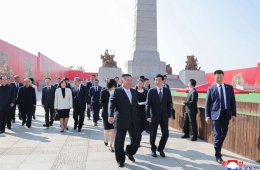
Israeli Prime Minister Benjamin Netanyahu is delivering a speech at an event held in Jerusalem on April 21 (local time). Photo by AP Yonhap News
View original imageOn June 14, The New York Times reported that Israeli daily Yedioth Ahronoth described the US-Iran ceasefire agreement as a “bad deal,” reflecting the prevailing sentiment. The full text of the agreement has not been released. However, the outlet noted that key provisions are reportedly missing from the MOU, fueling growing domestic discontent according to international news reports.
According to US and Iranian officials, the initial MOU is expected to cover the reopening of the Strait of Hormuz, the lifting of the US blockade on Iranian ports, a 60-day extension of the ceasefire, and negotiations over Iran’s nuclear program and the US lifting sanctions on Iran during the ceasefire. Some sources have speculated that the US is considering including the release of $25 billion (about 37 trillion won) in frozen Iranian assets in the MOU. There is also mention of the possibility of Iran expanding its oil exports.
These provisions are a far cry from what Prime Minister Netanyahu originally promised the Israeli people. At the start of the war, Netanyahu declared that the goal was to eliminate existential threats to Israel, specifically calling for the elimination of the Iranian nuclear threat, the dismantling of Iran’s ballistic missile program, and the creation of conditions for the Iranian people to overthrow their regime. In addition, he has strongly demanded an end to Iranian support for its terrorist proxy forces, including Lebanon’s Hezbollah, Yemen’s Houthi rebels, and Hamas in Gaza.
Avigdor Lieberman, former defense minister and right-wing politician considered a political rival of Netanyahu, criticized the deal via social media, calling it a “disaster” for Israel. Centrist opposition leader Yair Lapid also stated, “I hope the reports are not true,” adding, “If they are, this would be one of the most shocking failures in the history of Israel’s diplomatic and security policy.”
Hot Picks Today
 "Please Pay Me at Least 3 Million Won a Month": More Than Half of Young People Today Prioritize "Working Conditions" Over Company Size
- Selling Like Crazy Every Year... 30-Year-Old Hetbahn Takes on a New Challenge: Tastes Better Than "Mom's Home Cooking" [On-Site Report]
- "Is This Really Possible?" The World Is Watching... Could My Car Become a "Mobile ESS"? [Energy Odyssey] 15
- "Hey, Lady, Teach Your Kids to Behave!" ... 300,000 Won in Cash and a Bodily Injury Claim Demanded Over Child's Door Ding
- "Don't Trust This Woman": Documentary on 'Investment Scammer' Earns KRW 22 Billion in One Week
With Israeli general elections expected to be held by the end of October at the latest, the current situation is forecast to work against Prime Minister Netanyahu. He faces pressure not only from within his coalition government but also from the opposition, urging him not to simply accept demands from the Trump Administration. The New York Times wrote, “Nevertheless, Netanyahu is reluctant to publicly clash with Trump,” noting that “he has thus far touted his close relationship with Trump as one of his most important political assets.”
© The Asia Business Daily. All rights reserved. Unauthorized AI training and use prohibited.




![[Market ING] KOSPI Seeks Rebound in Superweek Packed with Corporate Earnings and FOMC](https://cwcontent.asiae.co.kr/asiaresize/307/2026102514484873155_1792907327.jpg)