Prosecutors Overtake Fair Trade Commission in "Oil Price Collusion"... Arrest Warrants Sought in "Fuel Price Cartel" Crackdown
From Dining Table Prices to Oil Costs
Seoul Central District Prosecutors' Office Fair Trade Investigation Division Pushes Forward Ahead of October Abolition
Targeting Collusion at the Forefront of "Livelihood Investigations"
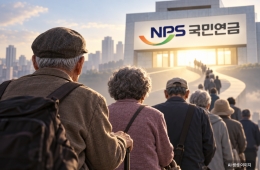
The increase in oil prices, often described as the "lifeblood" of industry, triggers a chain reaction that impacts prices across the board. The immediate result is higher transportation costs for freight workers, which in turn leads to rising logistics expenses and ultimately pushes up the price of everyday consumer goods. Furthermore, this domino effect extends to higher manufacturing costs across many industries, including petrochemical products such as plastics. In the context of prolonged high inflation, "oil price collusion," referring to artificial price distortion by a small number of refiners, has been singled out as a key factor threatening the national economy.

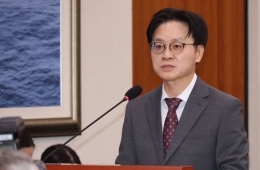
Heesuk Na, Chief Prosecutor of the Fair Trade Investigation Division, Seoul Central District Prosecutors' Office
View original imageRecently, the Fair Trade Commission launched an intensive investigation into such structural collusion cases, but months later, the situation remains stagnant, with no significant progress made. The Fair Trade Commission began investigating oil price collusion in March, but it has been reported that they have not even secured enough dedicated personnel to analyze the vast amount of data related to the case. Above all, criticism continues that "former officials" from the Fair Trade Commission, who have moved directly to large law firms, are now acting as shields for major corporations, delaying investigations or reducing the severity of penalties. Such collusion between former regulators and corporations is seen as a major obstacle to the strict enforcement of the law.
While the Fair Trade Commission's investigation has effectively stalled, the prosecution has launched its own probe. The Fair Trade Investigation Division of the Seoul Central District Prosecutors' Office, led by Chief Prosecutor Heesuk Na, recently requested arrest warrants for two executives from the price decision department of HD Hyundai Oilbank. Before this, the prosecution carried out a sweeping raid on the four major refiners—SK Energy, GS Caltex, S-Oil, and HD Hyundai Oilbank—along with the Korea Petroleum Association, and rapidly secured key evidence through extensive digital forensics. This action came just 18 days after President Lee Jaemyung declared the price crisis a "serious anti-social crime" and ordered a strict crackdown.
Despite being a small team of just six prosecutors, the recent moves by the Central District Prosecutors' Office's Fair Trade Investigation Division are being recognized for demonstrating the power of direct prosecutorial investigation. Since Chief Prosecutor Na, known as an expert in fair trade, returned to lead the division in August last year, the team has focused its efforts on cracking down on "unfair practices harming people's livelihoods." Notably, within just five months, the division uncovered nine collusion cases—including price-fixing among three major sugar companies (CJ CheilJedang, Samyang, and Daehan Sugar), as well as cases involving flour and power equipment—amounting to a total of 994.04 billion won, and indicted 52 individuals in a single sweep.

The division has also dealt with cases such as the "abuse of power" by large accommodation platforms and collusion in public sector bidding. By securing evidence quickly, the division frequently launches preemptive compulsory investigations and proves charges in a short period—often before the Fair Trade Commission has even decided on fines or other administrative penalties. This "speed-driven" approach is a hallmark of the division's investigation style. Legal experts note that these consecutive achievements are energizing the organization, especially as the prosecution faces possible dissolution following the expected passage of the Criminal Investigation Agency and Public Prosecution Act in October. Amid concerns over a significant reduction in prosecutorial authority, the division is maximizing its remaining powers in the economic and public livelihood sectors, thereby demonstrating both its expertise and its ongoing relevance.
In fact, President Lee singled out the division's investigation team during a Cabinet meeting and ordered them to be commended. In response, Minister of Justice Jeong Seongho recently awarded the entire investigative team with commendations for outstanding prosecutors. The focus of the "refinery cartel" investigation, which is uncovering the illegal oligopolistic practices of major corporations, is now on whether the probe will expand to other refiners, drawing keen attention from across the industry.
Hot Picks Today
!["Just by Parking Money at the Bank? Unusually High Parking Account Rates Lately [Practical Asset Management]"](https://cwcontent.asiae.co.kr/asiaresize/93/2026092308565839400_1790121417.png) "Just by Parking Money at the Bank? Unusually High Parking Account Rates Lately [Practical Asset Management]"
"Just by Parking Money at the Bank? Unusually High Parking Account Rates Lately [Practical Asset Management]"
- Kim Seui’s Apgujeong Apartment Enters Auction Over Unpaid 120 Million Won Legal Fees Amid Kim Soo Hyun Defamation Charges
- "I Worked Hard Throughout Chuseok"...Why Office Workers Are Quitting in Droves Right After the Holidays
- Explosive Response to Japanese User's Photo... 'Seoul Goods' Reimagining City Image Gain Popularity
- 'What Is This Craze?' As Global Demand Soars, Major Producer Suddenly Halts Exports Amid Domestic Shortage
Meanwhile, the presiding judge in charge of warrants at the Seoul Central District Court is scheduled to hold pre-arrest hearings for the two HD Hyundai Oilbank executives, who are suspected of violating the Monopoly Regulation and Fair Trade Act, at 2:00 p.m. and 4:00 p.m. on June 18, 2026.
© The Asia Business Daily. All rights reserved. Unauthorized AI training and use prohibited.