"World Cup Is an Exception"... Wall Street Banks That Opposed Remote Work Ease Rules
Major Matches in New York and New Jersey Raise Concerns Over Traffic Congestion
Strict In-Office Policies Temporarily Relaxed
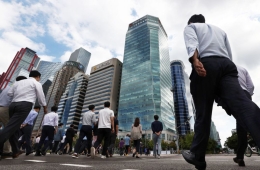
With the opening of the 2026 North and Central America World Cup, leading investment banks on Wall Street in New York, USA, have reportedly eased mandatory in-office attendance requirements for their employees on a temporary basis.
The Financial Times (FT), a UK daily newspaper, reported on June 13 (local time) that Goldman Sachs and JPMorgan Chase have allowed some employees to work from home during the World Cup period in response to anticipated traffic congestion and disruptions in transportation.
According to the report, both companies have informed employees who are expected to have difficulty commuting on match days that they can apply for remote work with managerial approval. This policy contradicts the strict return-to-office stance that both companies have maintained since COVID-19.
David Solomon, CEO of Goldman Sachs, previously described remote work as a "temporary phenomenon." Jamie Dimon, CEO of JPMorgan, has also consistently emphasized the necessity of in-person work. In fact, earlier this year, JPMorgan required its employees to return to a five-day, in-office work week.

FT analyzed that companies are taking practical measures as traffic congestion around stadiums and restrictions on rail use are expected during the World Cup period.
In particular, the New York and New Jersey areas have been selected to host major matches and the final in the latter stages of the tournament, and are expected to draw crowds far larger than usual. With a total of eight matches scheduled in the New York and New Jersey region, including the final at MetLife Stadium in New Jersey, hundreds of thousands of football fans are anticipated to gather.
Meanwhile, Citigroup, which has maintained a relatively flexible work policy, has also reportedly encouraged employees in affected areas to make active use of remote work arrangements.
FT commented on this case, stating, "This is an example that shows how large-scale international sporting events can influence corporate operations." It added, "Remote work, which had been reduced post-pandemic, is still being effectively used as a contingency measure."
Hot Picks Today
 "Doesn't Know How to Sell Shares": Kim Moonsoo, Who Bought SK hynix at 20,000 Won, Draws Attention Over "100-Fold Return" Rumors
Even after the COVID-19 pandemic, the proportion of remote work has remained relatively high in the United States. This is in stark contrast to Europe and Asia, where most countries have returned to pre-pandemic levels. However, it is known that recently, many companies have been encouraging employees to work in-office five days a week to improve productivity.
© The Asia Business Daily(www.asiae.co.kr). All rights reserved.