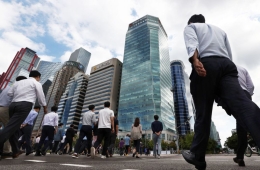
Ninth-Term Provincial Governors Enter 'AI Competition'... Extending Beyond Administrative Innovation to Manufacturing AX
Korea Local Information Research & Development Institute Analyzes AI Pledges of 16 Newly Elected Provincial Governors
Resident-Focused Services, Industrial Clusters, Manufacturing AX, and Specialized Industry Convergence Take Center Stage
"Focus on Utilization and Expansion over Technology Adoption... Tailored Regional AI Strategies Needed"

Local government AI policies are emerging as a core strategy not only for administrative innovation but also for fostering regional industries and transforming the manufacturing sector. Newly elected metropolitan mayors across the country have proposed a range of initiatives to utilize AI in resident-focused services such as civil complaints, education, and healthcare, as well as to enhance manufacturing competitiveness and advance regionally specialized industries.
The Korea Local Information Research & Development Institute (KLID) published the “KLID AI Issue Report” on June 14, which analyzes AI-related pledges made by the 16 newly elected provincial governors nationwide. This report examines the direction of AI policies for the ninth term of local governments, based on election brochures, media coverage, and party policy documents.
The report finds that local government AI policies have become a key tool for not only informatization projects, but also for driving administrative innovation, fostering regional industries, improving resident services, and solving local issues. In particular, the pledges of newly elected officials highlighted four major trends: resident-focused administrative innovation, industrial innovation and cluster creation, manufacturing AI transformation (AX), and the convergence of AI with regionally specialized industries.
Firstly, a large number of pledges focus on applying AI to administrative services, education, healthcare, civil complaints, and public safety to deliver innovations that residents can directly experience. Gyeonggi Province announced plans for an integrated AI civil complaints platform and an AI-based emergency medical system, while Seoul City put forward measures to leverage AI for the advancement of education and welfare services.
Strategies to establish AI clusters aimed at strengthening regional industrial competitiveness also stand out. Gwangju and South Jeolla Province are working on the second phase of the National AI Convergence Complex and expanding AI data centers, while Daejeon is promoting the construction of a large-scale GPU data center and a national AI convergence demonstration complex. Incheon is pushing to build a global AI hub through its “ABC+E Strategy,” which combines the bio, semiconductor, and energy industries with AI.
In regions with a high concentration of manufacturing, strategies for industrial transformation using AI were presented as key pledges. Ulsan is pursuing AI-based AX transformation in the automotive, shipbuilding, and petrochemical sectors, while South Gyeongsang Province aims to advance and upgrade manufacturing processes through the “Gyeongnam Manufacturing AI Transformation (G-M.AX)” initiative. Daegu is also emphasizing an industrial advancement strategy by linking the robotics industry with manufacturing AX.
The convergence of regionally specialized industries and AI was also cited as a major trend. North Jeolla Province is connecting the agri-bio and food biotechnology industries with AI data centers, and North Gyeongsang Province is simultaneously promoting smart agriculture and advanced industries. Gangwon Province is creating an industrial ecosystem that integrates the bio and medical industries with AI, while Jeju is exploring ways to apply AI in renewable energy, logistics, and alternative food industries.
The report concludes that the success of future local government AI policies will depend less on technology adoption itself and more on the tangible innovation of resident services, the competitiveness of regional industries, and the resolution of local issues. It also recommends the development of tailored strategies that reflect regional characteristics, as well as the establishment of regional AI ecosystems through the provision of data, computing resources, test environments, and specialized talent.
Hot Picks Today
 "Doesn't Know How to Sell Shares": Kim Moonsoo, Who Bought SK hynix at 20,000 Won, Draws Attention Over "100-Fold Return" Rumors
- "Called a High-Net-Worth Individual?"... YouTuber Who Lost 700 Million Won in Short-Term Trading Refutes, "Have You Ever Traded Stocks?"
- "Amputation with Scissors, Hard to Believe...But a Complicated Situation" — Practicing Doctor Weighs In on Incheon Nursing Hospital Controversy
- Was It Really Drugs? Shocking Turn as Suwon "Fentanyl Suspect" Tests Negative in Forensic Report: "I Was Just Weak"
Seokjin Kim, Deputy Director of the Korea Local Information Research & Development Institute, said, “This provides a foundational reference for understanding how local governments in their ninth term plan to utilize AI,” adding, “We will continue to analyze AI policy trends and best practices to support the digital transformation of local governments.”
© The Asia Business Daily(www.asiae.co.kr). All rights reserved.