Robot Stands by the Blast Furnace, AI Sits in the Control Room... POSCO Rewrites the Rules of Steelmaking
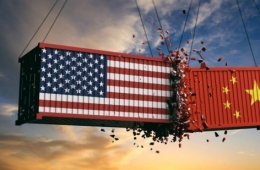
China Bets on Scale, POSCO Bets on AI: A New Competitive Edge in Steel
From Predictive Maintenance to Humanoids, Ready for On-Site Deployment
"Data Is Now the Key to Steel Competitiveness"
For a long time, steel mills have been considered an "industry of intuition." When equipment made an unusual sound, it was veteran workers who noticed first. Even a slight change in vibration would prompt someone to say, "Something is wrong." Dangerous tasks such as measuring molten steel temperatures and collecting samples were always the responsibility of people. Decades of accumulated experience and skills kept production lines running. However, the steel industry is changing. The number of skilled workers is declining, while Chinese steelmakers are closing in with massive production capacity. The challenge of increasing productivity while reducing workplace accidents is becoming ever more pressing.
On June 11, at the Korea Institute of Robot Convergence (KIRO) and the POSCO Pohang Steelworks in Pohang, Gyeongbuk, preparations were underway for AI and robots to be introduced to steel production sites. The experiment of creating an "AI steel mill"—where the experience of skilled workers is converted into data and robots take over hazardous tasks previously handled by humans—was kicking into high gear.
This project promoted by POSCO is the flagship initiative in the steel sector of the Ministry of Trade, Industry and Energy’s Manufacturing AI Transformation (M.AX) program. A total of 10 institutions, including POSCO, the Korea Institute of Robot Convergence, and the Pohang Institute of Industrial Science and Technology (RIST), are participating, with a total project budget of 17.5 billion won. The goal is not simple automation, but to fundamentally transform the steel production system through AI-based predictive maintenance and the use of robots.

On the 11th at the Korea Institute of Robot Convergence (KIRO) in Pohang, Gyeongbuk, a robot wearing a heat-resistant suit is operating a hot wire temperature measurement device, reproducing high-risk tasks at a steel mill. POSCO and the research team are promoting the unmanned operation of hazardous processes in steel mills using humanoid-based work robots. Photo by Kang Nahum
View original imageHumanoids Stand Before Molten Steel
The first thing unveiled that day was the humanoid robot. Standing about as tall as a person, the robot used its two arms to grab work equipment and simulated tasks such as molten iron sampling and temperature measurement. In actual steel mills, workers must manually measure temperatures and collect samples from molten steel coming out of the blast furnace. Even a small mistake in this task can lead to burns or serious safety accidents, making it a representative high-risk job.
The humanoid being developed by the researchers was created specifically to handle such tasks. It can manage loads weighing up to 40 to 45 kilograms with both arms and is designed to operate in high-temperature and dusty environments.
During the demonstration, the robot was shown gripping a temperature probe, moving to a designated spot, and performing the task. Although it is still in the proof-of-concept stage, the research team aims to deploy it in actual steel mill environments in the future.
Previously, these jobs required a person to wear heat-resistant clothing. Going forward, robots will enter hazardous areas, while workers will control them remotely from safe locations.
Jae-Yeol Lee, Director of the Integrated Robot System Research Division at KIRO, stated, "Although the steelmaking process is considered a difficult industry to automate, unmanned operation is essential for tasks with high risk of safety accidents. Once humanoids become commercialized, workplace safety will significantly improve."
"Knowing Before It Breaks"… AI Monitors Equipment
Even greater changes are expected from the AI predictive maintenance system. On one side of the demonstration area, there were belt conveyor inspection robots and blast furnace inspection robots.
Although they may look like simple mobile robots from the outside, sophisticated AI analysis is happening internally. The robots roam around the equipment, collecting data such as video, audio, vibration, and thermal images. The AI then analyzes this data to detect patterns that deviate from normal operation. It analyzes in real time whether the equipment temperature has risen, the bearing noise has changed, or there are anomalies in vibration frequency.
POSCO is particularly focused on multimodal AI technology. Previously, analysis often focused on a single type of data. However, in real-world equipment failures, multiple warning signs appear simultaneously. Accuracy increases when video, audio, and thermal imaging data are analyzed together. Essentially, AI takes over the process of a worker discovering problems by hearing strange noises on site.
Jayoung Choi, Senior Researcher at POSCO, explained, "The key is shifting from finding the cause after the equipment has stopped to predicting abnormalities before it stops. As predictive maintenance technology advances, production disruptions can be greatly reduced."
In the steel industry, even the stoppage of a single piece of equipment can cause enormous losses. Blast furnaces are representative of large-scale industrial equipment: once they start running, they cannot be easily stopped. The longer the downtime due to failure, the greater the production disruptions and cost burden. For this reason, global steelmakers are fiercely competing to adopt AI predictive maintenance technologies.

On the 11th, at Korea Institute of Robot Convergence (KIRO) in Pohang, Gyeongbuk, a predictive maintenance robot for belt conveyors jointly developed with POSCO is being demonstrated. Photo by Kang Nahum
View original imageThe Experience of Skilled Workers Becomes Data
For AI to function properly, data is essential. Through this project, POSCO is accumulating vast amounts of data across the steel mill. Video, audio, vibration, and thermal image data are representative examples. This is not merely data collection; it is the process of digitizing the experience-based judgments that skilled workers have made for years.
In the past, it was up to people to decide, "This sound means a bearing problem," or "This vibration means equipment should be inspected." Now, AI draws the same conclusions by learning from thousands or tens of thousands of data points.
Jisung Park, Head of POSCO No. 1 Ironmaking Plant, predicted, "In the future, AI will automatically analyze abnormal signs and notify workers, and some equipment will eventually be autonomously controlled."
Until now, people managed the equipment, but going forward, AI will manage the equipment while humans supervise.
Steel's Survival Strategy Amid Chinese Volume Onslaught
The backdrop for POSCO accelerating its AI transition is intensifying global competition. Chinese steelmakers are capturing global market share with overwhelming production scales. Relying solely on price competition makes it difficult for Korean steelmakers to maintain the upper hand. Ultimately, competitiveness will be determined by how much productivity, quality, and safety can be improved.
Shifts in the workforce structure are also a critical variable. The influx of younger workers is declining, and experienced workers are aging. There are concerns that production methods dependent solely on experience are no longer sustainable.
In this context, AI and robots are cited as alternatives that can solve these issues simultaneously. Robots handle dangerous tasks, AI analyzes equipment conditions in real time, and workers focus on operation and management.
There was a time when steel competitiveness was about who had the larger blast furnace. Later, producing higher quality became paramount. Now, a new competition based on AI is beginning.
Hot Picks Today
 "The Transfer Failed, but 'Ding Dong' Money Came In"... 32.5 Billion Won Financial Incident at Toss Bank
- "One injection on one side, and cancer on the other melted away"... A breakthrough against hard-to-treat cancer with a "30% survival rate" [Reading Science]
- "Those with Money Have Already Moved Their Gold"... Holdings Surge 16-Fold as Wealthy Investors Flock to 'This Country'
- "Baek Jongwon Had Been Quiet, Then Hit It Big"... Waits in the 100s in U.S. Despite KRW 46,000 Pork Belly
- 'Hangover Legend' Returns After 11 Years... Lee Sunmin Hyung's 'Captain Q' Sells Out
The humanoid robot encountered in Pohang was not just a demonstration device. Behind it was a new image of the steel industry, with AI diagnosing equipment, robots performing hazardous tasks, and data driving the production site.
© The Asia Business Daily. All rights reserved. Unauthorized AI training and use prohibited.