"If You Don't Attack, We'll Voluntarily Halt Gas Production"... Did Qatar Make a Secret Deal With Iran?
Suspicions of Qatar Aligning with Iran's Strategy to Protect LNG Facilities
Revealed Through Surveillance; Qatar Denies All Allegations
It has been reported that Qatar attempted to engage in a secret deal with Iran in the early days of the war to protect its liquefied natural gas (LNG) production facilities from Iranian attacks.

On June 12 (local time), the Washington Post (WP), citing anonymous sources, reported that immediately after the outbreak of war triggered by U.S. and Israeli attacks on Iran in late February, Qatar contacted the Iranian side and conveyed a proposal: Qatar would be willing to halt its own gas production on the condition that Iran would not attack the Ras Laffan LNG production facility. Security officials in the Middle East believe that Qatar was, in effect, seeking a secret deal.
Throughout this war, Iran has pursued a strategy of driving up international energy prices by blocking the Strait of Hormuz—which handles one-fifth of the world's maritime energy shipments—and striking key energy facilities of Middle Eastern oil-producing nations. These surging prices could shock economies around the world, thus serving as leverage to pressure the U.S. and Israel into an early end to the war. Ras Laffan in Qatar is the world’s largest LNG production hub, accounting for about one-fifth of global gas supply. For Qatar, protecting this core national economic asset was imperative. In effect, Qatar was sending a message to Iran: "You can achieve your desired strategic effect without attacking us."
This secret deal by Qatar was reportedly detected through intelligence analysis, including communications intercepts. However, it is said that Iran did not give a clear response to Qatar’s proposal. Still, the WP pointed out that given subsequent developments, there may have been some level of tacit understanding between the two sides. In fact, on the third day after the outbreak of war, Qatar halted operations at the Ras Laffan facility.
However, Qatar has categorically denied these allegations. The Qatari government has emphasized that the shutdown of Ras Laffan was entirely a decision for facility safety and personnel protection. Qatar insisted that the allegations of a backdoor deal with Iran are an attempt to undermine its efforts to mediate an end to the war and to shake its strategic partnership with the United States.
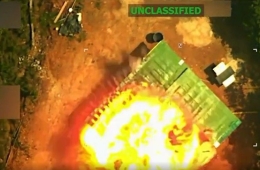
In reality, Ras Laffan was not spared from Iranian attacks. After Iran’s largest gas field, South Pars, suffered serious damage from Israeli airstrikes, Iran launched several missiles at Ras Laffan on March 18 in retaliation. Some facilities were damaged, causing turbulence in the international energy market. Qatar was unable to export 17% of its annual LNG volume (about 12.8 million tons). At the time, Qatar estimated that it would take three to five years to recover from the damage.
Hot Picks Today
!["Is the War Finally Over?" Will KOSPI Head Straight for 10,000?... 'This' Will Decide [Weekend Money]](https://cwcontent.asiae.co.kr/asiaresize/93/2026060105231082726_1780258989.jpg) "Is the War Finally Over?" Will KOSPI Head Straight for 10,000?... 'This' Will Decide [Weekend Money]
"Is the War Finally Over?" Will KOSPI Head Straight for 10,000?... 'This' Will Decide [Weekend Money]
- "Samsung Electronics and SK hynix Have Only Risen Halfway... Sold Out Through Next Year" [Weekend Money]
- "You Don't Have to Live There Yourself": Dongtan and Suji's Housing Boom Spreads to Giheung... Standard Units Surpass 1.5 Billion Won [Real Estate AtoZ]
- Making Batteries with Salt? Korean Stocks Benefiting from GM's Commercialization Decision [Weekend Money]
- "Training Is Over, Mass Deployment Is Key"...Jensen Huang's Gift 'AI Factory': How Is It Different from a Data Center [Tech Talk]
Additionally, U.S. officials were aware of Qatar’s contacts with Iran, but it is understood that there was no immediate strain in their relationship. Qatar has long maintained close ties with both the United States and Iran. Even during the current war, Qatar has been credited with helping to advance ceasefire negotiations between the two countries through active mediation.
© The Asia Business Daily(www.asiae.co.kr). All rights reserved.