Ministry of Education Eases Regulations for Local Universities, Implements 16 Regulatory Exemptions for Innovation
Gangwon Newly Designated as a Specialized Area for Higher Education Innovation
On June 12, the Ministry of Education announced that it would newly designate the Gangwon region as a specialized area for higher education innovation and re-designate existing regions—Busan, Gwangju·Jeonnam, Daegu·Gyeongbuk, and Daejeon·Sejong·Chungnam—with expanded regulatory exemptions, granting a total of 16 regulatory special cases.

The specialized area system has been in operation since 2021 and provides temporary (four years, with a possible two-year extension) regulatory relief or exemptions to local universities, tailored to the characteristics of the respective region (limited to universities that apply).
This round of designations is significant in two respects: the special exemptions, previously limited to specialized local (Glocal) universities in 2025, have now been expanded to all non-metropolitan universities; and a new exemption now allows the conferral of joint degrees between universities and junior colleges.
One of the key areas by field is the exemption related to the 'academic system.' Previously, when universities and junior colleges operated joint curricula, only limited cooperation in the form of 'credit exchange' was possible. However, under this new exemption, if a junior college receives approval for a 'major intensive program' designed for the joint curriculum, students who complete this program will be able to receive a bachelor's degree bearing the names of both institutions.
With this exemption, Chungnam National University can jointly operate curricula with Daejeon Health Institute of Technology in the biohealth sector and with Woosong Information College in the future mobility sector, and may confer joint degrees.
In the area of 'university personnel,' Chonnam National University and Chungnam National University have been granted exemptions relaxing qualification requirements for major positions such as vice president, allowing the universities to invite external experts to key managerial posts and thus foster greater innovation in university governance. Currently, under the Education Officials Act and related regulations, key positions such as vice president, dean of graduate school, and college dean are limited to internal faculty such as professors and associate professors. However, as university-industry and university-research institute collaboration becomes increasingly important, there has been growing demand from the field to enable the recruitment of external experts to these positions to drive university innovation.
Regarding 'university management,' the allowed scope for leased facilities has been expanded to include the same metropolitan government area. Previously, when a university did not own but leased its campus or school facilities, usage was restricted to within the same basic local government area (within 20 kilometers of the campus boundary). This exemption has been granted in consideration of university-industry collaborative education and partnerships with regional industries.
Accordingly, Yeungnam University College plans to secure educational facilities in corporate clusters to operate industry-linked curricula for junior colleges. Kyungsung University, Kyungpook National University, and Daegu Haany University also plan to facilitate the operation of specialized campuses for local universities.
Hot Picks Today
 "We Can't Live With So Many Tourists"... Japan to Impose Nightly Accommodation Tax as Visitor Numbers Soar
- "Sold Already? That Must Sting"... Gold Surges 15% in a Month, U.S. Treasuries Behind the Rally [Weekend Money]
- "Excited for 400,000 Won" Turns to Anger: "It Feels Like an Insult" as Basic Pension Leaves Seniors with No Income Gain
- "Quietly Among Ourselves"... 14,000 Unmanned Mahjong Parlors Open in 3 Years as Millennials and Gen Z Flock in China
- "Who Would Visit Now?" Foot Traffic Plummets... Japan Appeals to Koreans for Help—Here's Why
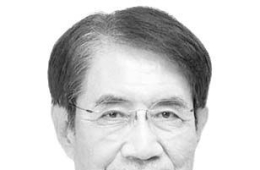
Minister of Education Choi Kyojin stated, “Designating specialized areas for higher education innovation is about removing institutional obstacles so that regional universities can design and implement their own innovations. For regulatory exemptions that are commonly requested by various regions and universities, or have proven effective in the field, we plan to consider amending relevant laws to fundamentally innovate the regulations.”
© The Asia Business Daily. All rights reserved. Unauthorized AI training and use prohibited.