Government's Fiscal Execution Exceeds 348 Trillion Won in First Half... Supplementary Budget Execution Rate Reaches 71%
As the government mobilizes all efforts to achieve its fiscal execution targets for the first half of the year, the scale of rapid execution in the public sector has surpassed 348 trillion won. Over 70% of the supplementary budget has also been executed, with the effects of policies such as high oil price response now materializing in earnest.
On June 12, Im Gi-geun, Vice Minister of the Ministry of Planning and Budget, presided over the 11th Joint Fiscal Execution Review Meeting at the Government Complex Sejong, where he reviewed the status of rapid execution of the main budget and the supplementary budget for the first half of 2026.
According to the Ministry of Planning and Budget, as of June 5, rapid execution in the public sector (including fiscal spending, public institutions, and private investment) totaled 348.4 trillion won based on the main budget, an increase of 16.8 trillion won compared to the same period last year.

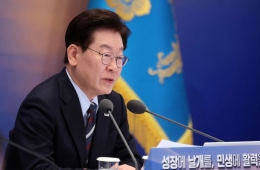
Im Gi-geun, Vice Minister of the Ministry of Planning and Budget, is speaking about the commercialization support project for AI applied products at the Emergency Economic Ministers' Meeting and Supply Chain Stabilization Committee held on March 18, 2026, at the Government Seoul Office in Jongno-gu, Seoul. Photo by Cho Yongjun
View original imageFor key projects under intensive management, 22.2 trillion won out of a total of 34.5 trillion won has been executed, resulting in an execution rate of 64.4%. The government explained that it is carrying out these projects without disruption to achieve the first-half target of 70% execution.
The execution of the supplementary budget is also accelerating. Of the 10.5 trillion won designated for rapid execution, 7.4 trillion won has been implemented, achieving an execution rate of 71%. The government is strengthening cross-ministerial management to ensure that the effects of supplementary projects, such as the high oil price response, can be seen swiftly.
In particular, compensation funds for high oil prices included in the supplementary budget reached an execution rate of 99%, with 4.7 trillion won out of the 4.8 trillion won in national funding executed by the end of May. As a result, as of May 28, the cumulative number of applicants stood at 32.38 million, with a total payment amount reaching 5.7 trillion won.
Hot Picks Today
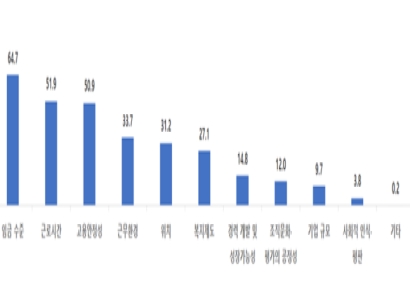 "Please Pay Me at Least 3 Million Won a Month": More Than Half of Young People Today Prioritize "Working Conditions" Over Company Size
- Selling Like Crazy Every Year... 30-Year-Old Hetbahn Takes on a New Challenge: Tastes Better Than "Mom's Home Cooking" [On-Site Report]
- I Thought Only 'Old Guys' Ate It... Young People Are Hooked on This 'Unusual Food' at Risk of Disappearing? [Delicious Stories]
- "Hey, Lady, Teach Your Kids to Behave!" ... 300,000 Won in Cash and a Bodily Injury Claim Demanded Over Child's Door Ding
- Beachgoer Finds 'Plastic' That Turns Out to Be Perfume Ingredient Worth More Than Twice as Much as Gold
Vice Minister Im stated, "I ask that you not only focus on improving the execution rate but also thoroughly check for obstacles in each project and ensure follow-up management, such as resolving procedural bottlenecks, so that the public can truly feel the effects of fiscal support."
© The Asia Business Daily. All rights reserved. Unauthorized AI training and use prohibited.